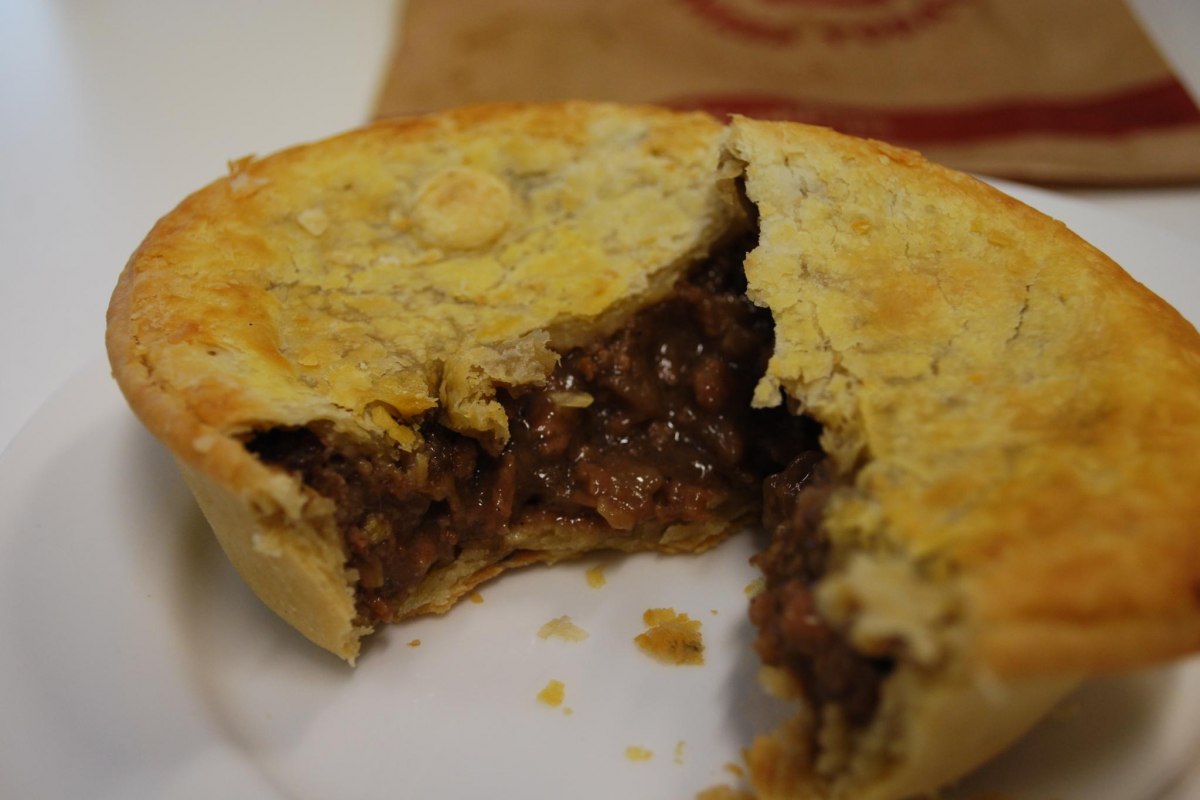
Beef and Guinness pie is the Irish cousin of the British steak and ale pie, and the difference is the stout. Dark, malty Guinness reduces into a deep, glossy gravy around tender chunks of beef, all sealed under a crust, and it is a fixture on almost any Irish pub menu, served with chips or mash and a spoon of peas. At heart it is the beef and Guinness stew with a pastry lid. This guide covers the recipe, the pastry question, and what makes the pie Irish rather than British.
What makes it Irish
The pie family is old and shared. Steak and ale pie comes from Britain, steak and kidney from England, and the beef pie in some form goes back to the Romans. What makes this one Irish is the Guinness. The Dublin stout, brewed at St James’s Gate since Arthur Guinness signed his lease in 1759, brings a roasted, faintly bitter depth that ale does not, and it is the same flavour that defines the Irish beef stew. Swap the ale for Guinness and the British pie becomes an Irish one. It is pub food in the truest sense, found in nearly every bar in the country, and Victorian Dublin pubs like the Stag’s Head have long kept a proper version on the menu alongside the pints.
The pie is the stew with a lid
There is no mystery to the filling: a good beef and Guinness pie is a good beef and Guinness stew, cooked until thick, then baked under pastry. Everything that makes the stew work makes the pie work. The beef must be a tough, collagen-rich cut, chuck or shin, browned hard in batches for colour and flavour. The Guinness is poured in and reduced by half so the malt concentrates and the raw bitterness cooks off. Then the whole thing simmers low for a couple of hours until the meat is tender and the gravy turns velvety and thick, thick enough to sit under pastry without making it soggy. If you can make the stew, you can make the pie. The only extra step is the crust. Irish cooks consistently name the same single mistake when a pie disappoints: failing to reduce the stout, which leaves the gravy tasting thin and sharply of raw beer rather than deep and malty.
The pastry question
How a beef and Guinness pie is topped divides cooks and pubs alike. There are two honest answers.
- Shortcrust base and lid. The traditional pie has pastry underneath as well as on top, a proper sealed pie you can lift from the dish. Shortcrust holds the gravy and travels well, the older way of doing it.
- Puff pastry cap. The modern pub version often skips the base and floats a flaky puff pastry lid on top of the filling in a dish. Strictly this is a stew with a hat rather than a true pie, but it is light, crisp and what most people now expect.
Both are valid, and the choice is yours. A sealed shortcrust pie is the more traditional and more portable; a puff cap is quicker and flakier. Some cooks split the difference with a shortcrust base and a puff lid for the best of both.
Why Guinness works in the pot
Stout earns its place in the pie for more than novelty. Guinness is brewed with roasted barley, which gives it notes of coffee, chocolate and a clean bitterness, and when it reduces in a pan those flavours concentrate into something close to a dark caramel. Against rich beef and a long, slow cook, that bitterness balances the sweetness of the onions and the depth of the meat, stopping the gravy from turning cloying. The stout also tenderises a little as it works, and its dark colour gives the finished gravy the glossy, almost black sheen that marks a proper Irish pie. The alcohol cooks away entirely over the two hours on the stove, leaving only the flavour. It is the same logic that puts stout into the beef stew and into porter cake: the Irish learned long ago that their national drink was also one of their best cooking ingredients, cheap, dark and full of flavour.
A beef and Guinness pie recipe
This makes one large pie to serve six. The filling is best made a day ahead so it sets and the flavour deepens.
Ingredients
- 1 kg beef chuck or shin, in 2-inch chunks
- 2 tablespoons oil and 2 tablespoons flour for dusting
- 2 onions and 2 carrots, chopped
- 2 tablespoons tomato puree
- 1 can of Guinness, about 440 ml
- 400 ml beef stock
- 2 bay leaves and a few sprigs of thyme
- 1 sheet of puff pastry, or shortcrust for a sealed pie
- 1 egg, beaten, to glaze
Method
- Pat the beef dry, dust with flour and brown hard in batches in the hot oil, then set aside.
- Soften the onions and carrots in the same pot, stir in the tomato puree, then pour in the Guinness and reduce it by half, scraping up the brown bits.
- Return the beef, add the stock, bay and thyme, and simmer low for about 2 hours until the meat is tender and the gravy is thick. Cool, ideally overnight.
- Heat the oven to 200C. Spoon the cold filling into a pie dish. For a sealed pie, line the dish with shortcrust first.
- Lay the pastry over the top, trim and crimp the edges, cut a small steam hole and brush with beaten egg.
- Bake for 30 to 35 minutes, until the pastry is deep golden and crisp.
- Rest a few minutes before cutting, so the filling settles, and serve with chips or mash and a spoon of peas.
The pie reheats well, so any left over makes a fine lunch the next day, the pastry crisping up again in a hot oven.
How it is served
In the pub, beef and Guinness pie comes one of two classic ways: with steak chips, thickly cut fried potatoes, or with a mound of buttery mashed potato, and almost always a spoon of green peas on the side. The peas are part of the picture, a small fresh note against the rich dark filling. A pint of the same stout that went into the gravy is the natural drink, the bittersweet beer echoing the flavour already cooked into the pie. At home the pie makes a generous centrepiece for a cold-weather dinner, and because the filling improves overnight, it is an ideal dish to make ahead for a crowd, assembling and baking the pastry only when you are ready to eat.
Tips for a better pie
- Make the filling thick. A runny stew makes a soggy-bottomed pie. Reduce the gravy until it coats the meat heavily before it goes under pastry.
- Cool the filling first. Hot filling melts the pastry before it bakes. Cold filling, ideally next-day, gives the crispest crust.
- Reduce the Guinness properly. Cooking the stout down by half is what turns it from sharp to savoury. Do not skip it.
- Glaze well. A good egg wash gives the deep golden, glossy top of a proper pub pie.
- Cut a steam hole. It lets the steam escape so the pastry crisps instead of going soft.
Common questions
What is the difference between beef and Guinness pie and steak and ale pie?
The beer. Steak and ale pie is British and uses ale; beef and Guinness pie is Irish and uses the Dublin stout, which gives a darker, more roasted, faintly bitter gravy.
What cut of beef is best for the pie?
A tough, collagen-rich cut like chuck or shin, the same as for the stew, browned hard and simmered until tender. Lean steak dries out and is a waste in a long cook.
Should I use puff or shortcrust pastry?
Shortcrust for a traditional sealed pie with a base, puff for a modern flaky lid. Both are common. A shortcrust base with a puff top is a good compromise.
Can you make beef and Guinness pie ahead?
Yes, and it is better for it. Make the filling a day or two ahead and keep it in the fridge, where the flavour deepens and it sets thick. Top with pastry and bake only when you are ready to serve. The cooked filling also freezes well for up to three months.
Why is my pie filling runny?
The stew was not reduced enough. Cook the filling down until the gravy is thick and clings to the meat before topping with pastry, and let it cool before baking so the pastry stays crisp.
Related recipes
For the same filling served as a stew, see Irish beef stew. For the wider tradition, see the Irish stew guide and traditional Irish food.
Sources
- Guinness Storehouse, St James’s Gate, Dublin
- Bord Bia, the Irish Food Board
- RTE Lifestyle Food, Irish pub classics
- Dúchas, the National Folklore Collection of Ireland
- Fáilte Ireland, National Tourism Development Authority
- The Irish Times, food and drink
- Alpha, beef pie photograph, Wikimedia Commons, licensed CC BY-SA 2.0