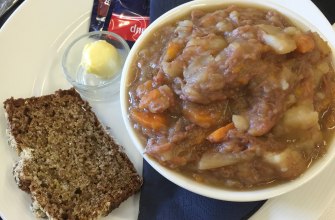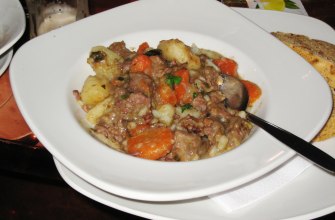
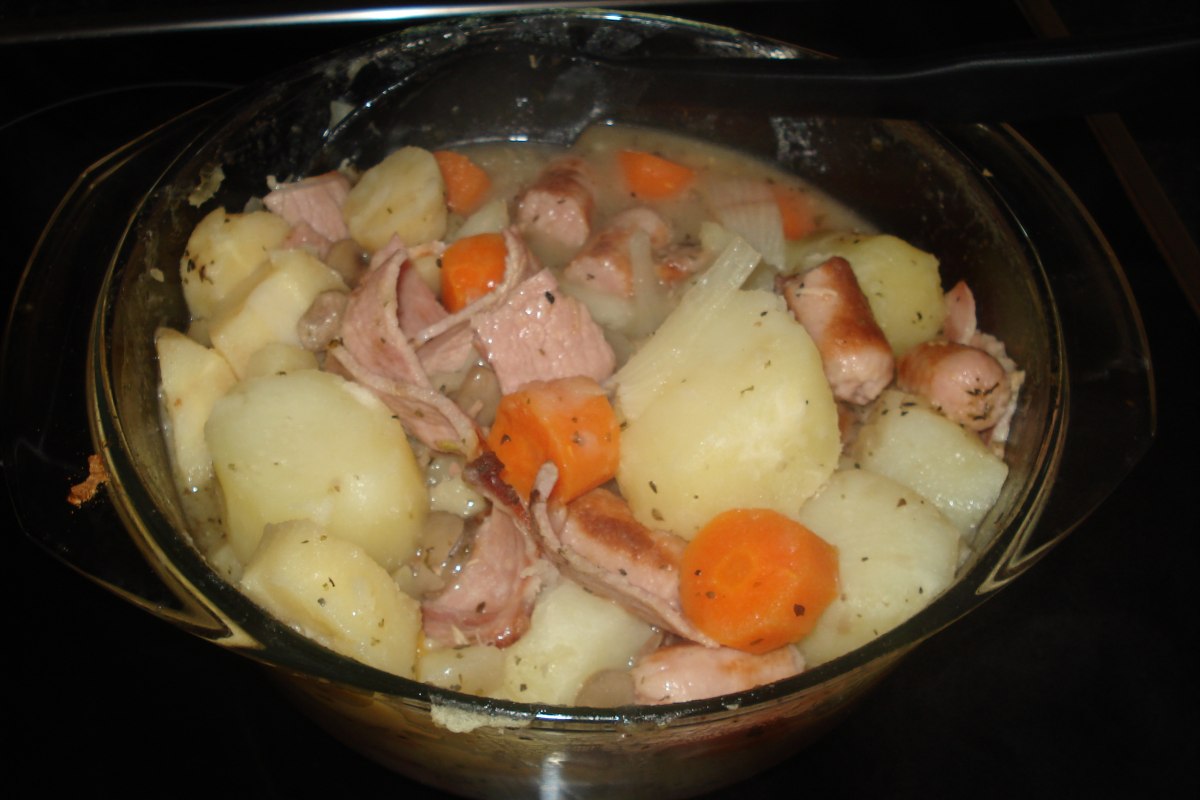
Dublin coddle is a pale stew, and it is meant to be. Pork sausages and bacon are simmered with onions and potatoes in a clear broth, never browned, until the broth turns the colour of weak tea and the potatoes fall soft. The word coddle means to cook gently in water just below the boil, and that pale, unbrowned look is the whole point of the dish, the thing Dubliners defend and outsiders always get wrong. This guide gives the authentic recipe, the no-browning rule, the right sausages, and the working-class Dublin history behind it.
What coddle is
Coddle is a one-pot Dublin stew of sausages, rashers of bacon, onions and potatoes, simmered slowly in a light broth. There is no beef, no beer, no garlic and no browning. Everything goes into the pot more or less raw, covered with water or a light stock, and left to cook gently until the sausages are soft and the potatoes have started to break down and thicken the liquid. It is humble food, made from cheap cuts and odds and ends, and it has been eaten in Dublin since at least the seventeenth century. The name says how it is cooked: to coddle is to simmer something tenderly below boiling point, and a coddle that has been boiled hard or browned in the pan is no longer a coddle.
The no-browning rule
This is the point everyone outside Dublin gets wrong. A coddle is pale, not brown. The sausages and bacon are not seared, the onions are not caramelised, and the broth stays a cloudy white-yellow rather than a deep stew brown. Cooks coming to the dish for the first time cannot resist browning the sausages for colour and flavour, and the moment they do, it stops being coddle. The pale look is not a failure to brown; it is the defining feature, born of a kitchen that simmered everything in one pot over a low fire. Many Dubliners parboil the sausages briefly first, which keeps the broth even clearer. If your coddle looks like a rich brown stew, you have made something else.
The right sausages
Coddle stands or falls on its sausages, and Dublin is particular about them. They must be good pork sausages, never beef, and the city has its own standards. Hicks of Sallynoggin, a long-established Dublin pork butcher, and the Superquinn sausage, now sold under SuperValu, are the two names Dubliners reach for, both plain, meaty pork sausages without heavy seasoning. A spicy or herby sausage, a Cumberland or anything strongly flavoured, throws the delicate balance of the dish and marks the cook as an outsider. The bacon should be a good streaky or a bacon joint, diced, which seasons the whole pot as it cooks. With the meat this simple, the quality of the sausage is what separates a fine coddle from a dull one.
A working-class Dublin dish
Coddle is tied to the tenements and the working families of inner-city Dublin. It was traditionally a Saturday-night meal, made from the week’s leftover sausages and rashers before the Sunday joint, a thrifty way to use up what was in the house. The absence of beef has a reason: it grew from Friday and Saturday cooking, when Catholic abstinence kept red meat off the table, so pork and bacon filled the pot instead. The dish runs deep in Dublin’s literary tradition. James Joyce put coddle into his writing, in Dubliners and in Finnegans Wake, and it belongs to the same tenement world that Sean O’Casey wrote his plays about. The Gravediggers, the nickname for John Kavanagh’s pub beside Glasnevin Cemetery, open since 1833, is among the Dublin houses that have kept coddle on the menu as a piece of living heritage.
What not to add
Modern recipes pile in extras that purists reject, and knowing what to leave out is part of making it right.
- No Guinness. Stout belongs in a beef stew. In coddle it darkens the broth that should stay pale and overwhelms the gentle flavour.
- No browning. Searing the meat is the cardinal sin, covered above. Everything goes in pale.
- No garlic or strong herbs. Coddle is a plain dish. A bay leaf and parsley are as far as it goes.
- Pearl barley is optional and modern. Some add a handful to thicken it, but the old coddle was just sausage, bacon, onion and potato. Treat barley as a recent variation, not the original.
Coddle today
For a long time coddle was a dish people ate at home and rarely admitted to, plain tenement food that did not look like much on the plate. That has changed. A wave of interest in honest, traditional Irish cooking has put coddle back on pub and restaurant menus around Dublin, and chefs now serve it with pride rather than apology, sometimes dressing it up but usually keeping it close to the original. The pale, unglamorous look that once embarrassed people is now its badge of authenticity. It remains, above all, a home dish, the kind of thing a Dublin grandmother made on a Saturday and that families still cook from memory rather than a recipe book. Knowing how to make a proper pale coddle, and why it should never be browned, is a small point of Dublin identity, passed down like the rhymes and the stories of the old inner city.
A traditional Dublin coddle recipe
This serves four to six and cooks slowly with almost no effort.
Ingredients
- 8 good pork sausages
- 250 g streaky bacon or a bacon joint, diced
- 900 g floury potatoes, peeled and cut into large chunks
- 3 large onions, thickly sliced
- About 1 litre water or light ham or chicken stock
- A bay leaf, salt and plenty of black pepper
- Chopped parsley to finish
Method
- For the clearest broth, drop the sausages into boiling water for a minute or two, then lift them out. This step is optional but traditional.
- Layer the onions, bacon, sausages and potatoes in a heavy pot.
- Pour in enough water or stock to almost cover, add the bay leaf and a good grind of pepper, and bring to a bare simmer. Do not let it boil hard.
- Cover and cook gently for about an hour and a half, until the potatoes are soft and starting to thicken the broth and the sausages are tender.
- Check the seasoning, adding salt carefully since the bacon is salty.
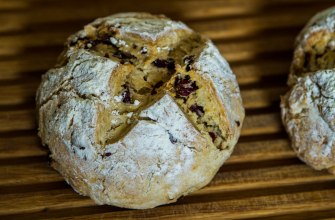
- Serve in deep bowls with the pale broth, a scatter of parsley, and plenty of buttered soda bread to mop it up.
Like most one-pot dishes, coddle is even better the next day, and a bowl of reheated coddle has long been a Dublin cure for the morning after the night before.
What to serve with coddle
Coddle needs only one thing beside it: bread to soak up the broth. Thickly buttered soda bread or a plain batch loaf is the Dublin standard, used to mop the bowl clean. A pint of stout alongside, not in the pot, suits the dish, as does a strong cup of tea. Some add a spoon of brown sauce or a dab of mustard at the table, a working-class touch that cuts the richness of the bacon. The dish is filling enough on its own that nothing else is needed, which was always part of its appeal: a whole meal in one cheap pot, with a bit of bread and butter to finish it off.
Common questions
Why is Dublin coddle not browned?
Because the name means to simmer gently, and the dish is defined by its pale broth. The sausages, bacon and onions go in raw and cook slowly in water, never seared, which keeps the broth clear and the flavour gentle.
What sausages do you use for coddle?
Good plain pork sausages, never beef. In Dublin the traditional names are Hicks of Sallynoggin and the Superquinn sausage, now sold as SuperValu. Avoid spicy or herby sausages, which overpower the dish.
Can you put Guinness in coddle?
Not in the traditional version. Stout darkens the pale broth and changes the character of the dish. It belongs in beef stew, not coddle.
Why is coddle a Dublin dish?
It grew in the working-class tenements of inner-city Dublin as a thrifty Saturday meal using up the week’s sausages and bacon. It avoids beef because it came from Catholic Friday and Saturday cooking, when red meat was set aside and pork and bacon took its place in the pot.
Related recipes
For the pale lamb stew it resembles, see traditional Irish stew. For the wider tradition and the bread to serve with it, see traditional Irish food and soda bread.
Sources
- Bord Bia, the Irish Food Board
- RTE Lifestyle Food, Dublin food traditions
- Tourism Ireland, food and drink
- Dúchas, the National Folklore Collection of Ireland
- National Museum of Ireland, Country Life
- The Irish Times, food and drink
- Coddle photograph, Wikimedia Commons, licensed CC BY-SA 3.0