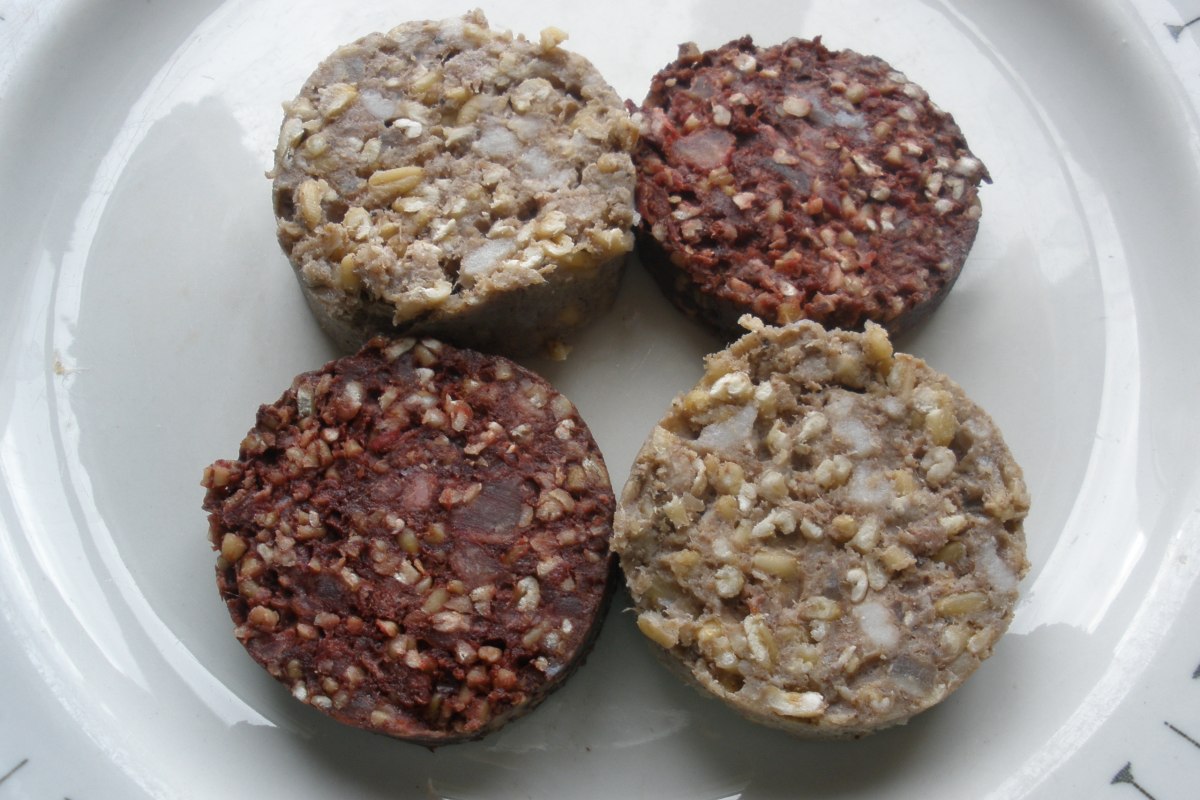
The difference between black pudding and white pudding is one ingredient: blood. Both are oatmeal sausages spiced and bound with fat, but black pudding carries pig’s or beef blood that turns it dark and rich, while white pudding leaves it out. They are the savoury heart of the full Irish breakfast, and Ireland makes some of the best in the world, from the crumbly beef-based Clonakilty to two puddings protected by European law. This guide covers the difference, the famous makers, and how to cook and make them.
Black versus white
Strip both puddings back and they share the same bones: oatmeal, suet or fat, onion and a blend of spices, packed into a casing and cooked. One ingredient sets them apart.
- Black pudding adds fresh pig’s or beef blood, which darkens it almost black and gives a deep, mineral, iron-rich flavour. It is a true blood sausage.
- White pudding leaves the blood out, so it stays pale and oaty, milder and softer, sometimes enriched with a little pork or pork liver.
Both are sliced into rounds and fried until crisp at the edges, and both belong on the breakfast plate. White pudding is the gentler introduction for anyone unsure about the blood; black pudding is the one with the cult following.
Clonakilty and the West Cork pudding
Ireland’s most famous black pudding comes from Clonakilty in West Cork, and its story runs through real people. The recipe dates to the early 1880s and the hand of Johanna O’Brien, a farmer’s wife from nearby Sam’s Cross who made black pudding to earn a little extra for Harrington’s butcher shop, which is why the label still reads Original Harrington’s Recipe. In 1976 Edward Twomey bought the Clonakilty butcher’s and with it the secret spice mix, and built it into a national name, adding a Clonakilty white pudding in 1986. What makes the Clonakilty pudding distinctive is that it breaks the usual rules: it is made with beef rather than pork and carries a low blood content of only three or four percent, which gives it a crumbly rather than dense texture and a warm, spiced flavour. It is the pudding most Irish people picture first.
The protected puddings
Two Irish puddings carry European Protected Geographical Indication status, the legal mark that ties a food to its place and method. Both come from the same corner of the country as Clonakilty.
- Timoleague Brown Pudding, in Irish Putóg Dhonn Tí Molaige, from the West Cork village of Timoleague, won PGI status in 1999. It is a blood pudding made from fresh pork blood, pork trimmings, cereals, onions and spices packed in natural casing, browner and coarser than a standard black pudding.
- Sneem Black Pudding, from the village of Sneem in County Kerry, also holds PGI status. Its quirk is the shape: rather than being stuffed into a sausage casing, it is a set pudding, the mixture of pig’s blood, oatmeal, onions and suet cooked and pressed into rectangular blocks, then sliced flat for the pan.
That two small West Cork and Kerry villages each protect their own pudding tells you how seriously this humble food is taken in the southwest of Ireland.
A food born of thrift
Pudding exists because nothing from the pig was wasted. When a rural family killed their pig, the one animal most cottages could keep, the meat was salted into bacon and ham for the year, but the blood, the oatmeal from the field and the scraps of fat could not be left to spoil. Stirred together with onion and whatever spices the house had, packed into the cleaned intestines and cooked, they became pudding, a way to turn the last of the animal into food that kept. It is the same nose-to-tail thrift that gave Ireland its bacon and cabbage and its coddle, the cooking of people who could not afford to throw anything away. That humble origin is why pudding was for centuries a country food rather than a restaurant one, and why the best recipes still come from village butchers rather than factories. The modern fashion for black pudding in fine dining is a recent twist on a food that was, for most of its life, the cheapest thing on the plate.
How to cook pudding
Most people buy their pudding ready-made and the skill is in cooking it. The rules are simple.
- Slice it thick. Rounds about a centimetre thick hold together and crisp without drying out. Thin slices crumble.
- Fry it gently. A medium heat in a little fat or oil, a few minutes a side, gives a crisp crust and a soft centre. Too high and the outside burns before the middle warms.
- Do not turn it too often. Let each side form a crust before flipping, once is enough.
- Mind the crumbly ones. A low-blood pudding like Clonakilty is fragile, so handle the slices carefully and let them set in the pan before moving them.
Beyond the breakfast, black pudding has become a chef’s ingredient, crumbled over scallops, stuffed into chicken, or set on a round of apple, where its spice and richness play against sweetness. When buying, look for a named butcher’s or a regional pudding rather than a bland supermarket own-brand: the spice mix is what separates a memorable pudding from a forgettable one, and the small West Cork and Kerry makers guard theirs closely.
A traditional white pudding recipe
White pudding is the one most achievable at home, since it needs no blood. This makes a couple of small puddings or a panful of patties.
Ingredients
- 200 g pinhead or coarse oatmeal
- 200 g pork shoulder, minced, and 100 g pork fat or suet
- 1 onion, finely chopped
- 1 teaspoon white pepper, half a teaspoon each of mace and allspice
- Salt, and a little stock or milk to bind
- Sausage casings, optional, or shape into patties
Method
- Toast the oatmeal lightly in a dry pan until it smells nutty, then leave to cool.
- Soften the chopped onion in a little fat without colouring.
- Mix the oatmeal, minced pork, fat, onion and spices, and season well. Add a little stock so it just holds together.
- Pack into casings and tie into links, or simply shape the mix into small patties.
- Poach the cased puddings gently in barely simmering water for about 30 minutes, then cool.
- To serve, slice and fry in a little fat until golden and crisp on both sides.
For black pudding, fresh pig’s blood from a butcher is stirred into the same kind of mix, loosening it and turning it dark, but the poaching, cooling and slicing are exactly the same. Sourcing fresh blood is the only real obstacle, which is why most people buy their black pudding and make only the white at home.
Pudding on the breakfast plate
Black and white pudding find their natural home on the full Irish breakfast, sliced and fried alongside rashers, sausages, eggs and grilled tomato, with toast or fried soda bread to mop the plate. In the north the same puddings go into the Ulster fry. The combination of crisp, spiced pudding with a soft fried egg is, for many Irish people, the best part of the plate, the slice they save for last and the one they miss most when a hotel breakfast leaves it off. A good breakfast usually offers both, a slice of black for the depth and a slice of white for the gentler oaty bite, and the better the pudding, the better the breakfast.
Common questions
What is the difference between black and white pudding?
Black pudding contains fresh pig’s or beef blood, which makes it dark and rich. White pudding leaves the blood out, so it stays pale, oaty and milder. Both share oatmeal, fat, onion and spices.
What is Clonakilty black pudding made of?
Unusually, beef rather than pork, with a low blood content of three or four percent, oatmeal and a secret spice mix dating to the 1880s. The low blood gives it a crumbly texture and a warm, spiced flavour.
Which Irish puddings have protected status?
Timoleague Brown Pudding from West Cork, granted EU Protected Geographical Indication in 1999, and Sneem Black Pudding from County Kerry, a set pudding pressed into blocks rather than cased.
How do you cook black pudding?
Slice it about a centimetre thick and fry gently in a little fat for a few minutes a side until crisp, turning once. Handle crumbly low-blood puddings carefully so the slices hold together.
Related recipes
For the meal it belongs to, see the traditional Irish food guide. For the bread on the same plate, see soda bread and brown bread.
Sources
- Department of Agriculture, protected food names (Timoleague, Sneem)
- Clonakilty Blackpudding, company history
- Bord Bia, the Irish Food Board
- Fáilte Ireland, National Tourism Development Authority
- The Irish Times, food and drink
- Good Food Ireland
- O’Dea, Irish black and white pudding photograph, Wikimedia Commons, CC BY-SA 4.0