Champ is the simplest great dish in Irish cooking: floury mashed potato beaten with chopped scallions, milk and butter, piled in a bowl with a well of melted butter in the middle. It comes from Ulster, where it was a meal in its own right rather than a side, eaten from a big bowl with butter to dip and a glass of buttermilk to wash it down. This guide gives the traditional recipe, the old names and customs, the green variants from nettles to dulse, and what sets champ apart from its cousin colcannon.
What champ is
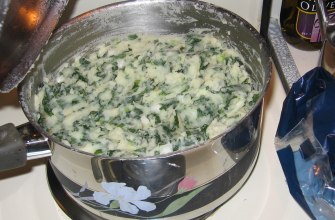
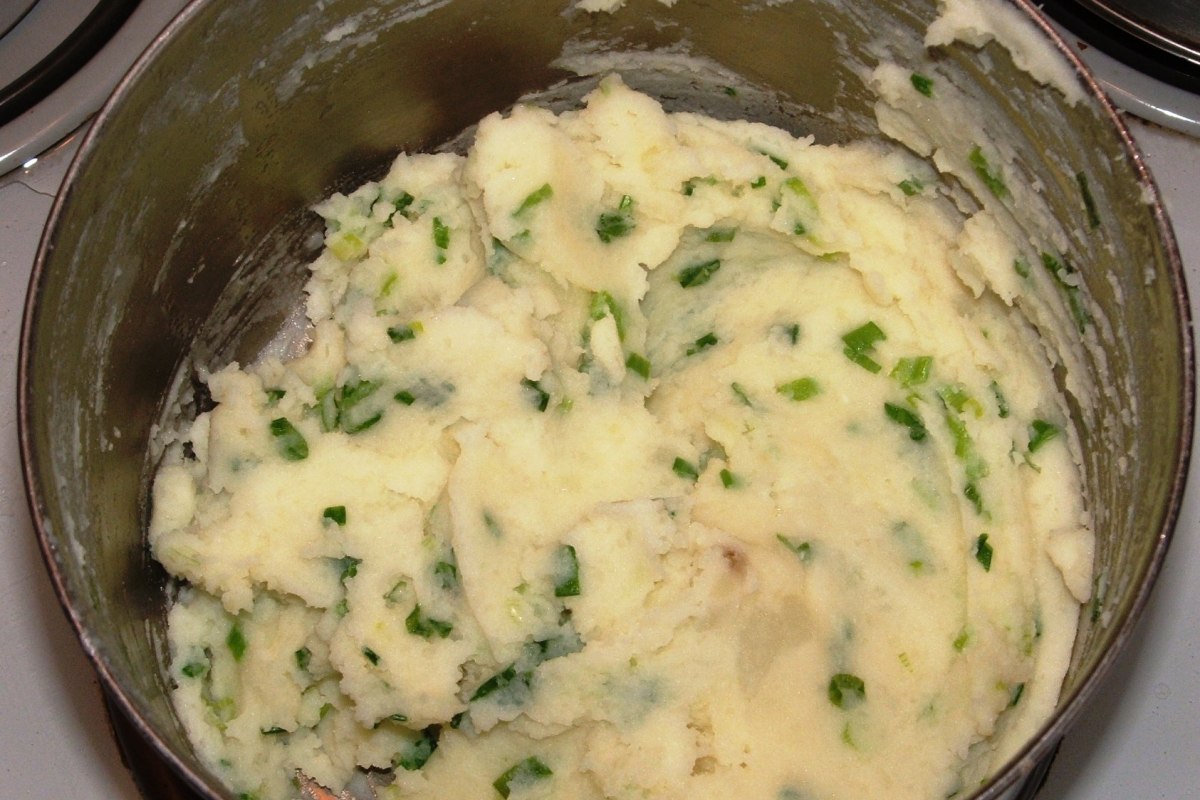
Champ, called brúitín in Irish, is mashed potato flavoured with spring onions or scallions and enriched with milk and butter. That is the whole dish. The scallions are the defining touch, gently softened in the milk before they go into the mash so they lose their raw bite and run green flecks through the white potato. It belongs to the north of Ireland, through the province of Ulster, where it was everyday food, and it sits one ingredient away from colcannon: champ has scallions only, colcannon adds kale or cabbage. Get champ right and you have proof that the plainest cooking, done with care and good butter, beats most of what is fussed over. The whole skill is in the mash and the milk, and both reward a little patience over a high flame.
Poundies, cally and the beetle
Champ goes by several old names depending on where in the north you stand. It is also called poundies, cally or thump, and the names come from how it was made. Before mashers, the boiled potatoes were pounded smooth with a heavy wooden pounder, and in many areas that pounder was called a beetle, a job that fell to the man of the house because it took some muscle. An old rhyme remembers the cramped cottage kitchen: there was an old woman who lived in a lamp, she had no room to beetle her champ. The names and the rhyme carry the memory of a dish made by hand in a small kitchen, night after night.
The butter well and buttermilk
Champ is served the same ceremonious way as colcannon. Each person gets a large bowlful, presses a hollow into the centre, and drops in a lump of butter that melts into a golden pool. You eat from the outside in, dipping each forkful down through the butter rather than stirring it through, which keeps the potato light instead of greasy. Tradition pairs it with two things: good country butter to eat and a glass of buttermilk to drink alongside. That combination, a bowl of champ, butter in the well and cold buttermilk, was a full and satisfying supper for a working family, and it cost almost nothing. Ulster cooks are near unanimous on two points that outsiders get wrong: the scallions go into warm milk first and never in raw, and the butter melts in the well to be dipped through, never beaten into the mash.
The green variants
Scallions are the classic, but champ was never fixed to one green. Whatever grew nearby went into the pot, and several variations are traditional in their own right.
- Nettle champ, made with young spring nettle tops in place of scallions, a free wild green that cleared the system after winter.
- Pea champ, with cooked green peas beaten through for sweetness and colour.
- Chive or parsley champ, milder herb versions for a gentler flavour.
- Dulse champ, made along the coast with the dried Atlantic seaweed for a salty, mineral note.
Each follows the same method, swapping the scallion for whatever the season and the place offered. The scallion version simply became the most common and the one most people now mean by champ.
Getting the mash right
Champ has nowhere to hide, so the potato and the technique matter.
- Use floury potatoes. Rooster, Kerr’s Pink or Golden Wonder mash light and fluffy. Waxy potatoes turn champ heavy and gluey.
- Boil them whole in their skins and peel after, so they do not soak up water and go wet.
- Warm the scallions in the milk. Heating the spring onions gently in the milk for a few minutes softens their harshness and lets them flavour the whole dish.
- Dry the potatoes over the heat for a moment after draining, then mash by hand with a masher or ricer, never a food processor, which turns them to glue.
- Keep it hot. Champ stiffens as it cools, so serve it straight away with the butter still melting.
Champ on the Ulster table
Champ was northern survival food turned into something good. In the cottages of Ulster, where the potato was the centre of the diet and meat was a rare luxury, a bowl of champ with butter and buttermilk was dinner for much of the week. It carried the household through the lean stretches and through Lent, when meat was off the table entirely, and it fed children cheaply and well. The dish has a particular link to the months of plenty too: it was eaten on the first of November, around the old festival, and on Saint Brigid’s Eve in spring, when the new season was welcomed. That a dish so plain earned its own rhymes, names and customs tells you how central it was. It was not a side that came with the meal; for many families, on many nights, it was the meal.
A traditional champ recipe
This serves four to six as a generous main or side.
Ingredients
- 1 kg floury potatoes, Rooster or Kerr’s Pink, scrubbed
- 1 bunch of spring onions or scallions, finely chopped
- 250 ml milk
- 75 g Irish butter, plus extra for the wells
- Salt and freshly ground black pepper
Method
- Boil the potatoes whole in their skins until tender, about 25 minutes, then drain and peel while hot.
- Warm the milk in a small pan with the chopped scallions for a few minutes, until the onions soften but the milk does not boil.
- Dry the peeled potatoes over the heat for a minute, then mash them smooth.
- Beat in the warm scallion milk and the butter until the champ is light and fluffy, and season well.
- Spoon into warm bowls, press a hollow in each, and drop in a knob of butter to melt.
- Serve at once, with extra butter and a glass of buttermilk on the side, while the butter in the well is still melting into the hot potato.
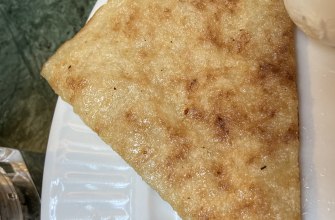
Like colcannon, leftover champ fries into golden potato cakes the next day, pressed into patties and crisped in butter until brown on both sides. Cold champ also stirs into a potato soup or thickens a stew, so a big pot is never wasted.
Champ or colcannon?
The two Ulster mashes are constantly mixed up, but the line between them is clear. Colcannon adds kale or cabbage to the mashed potato and is tied to Halloween and its fortune-telling charms. Champ keeps to scallions and has no festival attached, a plain everyday supper rather than a seasonal one. Both share the floury potato, the butter well and the northern roots, and both are far more than the sum of their parts. If you have made one, you can make the other by adding or dropping the green.
Common questions
What is the difference between champ and colcannon?
Champ is mashed potato with scallions only. Colcannon adds kale or cabbage. Both use floury potatoes and a butter well, but colcannon is a Halloween dish while champ is everyday food.
Why is champ called poundies?
Because the potatoes were pounded smooth with a heavy wooden pounder, called a beetle in some areas. The names poundies, cally and thump all come from that pounding.
What potatoes are best for champ?
Floury varieties like Rooster, Kerr’s Pink or Golden Wonder, which mash light and fluffy. Boil them whole in their skins and peel after to keep them from going watery.
What do you eat champ with?
Traditionally with extra butter to dip and a glass of buttermilk to drink, as a meal in itself. It also serves as a side to sausages, bacon or a stew.
Can you make champ with something other than scallions?
Yes. Champ was traditionally made with whatever green grew nearby, so young nettles, peas, chives, parsley and even dried dulse seaweed all appear in old recipes. The scallion version simply became the most common.
How do you reheat champ?
Warm it gently in a pan with a splash of milk and a knob of butter, stirring until soft again, or fry leftover champ into crisp potato cakes. Avoid the microwave, which makes it rubbery.
Related recipes
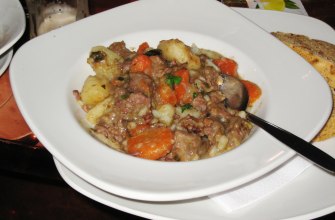
For the cabbage version, see colcannon. For the wider potato tradition, see the guide to traditional Irish food and a bowl of Irish stew to serve over it.
Sources
- Bord Bia, the Irish Food Board
- Teagasc, potato varieties
- RTE Lifestyle Food, traditional Irish cooking
- Dúchas, the National Folklore Collection of Ireland
- National Museum of Ireland, Country Life
- Fáilte Ireland, National Tourism Development Authority
- Glane23, champ photograph, Wikimedia Commons, licensed CC BY-SA 3.0