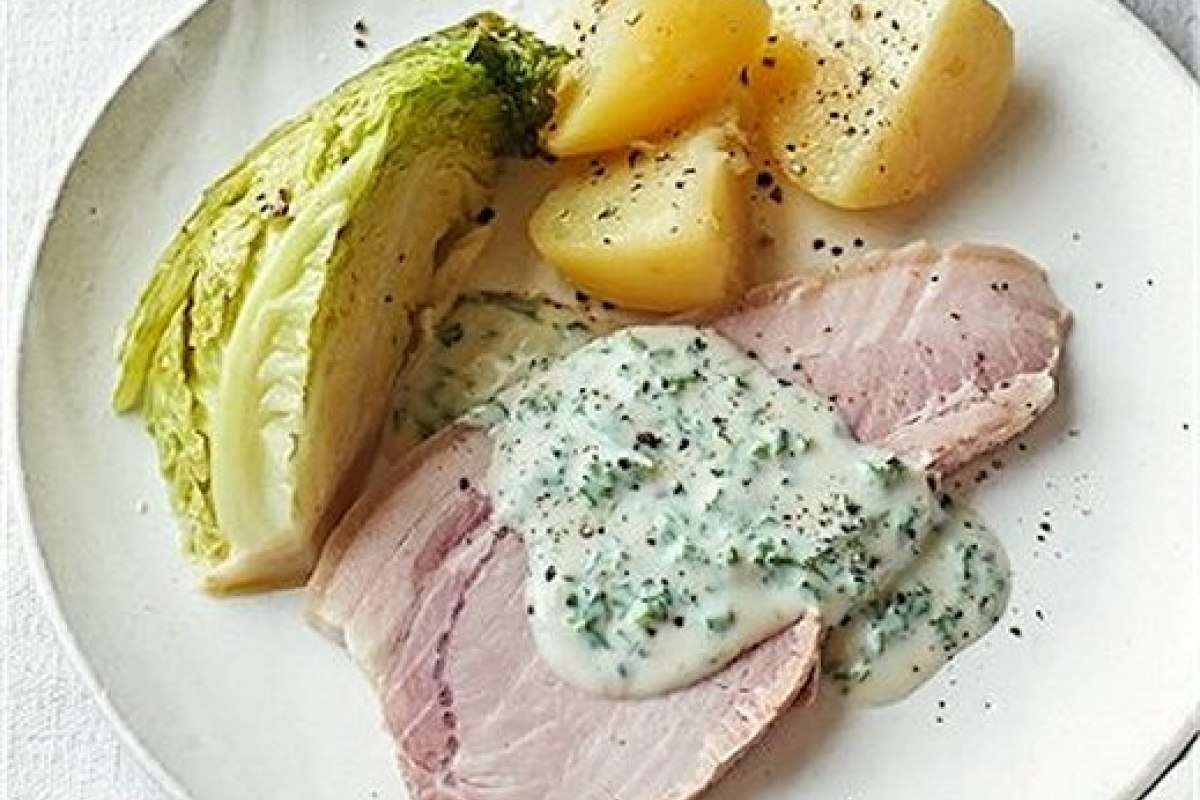
Bacon and cabbage is the dish the Irish actually eat, the one that corned beef only replaced in America. A joint of cured bacon is simmered until it turns soft and ham-like, then the cabbage is cooked in the same salty, savoury liquid, and the two are served together with floury potatoes and a parsley or mustard sauce. Surveys put it at the top of the list of meals Irish people see as their own, ahead of the stew and well ahead of the corned beef the rest of the world assumes they eat. This guide gives the traditional method, explains why Irish bacon is not the bacon most people picture, and sets the dish in the history that made it the real national plate.
The real Irish national dish
Ask the world for an Irish dinner and it says corned beef and cabbage. Ask Ireland and it says bacon and cabbage. Around two thirds of Irish adults name it the meal most bound up with their country, and it is the dish families cook for Saint Patrick’s Day at home, whatever the diaspora eats abroad. The difference comes down to history. In Ireland the everyday meat was the pig, cheap to keep and turned into bacon and ham, while beef was a luxury few could afford. When Irish emigrants reached America and found beef cheaper than pork, they swapped in salt beef and the corned beef version was born. Bacon and cabbage is the original, the dish that stayed home. The full corned beef story sits in its own corned beef guide.
Irish bacon is not what you think
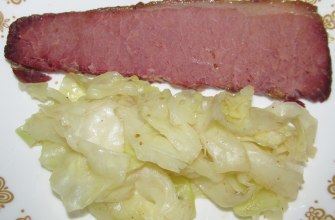
The first thing to understand is that Irish bacon is not the thin, streaky, fried bacon of an American breakfast. Irish bacon is a joint of cured pork from the back of the pig, a leaner, meatier cut closer to a gammon or a ham, sold as a loin or collar of bacon to be boiled rather than fried. It is cured in salt, which is why the cooking begins with soaking or an initial boil to draw out some of the saltiness. Boiled slowly for a couple of hours, the joint turns tender and faintly sweet, carving into thick, ham-like slices. Using rashers of streaky bacon, the obvious mistake for anyone outside Ireland, gives a completely different and lesser dish. Ask a butcher for a loin or collar bacon joint, or use a mild unsmoked gammon as the closest substitute.
Cooked together in one pot
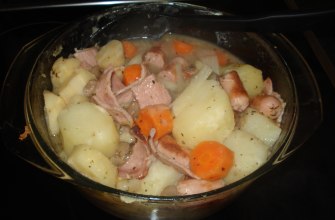
The heart of the dish is that the cabbage is cooked in the bacon’s water. The joint is simmered until nearly done, then the shredded cabbage is added to the same pot, or to a ladle of the reserved cooking liquid, and cooked for just a few minutes until tender. That salty, porky liquid seasons the cabbage all the way through, which is why bacon and cabbage tastes of itself in a way that bacon and separately boiled cabbage never does. Cooking the two apart in plain water, the way a careless cook might, throws away the whole point. The cabbage should be barely cooked, still green and with a little bite, not boiled grey for half an hour. This shared-pot method is the single technique that defines the dish.
The parsley or mustard sauce
Bacon and cabbage is almost always served with a simple white sauce, and there are two traditional versions. Parsley sauce is a plain béchamel, butter and flour cooked together, milk whisked in until smooth, and a generous handful of chopped parsley stirred through. Mustard sauce, the version Bord Bia favours, swaps in a spoonful of mustard and uses some of the bacon cooking liquid along with cream for a sharper, savoury finish that cuts the richness of the pork. Either sauce is spooned over the sliced bacon and cabbage, with floury potatoes on the side to complete the plate. The sauce is not a garnish but part of the dish, and a bacon and cabbage served without one feels unfinished to most Irish cooks.
Tips for the best bacon and cabbage
- Soak or first-boil the bacon. Cured bacon can be very salty. Soaking it in cold water for a few hours, or boiling it once and pouring that water away, keeps the dish from being overpowering.
- Do not overcook the cabbage. Three or four minutes in the bacon liquid is plenty. Long boiling turns it grey, soft and sulphurous.
- Keep the cooking liquid. It is liquid gold, the base for the sauce and for a pea and ham soup the next day. Never pour it down the sink.
- Use a leaner joint. A loin or collar carves into proper slices. Avoid a very fatty piece, which leaves the dish greasy.
- Rest the bacon before carving. Letting the joint sit a few minutes after cooking gives cleaner, thicker slices.
A traditional bacon and cabbage recipe
This serves six. The timing depends on the weight of the joint, roughly 20 minutes per half kilo.
Ingredients
- 1.5 kg loin or collar bacon joint, unsmoked
- 1 large head of green cabbage or Savoy, shredded
- 1 onion, 1 carrot and a few peppercorns, for the pot
- Floury potatoes, to serve
- For the sauce: 50 g butter, 50 g flour, 500 ml milk or bacon liquid, chopped parsley or 1 tablespoon mustard
Method
- Soak the bacon in cold water for a few hours, or bring it to the boil and discard that first water, to reduce the saltiness.
- Put the joint in a large pot with the onion, carrot and peppercorns, cover with cold water, bring to the boil and simmer gently, about 20 minutes per half kilo.
- Lift out the bacon when nearly done and keep it warm. Reserve the cooking liquid.
- Add the shredded cabbage to the pot of bacon liquid and cook for just 3 to 4 minutes, until tender but still green. Drain.
- For the sauce, melt the butter, stir in the flour and cook a minute, then whisk in the milk or some bacon liquid until smooth. Stir in the parsley, or the mustard and a little cream.
- Carve the bacon into thick slices and serve on a bed of cabbage with floury potatoes and the sauce poured over.
Leftover bacon is excellent cold in sandwiches the next day, and the cooking liquid makes a fine base for a pea and ham soup or a pot of lentils. Nothing from the pot need be wasted.
History on a plate
Bacon and cabbage is older than the potato in spirit, though the potato joined it to make the full plate. The pig was the one animal almost every rural family could keep, fed on scraps and slaughtered for bacon and ham that could be salted and stored, which is why it was called the gentleman that pays the rent. Cabbage grew in every kitchen garden through the cold months. Put together, they made a meal that cost a family next to nothing and fed it well, and that combination of cured pork and a boiled green goes back centuries in Irish cooking, long before the Famine. It became the Sunday and feast-day dinner of ordinary people, and it carries that weight still, a plain dish that means home. For generations of Irish families, the smell of a bacon joint boiling on the stove was the smell of a Sunday, and many who emigrated kept cooking it abroad as the surest taste of the country they had left behind.
Common questions
What is the national dish of Ireland?
Bacon and cabbage has the strongest claim, named by around two thirds of Irish adults as the meal most associated with Ireland. Corned beef and cabbage, despite its fame abroad, is the Irish-American version.
What kind of bacon is used in bacon and cabbage?
A joint of cured pork from the pig’s back, sold as loin or collar bacon, boiled rather than fried. It is leaner and meatier than streaky bacon, closer to a ham or gammon.
Why cook the cabbage in the bacon water?
The salty, savoury cooking liquid seasons the cabbage right through, which is what gives the dish its flavour. Cooking the cabbage separately in plain water loses the whole point.
What sauce goes with bacon and cabbage?
A simple white sauce, either parsley sauce, a béchamel with chopped parsley, or mustard sauce made with some of the bacon liquid and a little cream. It is served poured over the sliced bacon.
Related recipes
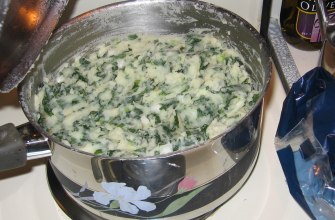
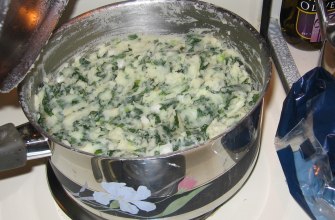
For the American version and its history, see corned beef. For the potato sides, see colcannon and champ, and for the wider tradition, traditional Irish food.
Sources
- Bord Bia, traditional bacon and cabbage
- RTE Lifestyle Food, Irish classics
- Teagasc, Agriculture and Food Development Authority
- Dúchas, the National Folklore Collection of Ireland
- Fáilte Ireland, National Tourism Development Authority
- The Irish Times, food and drink
- Zackgallagher, bacon and cabbage photograph, Wikimedia Commons, licensed CC BY-SA 4.0