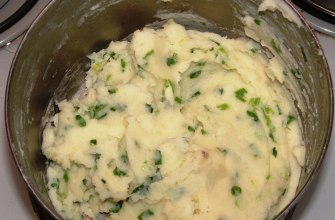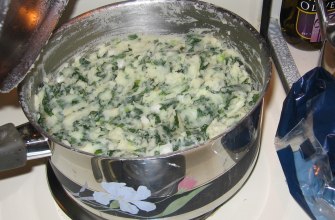
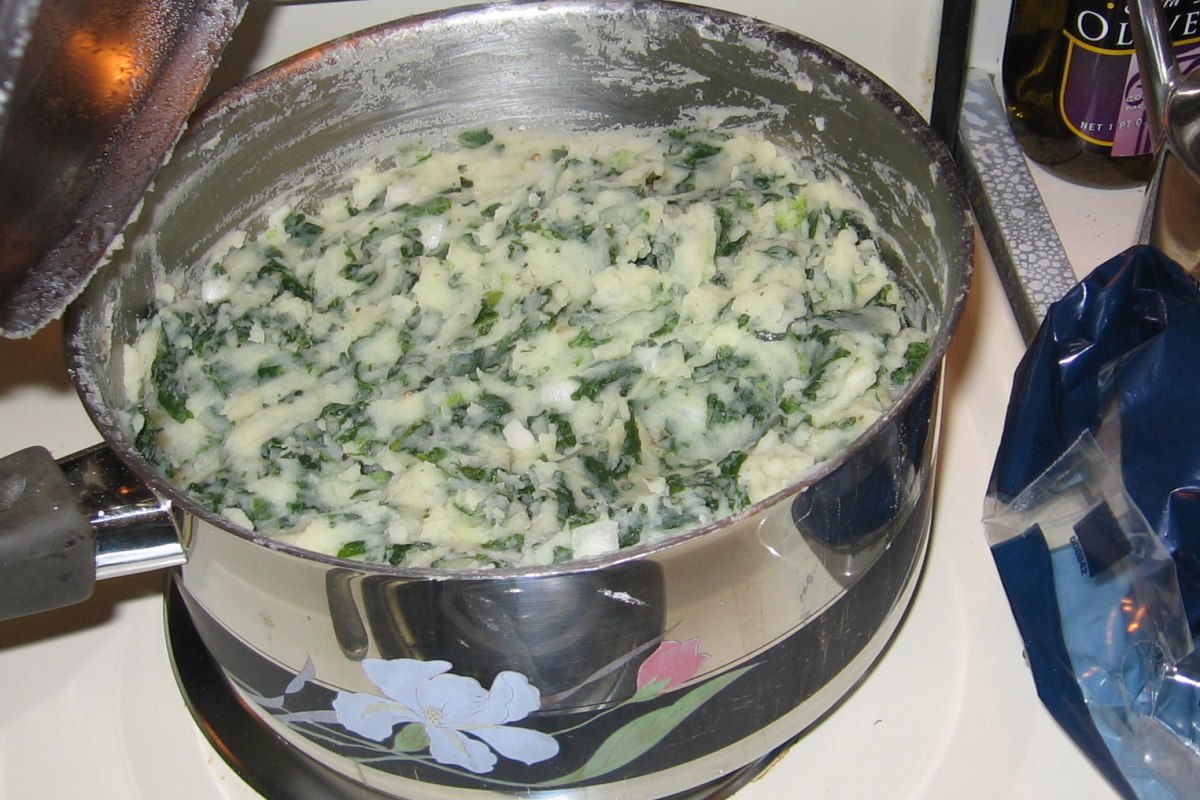
Colcannon is mashed potato with a fortune buried in it. The dish itself is simple, floury potatoes beaten with kale or cabbage and spring onions and finished with a well of melted butter, but on Halloween night it carried hidden charms that told your future in the coming year. A ring meant a wedding, a coin meant money, a thimble meant you would stay unmarried. This guide gives the traditional recipe, the regional split between kale and cabbage, the butter-well way to serve it, and the Samhain customs that make colcannon more than a side dish.
What colcannon is
Colcannon is a dish of mashed potato and a green, either kale or cabbage, bound with butter and milk and lifted with chopped spring onions or scallions. The name comes from the Irish cál ceannann, meaning white-headed cabbage, and the dish dates to around the eighteenth century, once the potato had settled into the Irish diet after arriving from the New World in the sixteenth. It is comfort cooking at its plainest, the kind of dish made from the back of the garden and the bottom of the milk jug, and it has stayed on Irish tables for two centuries because it costs almost nothing and tastes of home.
Kale or cabbage, and the regional split
The green divides the country. The northern tradition, through Ulster, leans on curly kale, which holds a firmer texture and a slightly bitter, mineral edge. Munster and Connacht, through the south and west, more often use green cabbage, softer and sweeter once cooked. Both are correct, and both are traditional; which one a family uses says more about where their people came from than about any rule. Outside Ireland, savoy cabbage or spring greens stand in well. Whatever the green, it is cooked separately until just tender, drained hard, and folded through the mash at the end so it keeps its colour and bite rather than turning grey in the pot.
The Halloween charms and fortune-telling
Colcannon was a dish of Samhain, the old Irish festival that became Halloween, and it carried the same fortune-telling game as the barmbrack. Cooks hid small charms in the mound of potato, and whatever turned up in your serving foretold your year. The tokens varied from house to house, but the common ones were fixed in meaning.
- A ring meant you would be married within the year.
- A coin meant wealth was coming.
- A thimble meant a woman would stay a spinster.
- A button meant a man would stay a bachelor.
- A pea or a rag warned of poverty or hard times ahead.
Unmarried girls had their own custom, saving the first and last spoonfuls of colcannon in a sock and hanging it on the door, in the belief that the next man through would be their future husband. The dish was loved enough that a traditional song was written about it, remembering the creamy butter and the kale that mothers used to make. The fortune-telling has faded, but plenty of Irish families still eat colcannon on Halloween out of habit and memory.
The butter well
How colcannon is served is part of the dish. The mash is piled into a mound on the plate or in a bowl, and a hollow is pressed into the top and filled with melted butter, so it pools like a small golden lake. Each forkful is dipped down through the butter on its way up, rather than the butter being stirred through the whole bowl. The point is partly flavour and partly ceremony: the dish stays light and fluffy instead of turning greasy, and every bite carries its own hit of butter. Mixing the butter all the way through is the mark of someone who was not taught the proper way. Use a good Irish butter, since on a dish this plain the butter is the luxury.
Getting the potatoes right
Colcannon lives or dies on the mash, and that means the right potato. Floury varieties are essential: Rooster, Kerr’s Pink or Golden Wonder break down into a light, fluffy mash that takes butter and milk without turning gluey. Waxy salad potatoes are the wrong choice entirely, since they stay firm and turn the dish heavy and wet when mashed. A few rules give the best result.
- Boil the potatoes whole in their skins and peel them after, so they do not waterlog. This is the single biggest fix for a watery colcannon.
- Warm the milk and scallions together before they go into the mash. Heating the spring onions gently in the milk takes off their raw, harsh edge and softens them into the potato, a tip Irish cooks pass down.
- Dry the potatoes over the heat for a minute after draining, to drive off steam before you mash.
- Do not use a food processor. It turns potato to glue. Use a masher or a ricer and a wooden spoon.
A traditional colcannon recipe
This serves six as a side. Add the charms wrapped in greaseproof paper if you are making it for Halloween.
Ingredients
- 1 kg floury potatoes, Rooster or Kerr’s Pink, scrubbed
- 400 g kale or green cabbage, shredded
- 6 spring onions or scallions, finely chopped
- 150 ml milk
- 75 g Irish butter, plus extra for the well
- Salt and freshly ground black pepper
Method
- Boil the potatoes whole in their skins until tender, about 25 minutes, then drain and peel while hot.
- Meanwhile cook the kale or cabbage in a little boiling water until just tender, drain it very well and chop it finely.
- Warm the milk in a small pan with the chopped spring onions for a few minutes, so the scallions soften.
- Mash the peeled potatoes until smooth, then beat in the warm milk and onions and the butter until light and fluffy.
- Fold the drained greens through the mash and season well with salt and pepper.
- Pile into a warm bowl, press a hollow in the top and fill it with melted butter, and serve at once.
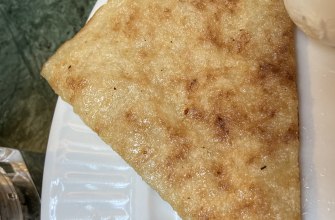
Leftover colcannon fries beautifully the next day, pressed into a cake and crisped in butter, the Irish answer to bubble and squeak.
What to serve with colcannon
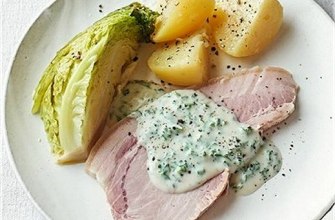
Colcannon is a side dish first, the soft bed under something richer. Its classic partner is boiled bacon, the cured pork of an Irish boiled dinner, where the salty meat plays against the buttery potato and greens. It sits just as well beside sausages, a pork chop or a Sunday roast, soaking up the gravy. A bowl of it on its own, with extra butter in the well and a grind of pepper, was supper for many a household on a cold night, filling and cheap. At Halloween it becomes the centre of the table rather than a side, served in a big mound for everyone to dig into and hunt for the charms. However you serve it, the dish wants to be hot and freshly made, since it loses its lightness as it cools and stiffens.
Colcannon and champ
Colcannon has a close cousin in champ, the Ulster dish of mashed potato beaten with spring onions and a butter well but no green. The two are often confused, but the difference is simple: champ has scallions only, while colcannon adds the kale or cabbage. Both share the butter well and the floury-potato rule, and both turn a few cheap ingredients into something far better than the sum of its parts. Either makes a fine bed for a bowl of stew or a plate of bacon.
Common questions
What is the difference between colcannon and champ?
Colcannon is mashed potato with kale or cabbage and spring onions. Champ is mashed potato with spring onions only, no green. Both share the butter well and use floury potatoes.
Why do you put charms in colcannon?
It was a Halloween fortune-telling game. Small tokens hidden in the mash predicted the finder’s year: a ring for marriage, a coin for wealth, a thimble or button for staying single, a pea for poverty.
Is colcannon made with kale or cabbage?
Both are traditional. Ulster favours curly kale; the south and west more often use green cabbage. Either works, so use what your family used or what you can get.
Why is my colcannon watery?
Usually the potatoes absorbed water, or the greens were not drained enough. Boil the potatoes whole in their skins and peel after, dry them over the heat before mashing, and squeeze the cooked greens hard.
Related recipes
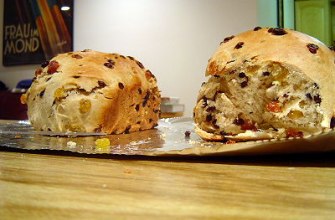
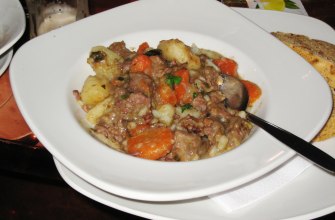
For the wider potato tradition, see the guide to traditional Irish food. For the dish to serve it with, see Irish stew, and for the Halloween sweet, the barmbrack.
Sources
- Bord Bia, the Irish Food Board
- RTE Lifestyle Food, Irish Halloween traditions
- Teagasc, potato varieties
- Dúchas, the National Folklore Collection of Ireland
- National Museum of Ireland, Country Life
- Fáilte Ireland, National Tourism Development Authority
- Alison Cassidy, colcannon photograph, Wikimedia Commons, public domain