Cody Turkey Calls is a small American manufacturer of handmade wooden turkey calls based in Ohio, known for its Drop Dead box call series that won multiple National Wild Turkey Federation competitions in the 2010s. The company produces limited-run box calls, pot calls, and pushbutton calls in walnut, cherry, and chestnut, selling direct to hunters and through specialty game-calling retailers at prices of $60-180 per piece. Cody calls are one option among several respected small-maker brands in the US turkey-hunting market (Woodhaven, Zink, Primos, Quaker Boy), each with its own loyal following among spring gobbler hunters.
This guide covers the Cody Turkey Calls product line in detail, the main turkey-call types (box, pot, diaphragm, pushbutton, locator), how box calls produce the yelp-cluck-purr sounds that wild turkeys respond to, competitive turkey-calling events and the NWTF judging criteria, how to choose a turkey call for hunting versus competition use, and where to buy Cody and comparable brands. The article applies to turkey hunting as a sport rather than to Turkey the country, despite the URL placement.
Cody Turkey Calls: The Product Line
Cody Turkey Calls operates from a small shop in southern Ohio, producing approximately 500-800 calls per year across the main product categories. The workshop focuses on hand-fitted box calls with a distinctive concave lid and vertical-core construction, a design the company has been building since the 2000s.
The main series:
- Drop Dead Series Box Call: The flagship product. Features a concave lid (rather than the flat lid used by most box calls) and a proprietary vertical-core internal construction that affects the reverberation pattern. Side construction is laminated walnut or cherry. Retail price $120-180.
- 6.5 One Sider Box Call: A single-sided box call with one striking surface, popular with hunters who prefer a single-note call rather than switching tones. Made in solid walnut, cherry, and chestnut options. Price $95-135.
- Cody Pot Call: A slate-over-glass friction call with a walnut pot body. Simpler than the box calls and priced at $60-90.
- Pushbutton Calls: Small one-handed pushbutton calls for close-range use, typically $40-65.
- Camouflage Finish Series: Box calls with hydrographic camo coating, $110-165.
All Cody calls come with a lifetime warranty on construction defects and a 30-day satisfaction guarantee. The company ships from Ohio and sells primarily through its own website and through a handful of authorised dealers including Scheels, Midwest Turkey Call Supply, and several regional archery and hunting shops in Ohio, Pennsylvania, and Michigan.
Types of Turkey Calls
Wild turkey hunters use several categories of calls, each producing the yelp, cluck, purr, and cut sounds that attract wild turkeys during spring breeding season. Readers new to the sport can start with our broader piece on the wild turkey in the Francis Marion National Forest. The main types:
- Box calls: Rectangular wooden boxes with a hinged lid that scrapes across the box sides to produce sound. Versatile, loud enough for long-distance calling, and the easiest type for beginners to learn. Cody’s main product category.
- Pot calls (slate, glass, aluminium): A flat friction surface scraped by a wooden or plastic striker. Quieter than box calls but more precise, favoured for closer-range work with birds within 50-80 yards.
- Diaphragm calls (mouth calls): Latex or vinyl reeds mounted in a horseshoe-shaped frame, held in the mouth between tongue and palate. Hands-free operation is the main advantage; the steepest learning curve in turkey calling.
- Pushbutton calls: Small rectangular boxes with a push-button plunger. One-handed operation, quick access, but less versatile than box or pot calls.
- Locator calls: Calls that mimic crows, owls, or coyotes. Used to elicit a “shock gobble” from a tom turkey, revealing his location without using turkey sounds that would draw him in prematurely.
- Trumpet calls: Conical wooden or antler calls producing a softer, more traditional hen sound. Niche product, popular among traditionalists.
Serious hunters carry multiple call types. A typical spring turkey hunt kit might include one or two box calls for locating, a slate pot call for medium-range work, two or three diaphragm calls for hands-free close-range use, and an owl or crow locator for pre-dawn shock-gobble attempts.
How a Box Call Works
A box call produces turkey vocalisations by friction between the hinged lid (paddle) and the box sides. The paddle scrapes one edge at a time, producing a yelp on one side and often a slightly different tone on the other side (for double-sided calls). The specific sound depends on the wood species, the box dimensions, the lid shape, and the amount of chalk applied to the friction surfaces.
Key acoustic factors:
- Wood species: Walnut produces a warm medium-tone call. Cherry is brighter and more resonant. Chestnut is rarer and falls between the two. Purpleheart and mahogany are occasional premium options with distinct tonal signatures.
- Box dimensions: A longer, narrower box tends to produce a higher-pitched, more sibilant yelp. Shorter, wider boxes produce deeper, more assertive calling.
- Lid shape: Flat lids are the standard. Concave lids (Cody’s signature feature) alter the contact pattern between the lid and box sides, producing a slightly different frequency response.
- Chalk: Natural blackboard chalk applied to the paddle provides the friction grip needed for consistent sound. Too little chalk produces a weak call; too much muffles the tone.
- Sound holes: Small holes drilled in the box sides affect resonance. Cody uses specific hole placement as a proprietary design element.
The four main turkey sounds a hunter wants from a box call are the yelp (the primary hen vocalisation, a two-note up-down pattern), the cluck (a single sharp note used when birds are close), the purr (a soft rolling sound signalling contentment), and the cutting sequence (rapid excited yelps used by receptive hens). A good box call produces all four sounds cleanly with the same chalk setting.
Competitive Turkey Calling
Competitive turkey calling events are held annually at the National Wild Turkey Federation convention in Nashville, Tennessee, and at regional qualifying events across the US. Callers are judged on realism, rhythm, and consistency against reference recordings of wild hen turkeys. Competition categories include box call, pot call, diaphragm call, senior, junior, women’s, and open divisions.
Cody Turkey Calls appeared in the competition wins list during the 2010s, with several professional callers using Cody Drop Dead box calls to place in NWTF regional and national events. The brand’s reputation was built partly through these competition wins, which hunters watch as a rough quality proxy even when they don’t compete themselves.
Competition calls are often different from hunting calls. The competitive American turkey-calling world has its own culture of contests and collectors, not unlike the antique-decanter market covered in our piece on the wild turkey decanter. A competition call is tuned for maximum tonal accuracy against the judging reference recording, which means it may be more delicate, less weather-resistant, and tuned for a smaller range of sounds than a hunting call. A hunter who wants to shoot a tom in the woods typically wants a call that is loud, weather-proof, easy to operate with gloves on, and capable of producing all four major sounds. A competition caller prioritises realistic yelp and cluck rendering over versatility and ruggedness. State wildlife agencies set turkey hunting seasons and bag limits; our overview of wild turkey in Francis Marion National Forest covers the South Carolina context as an example.
Choosing a Turkey Call for Hunting
Beginners should start with a box call. It is the easiest category to produce acceptable turkey sounds with minimal practice, and it remains effective through the advanced levels of the sport. A mid-range box call from a reputable small maker (Cody, Woodhaven, Zink) costs $80-150 and will serve a hunter for years if maintained properly.
Intermediate and advanced hunters add pot calls (more precision at medium range) and diaphragm calls (hands-free operation with a firearm shouldered). Locator calls are added for scouting and pre-dawn work. Our piece on incubating turkey eggs covers the breeding biology that drives spring-season gobbler behaviour. A complete turkey-hunting call kit might run $200-500 in total, accumulated over two or three seasons as the hunter learns which calls work for them.
Maintenance matters. Box calls should be stored in a cloth bag away from moisture; the lid chalk should be refreshed before each hunt. Pot calls benefit from periodic light sanding of the slate or glass surface to remove skin oils. Diaphragm calls should be rinsed in mouthwash or saltwater after each use and air-dried to prevent mould growth. Properly maintained, a good box call lasts 20-30 years; diaphragm calls typically last one season of heavy use before the latex reeds fatigue.
Alternative Brands to Cody
Cody Turkey Calls is one of several respected small-maker brands in the US turkey-call market. Comparable brands and their typical strengths:
- Woodhaven Calls: Based in Alabama, founded by master caller Mike Pentecost. Known for the Ninja series of diaphragm calls and for competition-grade box calls. Price range similar to Cody.
- Zink Calls: Based in Ohio, founded by hunter Fred Zink. Broad product range including the Avian-X decoy line. Widely distributed through major retailers.
- Primos Hunting: The largest US turkey-call brand by volume. Offers entry-level to pro-grade calls at accessible prices, with strong retail distribution through Walmart, Cabela’s, Bass Pro Shops.
- Quaker Boy: New York-based, specialises in box calls and pot calls. Dick Kirby, the company’s founder, won multiple NWTF world championships in the 1980s.
- Knight and Hale: Kentucky-based legacy brand. Broad product range and strong retail presence.
- Custom makers: Dozens of individual craftsmen produce custom box calls from $200-1,500 per piece. Examples include David Halloran Custom Calls, Jim Clay Custom Calls, and Tom Turpin Custom Calls. Turnaround time can reach 6-12 months for new orders.
Hunters who want the best call often end up with two or three different makers’ products for different situations. A Cody box call for locating, a Woodhaven slate pot call for medium range, and a Zink diaphragm for close-range work covers most spring gobbler scenarios.
Where to Buy Cody Turkey Calls
Cody Turkey Calls sells through three main channels:
- Direct from the maker: The Cody website accepts online orders and ships across the US. New products and competition models are often listed first on the direct channel.
- Specialty turkey-call dealers: Midwest Turkey Call Supply (Ohio) and several regional dealers carry the full Cody line. These retailers often bundle calls with strikers, chalk, and carrying cases at a small discount.
- Hunting and outdoor retailers: Scheels, Dunham’s Sports, and some Bass Pro Shops stock selected Cody models. Availability varies by region, and the retailers typically carry only the mid-range pieces rather than the full competition line.
Because Cody produces a limited number of calls each year, popular models sometimes sell out during the pre-season months (January-March) and do not restock until autumn. Hunters looking for a specific Cody box call should check availability in December of the prior year, not in April of the hunting season. Used Cody calls appear occasionally on eBay and at regional hunting shows, typically at 60-80% of the original retail price.
Frequently Asked Questions
What is Cody Turkey Calls?
Cody Turkey Calls is a small American manufacturer based in Ohio, producing handmade wooden turkey calls since the 2000s. The company is best known for the Drop Dead Series box call, a competition-winning design featuring a concave lid and proprietary vertical-core construction. Annual production runs to 500-800 calls across all product categories.
How much do Cody Turkey Calls cost?
Cody box calls run $95-180 depending on wood species and finish. Pot calls cost $60-90, pushbutton calls $40-65, and the premium Drop Dead Series box call reaches $120-180. Pricing sits in the mid-to-upper tier of the small-maker turkey call market.
What is the difference between a box call and a pot call?
A box call is a rectangular wooden box with a hinged lid that scrapes across the sides. It is loud, versatile, and easy to learn. A pot call is a friction surface (slate, glass, or aluminium) in a shallow wooden pot, struck with a separate striker. Pot calls are quieter and more precise, better suited for close-range work with turkeys already within 50-80 yards.
Do I need multiple turkey calls?
Collectors sometimes appreciate the connection between hunting gear and bar accessories, covered in our piece on the wild turkey decanter. Serious hunters carry at least two or three types. A typical spring turkey hunting kit includes a box call for long-distance locating, a slate pot call for medium-range work, and one or two diaphragm (mouth) calls for hands-free close-range use. Locator calls (owl, crow) are added for pre-dawn scouting. A complete kit runs $200-500.
Are Cody Turkey Calls good for beginners?
Yes, the Cody box calls in particular suit beginners because the box call is the easiest turkey call category to learn. The 6.5 One Sider at around $95-135 is a reasonable starter piece. Beginners should plan to spend 10-20 hours of home practice learning the basic yelp, cluck, and purr patterns before hunting season opens.
How do I maintain a Cody box call?
Store in a cloth bag or padded case to protect the wood finish. Refresh the lid chalk before each hunt using natural blackboard chalk (not wax-based modern chalk). Keep the call dry; if it gets wet, let it air-dry at room temperature before storing. Avoid exposing it to extreme heat in a parked vehicle in summer, which can warp the wood. Properly maintained, a quality box call lasts 20-30 years.
What is a “drop dead” turkey call?
Drop Dead is Cody Turkey Calls’ flagship box call series, named for its reputation for producing turkey vocalisations so realistic that gobblers respond immediately. The name is marketing rather than a technical term, but the series’ NWTF competition wins have given the phrase some recognition in the US turkey hunting community.
Sources and Further Reading
- National Wild Turkey Federation – nwtf.org
- Types of turkey calls overview – fieldandstream.com/hunting/turkey-calls-guide
- Cody Turkey Calls official site – codyturkeycalls.com
- Turkey hunting regulations and seasons – state wildlife agencies (TPWD, PGC, ODNR)
- Spring turkey hunting techniques – Mossy Oak Game Keeper magazine
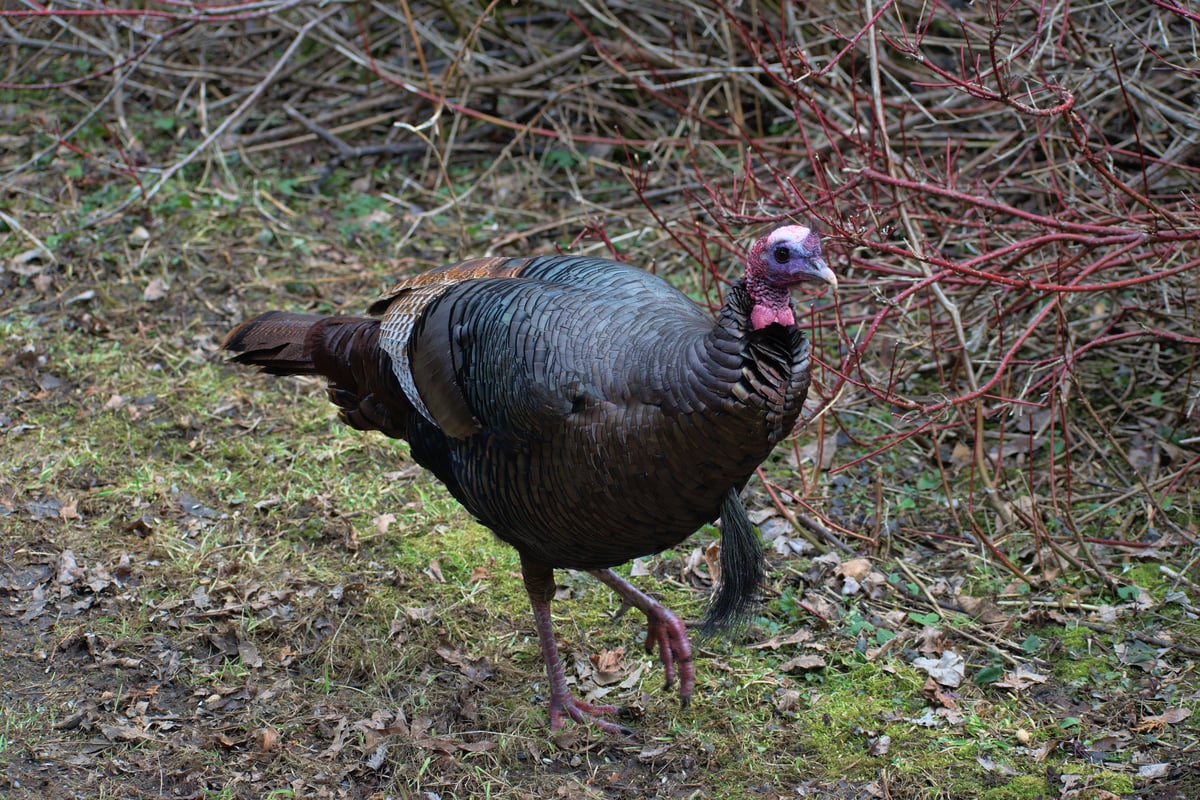
- Hero photo: “Wild turkey – Lynde Shores” by The Cosmonaut, CC BY-SA 2.5 – commons.wikimedia.org/wiki/File:Wild_turkey_-_Lynde_Shores.jpg