Almost everyone who comes to Puerto Iguazu comes for the waterfalls, and almost everyone treats the town as a place to sleep between park visits. That sells it short. This small town in the far northeast of Argentina, wrapped in subtropical rainforest where Argentina, Brazil and Paraguay meet, is the base camp for the great Iguazu falls and a worthwhile stop in its own right. This guide covers the town itself: how to use it as a base for the falls, what to see when you are not at the park, and how to cross into the two countries next door.
The Town Behind the Falls
Puerto Iguazu sits in Misiones province, the thin wedge of Argentina that pushes up between Brazil and Paraguay, surrounded by the remnant Atlantic Forest the locals call the selva misionera. It is a compact, walkable town built almost entirely around tourism, with the bus terminal, hotels, the duty-free strip and a cluster of restaurants within a few blocks of each other.
The town owes its existence to a single act of patronage. In August 1901 the first tourist boat to the falls, the steamer Espana under Captain Jordan Hummel, reached this stretch of river, and one passenger, Victoria Aguirre, was so dismayed that no road led to the cataracts that she put up 3,000 pesos to build one. The settlement that grew at the landing took the name Puerto Aguirre in her honour, and its main avenue still carries her name. It counted just 431 people in 1940, was briefly renamed Eva Peron in 1951, and settled on Puerto Iguazu only after 1955.
Mbya Guarani communities still live in the forest along the road to the park, and some welcome respectful, paid visits that support their schools, a reminder that this corner of Misiones was Guarani land long before it became a tourist gateway.
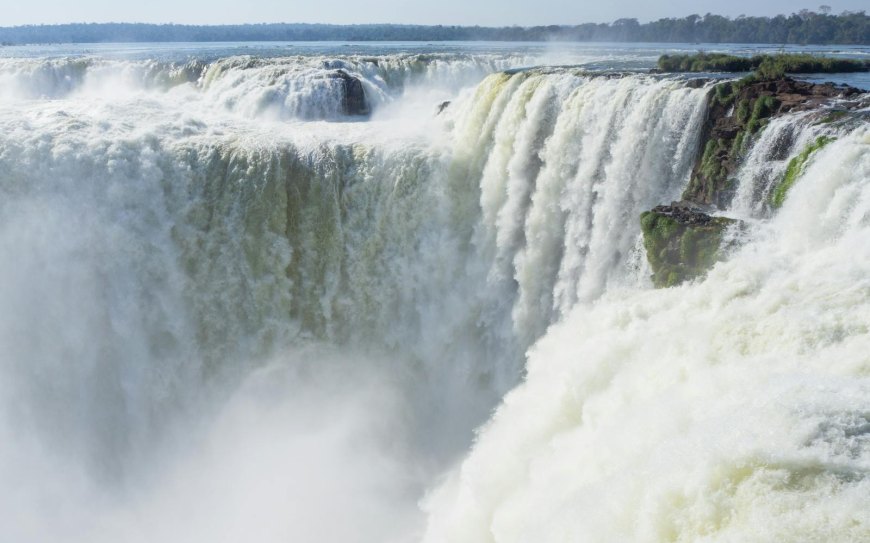
The falls themselves lie about 18 kilometres away inside a national park, and for the cascades, the Garganta del Diablo and the walkways, our guide to Argentina’s waterfalls covers them in full. This page is about everything else Puerto Iguazu gives you, which is more than a bed.
Getting to Puerto Iguazu
The town sits in the far corner of Argentina, a long way from everywhere. The quick way in is to fly: the Cataratas del Iguazu airport, about 20 kilometres from the centre, is roughly an hour and three quarters from Buenos Aires, with shuttles and taxis running into town. The slow and cheap way is the long-distance bus from Retiro in Buenos Aires, a haul of about 16 to 18 hours that most travelers take overnight in a reclining cama seat. Once you arrive, the town is small enough to walk, and the park, the borders and the attractions are all short bus or taxi rides away.
Getting to the Falls from Town
The trip to the Parque Nacional Iguazu, a UNESCO World Heritage Site since 1984, is easy and cheap. Public buses leave the Puerto Iguazu terminal through the day, roughly every 20 to 30 minutes, and reach the park entrance in about 45 minutes. Taxis and tours run the same route faster for more money.
Go early. The park opens in the morning, the Garganta del Diablo walkway and the eco-train fill up by midday, and the coatis and butterflies are at their best before the heat peaks. One full day covers the Argentine side; a second is worth it in high season when queues are long.
Hito Tres Fronteras: Where Three Countries Meet
The town’s signature viewpoint is the Hito Tres Fronteras, the Three Borders Landmark, a small riverside park built around an obelisk painted in the blue and white of Argentina. From the railing you look out over the confluence of the Iguazu and Parana rivers, with Brazil on one bank and Paraguay on the other, each marked by its own matching monument. It is free, open all year, and best at sunset, when the light goes gold over three countries at once.
La Aripuca and Guarani Culture
A few kilometres from the centre, La Aripuca is a cultural park built around a single extraordinary object: a wooden structure more than 17 metres high and weighing around 500 tonnes, shaped like the Guarani bird trap, the aripuca, that gives it its name. Every beam was salvaged from native hardwood that had been illegally felled or seized, so the monument was raised without cutting a living tree. The site explains the region’s Guarani heritage and the threatened trees of the Atlantic Forest, and a resident Guarani family shares its culture and crafts there as a main source of income.
Guira Oga and the Rainforest Wildlife
Guira Oga, Guarani for house of the birds, is a 19-hectare wildlife refuge just outside town that rescues and rehabilitates animals of the Atlantic Forest: toucans, harpy eagles, monkeys, ocelots and others hurt by traffic, poaching or the pet trade. Guided walks of about 90 minutes explain the rescue work and the forest. It is the easiest way to see the region’s fauna up close without trekking, and a gentler counterpoint to the crowds at the falls. For something smaller, the Jardin de los Picaflores is a private hummingbird garden in town where dozens of the birds feed within arm’s reach, a quiet half-hour that rewards patient photographers.
Crossing into Brazil and Paraguay
Puerto Iguazu is one corner of a three-country triangle, and the borders are part of the trip. Over the Tancredo Neves bridge lies Foz do Iguacu in Brazil, where the panoramic Brazilian side of the falls, the Parque das Aves bird park and the vast Itaipu dam sit within a short drive. Beyond Foz, across the Friendship Bridge, is Ciudad del Este in Paraguay, a famous duty-free shopping city.
Day trips to the Brazilian side are common, but check visa rules for your nationality before crossing, since some travelers need a Brazilian visa and a same-day return still counts as an international crossing. Carry your passport even for a short hop.
Where to Stay and Eat
Lodging splits between the town centre, which is cheaper and walkable to restaurants, and the road toward the park, where resorts and the one hotel inside the park trade convenience for price. The town has a duty-free shopping complex on the Brazilian-border road, useful for electronics and spirits.
On the plate, look for the regional specialities of Misiones: river fish such as surubi and dorado, the cassava bread called chipa, and plenty of yerba mate, which is grown in the province. Tropical heat makes the ice-cream parlours busy by late afternoon.
When to Go and Practical Tips
The climate is subtropical and humid, hot from October to March and milder from April to September. The falls run heaviest after summer rains, though very high water can briefly close the Garganta del Diablo walkway, while the dry winter months bring clearer paths and thinner crowds. Whenever you come, plan around the heat of midday.
- Buy park tickets and check opening hours in advance, as the Argentine park caps daily numbers in peak season.
- Bring strong sun cover, repellent and a rain layer: the forest is hot, buggy and prone to sudden downpours.
- Carry pesos for buses and small shops; our note on money and currency in Argentina explains the cash situation.
- Keep your passport on you for any border crossing, even a day trip to Brazil.
- Allow two nights minimum to see the Argentine falls without rushing, more to add the Brazilian side.
Frequently Asked Questions
Is Puerto Iguazu worth staying in, or just the falls?
It is worth a stay. The town is the base for the Argentine side of the falls, but it also has the Three Borders Landmark, La Aripuca, the Guira Oga wildlife refuge and easy crossings to Brazil and Paraguay, enough to fill the time around park visits.
How do you get from Puerto Iguazu to the falls?
Public buses leave the town terminal every 20 to 30 minutes and reach the Parque Nacional Iguazu in about 45 minutes for a low fare. Taxis and organised tours are faster but cost more.
Can you see the falls from both Argentina and Brazil?
Yes. The Argentine park has the close-up walkways and the Garganta del Diablo, while the Brazilian side at Foz do Iguacu gives the wide panoramic view. Crossing the Tancredo Neves bridge for a day is common, but check whether your nationality needs a Brazilian visa first.
What is the Hito Tres Fronteras?
It is the Three Borders Landmark in Puerto Iguazu, a riverside obelisk at the meeting of the Iguazu and Parana rivers where Argentina, Brazil and Paraguay touch. Each country has its own matching monument, and the Argentine one is free to visit.
How many days do you need in Puerto Iguazu?
Two nights is the practical minimum for the Argentine falls plus a town attraction or two. Add a third night if you also want the Brazilian side, Guira Oga and La Aripuca without rushing.
Is Puerto Iguazu safe?
It is a small, tourism-focused town and generally calm, with normal city precautions around the bus terminal and at night. Border areas attract petty crime, so keep documents and valuables secure when crossing.
Sources and Further Reading
- Parque Nacional Iguazu (Argentine National Parks) – official park information and access
- Iguazu Argentina – the park concessionaire on walkways, the eco-train and tickets
- Argentina.gob.ar, Misiones – national tourism guide to the province and Puerto Iguazu
- Welcome Argentina, Iguazu – town attractions and excursions
- La Aripuca – the Guarani cultural park and its rescued-wood monument
- Guira Oga – the Atlantic Forest wildlife refuge and rehabilitation centre
- MisionesOnline (Spanish) – the 1901 founding and Victoria Aguirre
- La Nacion (Spanish) – Victoria Aguirre, the patron who funded the road to the falls