Bali climate basics: two seasons, one equator
Bali sits at 8 degrees south of the equator. Daytime temperatures vary by less than 5 degrees Celsius across the year, hovering between 27 and 32 degrees. What changes is rainfall and humidity. The island runs a binary climate cycle: a dry season from May through September, and a wet season from November through March, with April and October as transitional shoulder months. The shorthand “best time to visit” answer is May, June, or September. The longer answer depends on what you came for.
The other variable is crowds. Bali absorbs roughly 6 million international visitors per year, with peak concentration in July, August, and the late-December holiday window. Australians supply 30-40% of that traffic and travel on a different school calendar than US and European visitors. Knowing the Australian holiday windows changes the math on which week of June or September actually delivers the lower prices and emptier beaches that the SERP guides promise. Where to sleep also shifts by season; our companion piece on where to stay in Bali across Ubud, Seminyak, Canggu, and beyond covers neighborhood selection for each climate window covered below.
Dry season May to September: the default answer
The dry season is when most travelers visit Bali, and it earns the reputation. May through September delivers daily highs of 28-30 degrees, average humidity at 70-75%, sea temperatures at 27-28 degrees, and monthly rainfall averaging 30-80mm versus 300mm+ in January. Sunshine runs 8-10 hours daily. Beach activities work without asterisks. Surf at the west-coast breaks (Uluwatu, Padang Padang, Bingin) is consistent and large, drawing the international surf travel crowd from May onward.
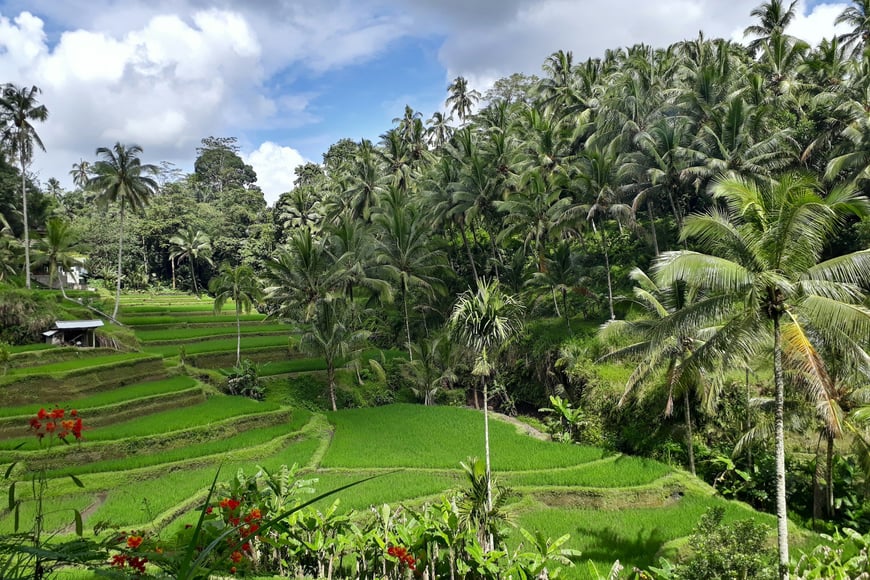
The cost of the dry-season default is crowds and prices. Hotels run 30-60% above wet-season rates. Restaurants in Seminyak and Canggu require dinner reservations. Uber pickup times stretch from 5 minutes to 25 minutes during the July-August peak. The popular Tegallalang rice terraces and the Tirta Empul water temple host queue lines that did not exist a decade ago. The longer view of these landscapes lives in our older Bali piece on Ubud as a different side of Bali, written before the post-pandemic tourism surge changed the daytime feel.
May and June: the calendar sweet spot
May and June are the highest-value months in the Bali calendar. The wet season has fully ended, the surf is consistent, the rice terraces are still green from the previous wet season, and the high-season crowds have not arrived. Hotel rates run 20-30% below July-August. Australian schools are still in term during most of May and June, removing the largest tourism inflow.
The exception inside this window: Australian Easter holiday week (mid-April to early May depending on the calendar year) drives a 1-2 week spike. The mid-June Australian semester break in some states (Queensland, Western Australia) can push rates upward for 7-10 days starting around June 22. Outside those specific windows, May 5-25 and June 1-20 are the two cleanest sweet-spot windows for travelers who want the dry-season weather without the crowds.
Trip-type fit: honeymooners, photographers, hikers, and anyone planning a yoga retreat in Ubud should target May or June over July-August. The same week pricing difference often funds a higher accommodation tier.
July and August: peak everything
July-August is the absolute peak of the Bali tourism year. Rainfall floors at 30-50mm per month. Temperatures sit at 27-29 degrees daily. The northern hemisphere summer holiday traffic combines with the Australian school winter break (late June through mid-July across all states), pushing accommodation rates 50-100% above March-April figures. Popular hotels in Canggu and Uluwatu sell out 4-6 months ahead. Restaurant reservations at La Brisa, La Favela, or Single Fin Beach Club require booking 2-3 weeks in advance.
What you get for the surcharge: the most reliable weather of the year, the largest expat-and-tourist social scene, the highest concentration of beach club energy, and visible Hindu cultural events including Galungan and Kuningan (10-day temple celebration cycles). Australians are also the most visible visitor group, which means more beach restaurant noise and more rental scooter chaos in Canggu.
Trip-type fit: only travelers who specifically want the lively beach-club scene, families with children locked into summer school holidays, or surfers chasing the largest west-coast swell should accept the July-August premium.
September: the second sweet spot
September is the underrated month in the Bali calendar. The dry season continues with rainfall still under 80mm and sunshine at 8-9 hours daily. The northern hemisphere school year resumes, removing 60-70% of the June-August crowd within the first 10 days of the month. Hotel rates drop 25-35% from August figures. Beaches breathe.
The end of September starts to introduce the first seasonal rain showers, usually short afternoon downpours rather than full-day rain. Rice terraces stay green. The surf at the west-coast breaks remains strong, often with cleaner conditions than the peak summer when crowds in the lineup matter. September 10-30 is the cleanest single window of the entire year for travelers who want dry weather, lower prices, and minimal crowds.
Wet season October to April: the green months
The wet season starts in earnest in mid-October and runs through April. Monthly rainfall climbs from 100mm in October to 300-400mm in January and February, then tapers back through March and April. Temperatures stay nearly identical to the dry season – the rain does not cool the island, it just adds humidity. Showers typically arrive in afternoon bursts of 30-90 minutes rather than full-day downpours, leaving most days with usable morning and evening windows.
The wet season trade-offs: fewer crowds, lower prices, and a visibly greener landscape. Ubud and the rice terraces look postcard-perfect through January. The downsides: humidity at 80-90%, occasional flooding in low-lying coastal stretches, and significantly reduced surf at the west-coast breaks (Uluwatu, Padang Padang). The east coast picks up the surf slack from November through March, with Nusa Dua and Keramas hosting consistent waves.
November and early December: the gentle wet
November and the first three weeks of December are the gentlest part of the wet season. Rainfall averages 150-200mm per month, mostly delivered in 1-2 hour afternoon downpours that leave evenings clear. Hotel rates run 30-40% below July-August. Crowds are minimal until December 18-20.
The Christmas-New Year window from December 20 through January 5 is a sharp exception. Australian summer holidays peak, US/UK families arrive, and accommodation rates spike by 60-100% across the entire island. Bali’s coastal restaurants charge “festive surcharge” rates of 15-25% above standard menus. Avoid this 2-3 week window unless you specifically want the New Year beach-party scene at Potato Head, Finns Beach Club, or Omnia Dayclub.
January and February: peak rain, lowest crowds
January and February are the heaviest rainfall months. Daily rain probability runs 70-80%, with monthly totals often exceeding 350-400mm. Some days deliver 6-8 hour storm cycles rather than the brief afternoon bursts of November. Beaches in Kuta and Seminyak occasionally flood. Roads in Ubud’s deeper valleys become temporarily impassable for scooters.
The trade-off is dramatic price reduction and complete crowd absence. Hotels run 50-65% below July-August. Yoga retreats in Ubud routinely fill last-minute at substantial discounts. Surfing on the east coast (Nusa Dua, Keramas, Sanur) is at its peak as the wet season pushes the swell window across to that side. Digital nomads working through the wet season often pick this window deliberately for the price.
Nyepi 2027: the day Bali stops
Nyepi, the Balinese Hindu New Year and Day of Silence, falls on March 8, 2027. The 24-hour observance runs from 6am that morning until 6am the following day. The entire island shuts down. Ngurah Rai International Airport (DPS) closes for the full 24 hours – no flights in or out. Beaches are closed to everyone including non-Hindus. Hotels lock the perimeter and confine guests to property grounds. Streetlights go dark. Wi-Fi networks across the island are scaled back. Even the use of fire is restricted in compliance with the fasting-and-meditation observance.
The eve of Nyepi (March 7, 2027) features the Ogoh-Ogoh parade, when villages across Bali parade through the streets giant papier-mâché demon figures that are then burned at midnight. This is one of the most photographed cultural events in Bali year-round and worth scheduling around if you happen to be on the island that week.
Practical impact for travelers: do not arrive March 7 or depart March 8-9. Hotels charge in full for the silent day even though you cannot leave the property. Pre-stock snacks and entertainment for a full day inside your room. Travelers booked into multi-night stays through the date often opt for the experience because the absolute silence and unobstructed star visibility on Nyepi night are unique. For travelers prioritizing other things, schedule around it. Similar cultural-shutdown traditions exist elsewhere in Southeast Asia; our piece on annual festivals in northern Thailand covers regional analogues.
Surf seasons: west coast May-October, east coast November-April
Bali’s geography splits the island into two opposite surf seasons. The trade-wind pattern that drives swell direction shifts twice a year, sending the same swell energy to opposite coasts in dry versus wet seasons.
The west coast holds the famous breaks: Uluwatu, Padang Padang, Bingin, Balangan, Dreamland. These work best from May through October, when the offshore winds blow east-to-west and the southwest swell hits cleanly. Conditions peak in July-August.
The east coast (Nusa Dua, Geger, Keramas, Sanur) reverses the pattern. November through April delivers consistent waves on this side, with Keramas hosting international surf competitions in February and March. Kandui and Hotel Nikko Bali also pick up wet-season swells.
What this means for surf travelers: Bali is a year-round surf destination if you pick the right coast. Top-3 best-time guides routinely recommend “May to October” universally and miss travelers who could get just-as-good waves on the east coast in January. Beach holidays elsewhere in Southeast Asia follow different patterns; our coverage of beaches on Koh Samui and beaches in Phuket Thailand notes the different monsoon-driven calendars in those regional alternatives.
Best month by trip type
The single best month depends on what you came for. Specific picks:
- Beach and relaxation: May, June, September. Dry, warm, less crowded.
- West-coast surfing (Uluwatu, Padang): June, July, August. Consistent swell.
- East-coast surfing (Keramas, Nusa Dua): January, February, March. Reverse-side swell window.
- Yoga retreat in Ubud: April, May, September, October. Mild weather, fewer crowds, retreat centers offer shoulder-season rates.
- Wedding or honeymoon: May, June, September. Best photography conditions, cleanest beach days.
- Digital nomad longer stay: January through March or October. Cheapest rates, easy desk-availability at coworking spaces, fewer Instagram-tourist distractions.
- Family with school-age kids: The Australian winter holiday window (late June to mid-July) overlaps the US summer holiday. Trade-off the price spike for the school calendar fit.
- Cultural traveler chasing Galungan or Kuningan ceremonies: These 10-day cycles run on the 210-day Pawukon calendar, falling roughly twice per year. Galungan 2027 dates April 14-25 and November 10-21. Plan the trip backward from the ceremony dates.
- Photography (rice terraces, sunset, temples): April or November. The transitional months deliver dramatic skies and the rice fields are in their most photogenic stages.
The where-to-stay choice follows the when-to-go choice. Our companion piece on where to stay in Bali matches each neighborhood (Ubud, Seminyak, Canggu, Uluwatu, Sanur, Nusa Dua) to traveler profile and trip type. Travelers building a wider Southeast Asia loop can also pair the Bali timing with neighboring countries; our pieces on Buddhist temples in Ayuthaya and Cambodian Buddhist temples map the regional cultural circuit.
Common questions
Can I swim in Bali during the wet season? Yes, with caveats. The east-coast beaches (Sanur, Nusa Dua, Geger) have calmer water year-round and stay swimmable through the wet season. The west-coast beaches (Kuta, Seminyak, Canggu) get larger waves and stronger currents from December through February.
What about the Mount Agung volcano? Mount Agung had a major eruption cycle in 2017-2018 and minor activity in 2019. Status changes through Indonesia’s volcano monitoring agency. Check current alerts before travel; in normal alert states, Bali airport operates without restriction.
How does the Australian school calendar affect Bali rates? Australia drives 30-40% of Bali tourism. Term breaks vary by state but generally run: late September through early October, mid-December through late January, mid-April Easter, and late June through mid-July. These windows produce 10-25% accommodation surcharges.
Is wet-season Bali pleasant for non-surfers? Yes. Showers usually arrive 2-5pm and clear by sunset. Mornings and late afternoons stay sunny most days. Ubud, the temples, and the volcano hikes are all accessible. Photography is often better thanks to dramatic cloud cover.
Should I avoid Bali entirely on Nyepi? Schedule around it (avoid March 7-9, 2027) unless you want the genuine cultural experience. Hotels remain open and charge full rates, but you cannot leave the property and the island goes completely silent.
What’s the best month for digital nomads? January through March or October. Lowest prices, fastest desk reservations at coworking spaces (Tropical Nomad, Outpost, Dojo), and the wet-season pace lets you actually work without distraction.
Sources
- Indonesia Travel (Ministry of Tourism) – official tourism portal covering Bali entry requirements, regional climate maps, and the calendar of major Hindu and national holidays referenced in the trip-type recommendations.
- BMKG – Indonesian Meteorological Agency – source for the official monthly rainfall and temperature data that underpin the dry/wet season month-by-month breakdown above.
- Ngurah Rai International Airport (Bali) – official airport authority covering the 24-hour Nyepi closure on March 8, 2027 and the airline operating schedule for adjacent dates.
- Climate of Bali (Wikipedia) – background on the trade-wind cycle that drives the surf-coast season split, plus the Pawukon calendar that schedules Galungan and Kuningan.
- Nyepi (Wikipedia) – cultural and operational context for the Day of Silence observance, including the Ogoh-Ogoh parade tradition on the eve.
- Love Bali (Bali Provincial Government) – official Bali tourism levy portal and current visitor regulations for international travelers.
- Surfline Indonesia – real-time and historical wave-and-wind data backing the west-coast versus east-coast surf-season split discussed above.