Costa Rica’s two coasts: how to pick one (or both)
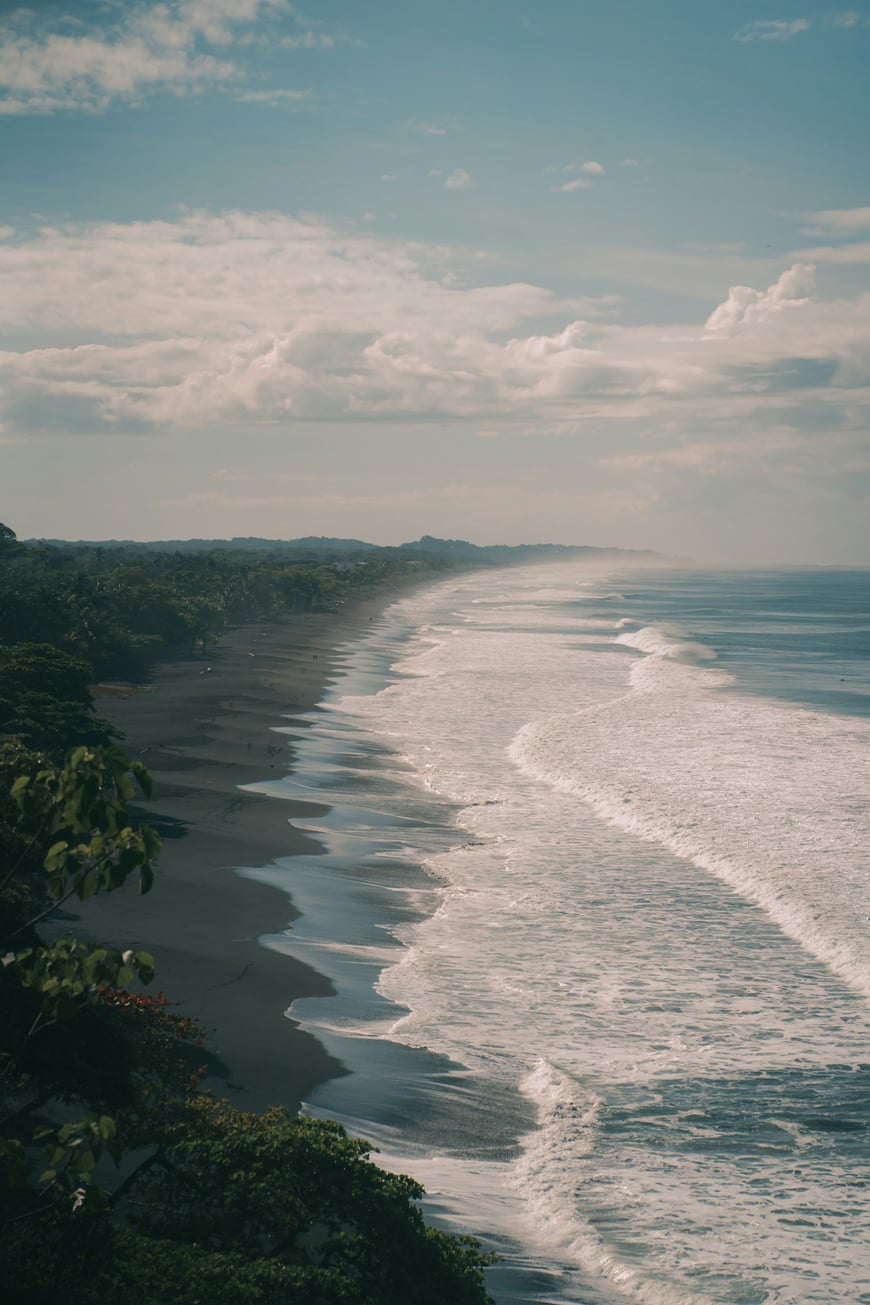
Costa Rica has two distinct coastlines that act like two different countries. The Pacific runs about 600 miles down the western edge of the country and carries 90% of the tourist development: surf towns, all-inclusive resorts, dry-season beach culture, and most of the famous national parks. The Caribbean is shorter (about 130 miles), wetter, less developed, and culturally distinct – the legacy of Afro-Caribbean and Bribri indigenous communities gives the food, music, and street life a register you do not find on the Pacific.
The simple decision rules: if your trip falls between December and April, the Pacific is the safer beach pick because it is the dry season there. If you are travelling in October (the rainiest Pacific month and the only month the Caribbean is reliably sunny), choose the Caribbean. If you have only 5 to 7 days, do not split coasts; the cross-country drive eats a full day each way. With 10+ days you can do both, but most travellers come for one and pick the other side as an extension on a return trip. For a wider Costa Rica orientation, see our Costa Rica best beaches overview.
Manuel Antonio (Pacific, family-friendly, accessible)
Manuel Antonio sits 3.5 hours south of San Jose by road or 30 minutes by domestic flight (SJO to Quepos, then 7 km onward). The town spreads along a ridge above two beaches with the small but dense Manuel Antonio National Park at the southern end. The park is the single most-visited in the country and the wildlife (sloths, capuchin monkeys, agoutis, scarlet macaws) is closer to the trail than anywhere else accessible by paved road.
2026 entry rules matter: tickets to Manuel Antonio National Park cost $18 USD adults and $5 children 2-12, and they are sold only through SINAC’s online portal at sinac.go.cr. Tickets are not for sale at the gate. Daily capacity is 2,000 to 2,500 visitors and Christmas, New Year, and Easter weeks fill 4 to 6 weeks in advance. The park opens 7 a.m. to 4 p.m., closed Tuesdays, with last entry at 2 p.m.
Pick Manuel Antonio if: this is your first Costa Rica trip, you want wildlife within a 10-minute walk of the hotel, or you have kids over 5 who can handle a 2-hour park trail. The town has the densest mid-luxe hotel cluster on the central Pacific coast.
Tamarindo and Guanacaste (Pacific north, surf, social)
Tamarindo sits in Guanacaste province on the north Pacific, an hour from Liberia airport (LIR). The town built itself on surf – Playa Tamarindo and Playa Grande just to the north have year-round waves with a long forgiving sandbar that suits beginners better than almost anywhere in the country. Nightlife is the strongest on this coast outside Jaco; restaurants stay busy past 11 p.m. in dry season.
What works: direct flights to Liberia from US east coast and Texas hubs cut a domestic transfer, beginner-to-intermediate surf at Tamarindo and Avellanas, and the cheapest 4WD rentals on the coast (the Liberia road network is mostly paved, so a regular SUV is enough). Nearby Playa Conchal offers a quieter alternative with the famous crushed-shell beach if Tamarindo’s bar strip is not your register.
What does not work: Tamarindo town has lost some character to expat development, peak-season Saturday traffic in the centre is real, and prices are 20-30% above Manuel Antonio. The wildlife within walking distance is thinner than on the central coast. Sport-fishing charters out of Tamarindo are first-class; see our deep sea fishing guide for season specifics.
Nosara and Santa Teresa (Pacific, yoga, wellness)
Nosara on the Nicoya Peninsula and Santa Teresa at the peninsula’s southern tip have become Costa Rica’s wellness coast. Both started as surf villages, both have kept their dirt roads through the centre on purpose, and both run an economy of yoga teachers, sound healers, raw-vegan restaurants, and rental villas with infinity pools.
What works: world-class beginner yoga and surf packages (Bodhi Tree in Nosara, Pranamar in Santa Teresa), authentic Nicoya Blue Zone life around Nosara village, and the strongest sunset culture in the country – both beaches face directly west into the open Pacific.
What does not work: the roads. Both Nosara and Santa Teresa sit at the end of unpaved roads that turn into rivers in the May-November rainy season. A 4WD is not optional; the 50 km from the Liberia airport or the Puntarenas ferry takes 2.5 to 4 hours depending on weather. Hotel prices in Santa Teresa run 30-50% above Tamarindo for similar quality; you pay for the dirt-road exclusivity.
Pick Nosara or Santa Teresa if: you came for yoga, surf retreats, or both; you are willing to drive a 4WD on rough roads; you value a quieter beach over walking-distance restaurants.
Dominical and Uvita (Pacific south, whales, waterfalls)
Dominical and Uvita run along the southern Pacific, an hour south of Manuel Antonio on a recently-improved coastal highway. The coast here is wilder, the development is lower, and the south-coast version of Pacific beach culture leans hippie-surf rather than mid-luxe-resort.
What works: the Marino Ballena National Park whale-watching window (mid-July to October for the southern humpback migration; mid-December to early April for the northern migration); the Nauyaca Waterfalls hike out of Dominical (entry $10, 4WD or guided ATV recommended); and quieter beaches that stay walkable even in peak season. Uvita itself is small enough to feel calm but big enough for proper restaurants and a Saturday farmers market. Canopy zip-line tours in the Dominical area are the most established on the coast.
Pick Dominical or Uvita if: whale-watching is on the list, you want a quieter Pacific base than Manuel Antonio, or you are continuing south to the Osa Peninsula for Corcovado.
Puerto Viejo de Talamanca (Caribbean, Afro-Caribbean culture)
Puerto Viejo sits 4.5 hours by road from San Jose on the southern Caribbean coast, 30 km north of the Panama border. The town carries the strongest Afro-Caribbean cultural register in Costa Rica – reggae and soca on the bars, calypso on Sunday, rondón (a coconut-milk seafood stew) on the menu, Bribri indigenous communities in the hills behind the coast. For wider context on traditional plates, see our Costa Rican cuisine guide.
What works: a 9 km coastal road from Puerto Viejo south to Manzanillo, with side beaches at Cocles, Chiquita, Punta Uva, and Manzanillo – each better than the last, all with reef-protected swimming. December through April is the dry-season peak; September and October are the local summer with the year’s best beach weather. Surf at Salsa Brava (one of the heaviest reef breaks in the country) is for advanced surfers only; Cocles handles intermediate.
What does not work: the road from San Jose runs through Limon and adds time most travellers underestimate (5+ hours including stops). Resort infrastructure is genuinely absent; the largest hotel on this coast has fewer rooms than a single Manuel Antonio condo block. International chains do not operate here. If you want a Marriott, this is not your coast.
Cahuita (Caribbean, national park, snorkel)
Cahuita sits 16 km north of Puerto Viejo and trades the night-life of Puerto Viejo for genuine quiet. The town is small, 90% village rather than tourist development, and the headline is Cahuita National Park – the only park in Costa Rica with a coral reef accessible by short snorkel from the beach. The park entrance has a “voluntary donation” model on the southern Kelly Creek side (no fixed fee, suggested $5) and a $5 fixed fee on the Puerto Vargas northern side.
What works: easy snorkel at the reef when seas are calm (best November through April), a flat 7 km coastal trail through the park with sloths and howler monkeys, and accommodation prices 25-35% below Puerto Viejo for similar quality.
What does not work: very limited dining beyond the village core, almost no nightlife, and rough seas in May to October that close most snorkel days.
Pick Cahuita if: you want the Caribbean culture without Puerto Viejo’s bar strip, you want reef snorkelling without a boat trip, or you are pairing it with Puerto Viejo across two zones.
Tortuguero (Caribbean north, sea turtles, river only)
Tortuguero is its own register. The village sits inside Tortuguero National Park on the northern Caribbean and has no road access. You arrive by boat from La Pavona (1 to 1.5 hours, about $8 per person, the route most lodge packages use) or by domestic flight from San Jose (25 minutes, around $110 one-way). Once you are in, the only transport inside the park is by boat through the canal network.
The reason to come is sea turtles. Green turtles nest on the beach from July 1 through October 15 with peak activity in August and September; leatherbacks nest March through May. Guided night turtle tours run between 7 p.m. and 10 p.m., capped at 15 visitors per group, and must be booked 1 to 2 weeks ahead in peak weeks. Park entry is $17 USD, paid online via SINAC before arrival; tickets are not sold at the dock. For ethical context on the conservation work that made this possible, see our conservation volunteering piece. Daytime canal trips on the Tortuguero canals are the wider attraction; the wildlife (caimans, river otters, three-toed sloths, more than 300 bird species) is denser than anywhere comparable. Nature-led day trips work well; see our Costa Rica eco-tours guide for context.
Pick Tortuguero if: turtle nesting is on the list, you want river-and-canal wildlife at scale, or you have 2 to 3 days to spend on a single immersive node rather than splitting between coast towns.
Hotel tiers and what each price band buys
Approximate per-night rates in 2026 dry-season high (December to April), two adults, breakfast where standard:
- Hostel and budget (USD 18 to 50): dorms or basic privates in Tamarindo, Puerto Viejo, Santa Teresa; shared kitchen; family-run cabinas in Cahuita and Dominical.
- Mid (USD 80 to 160): three-star jungle lodges or beachside hotels in Manuel Antonio, Uvita, Puerto Viejo; pool, breakfast, walkable to town.
- Mid-luxe (USD 180 to 380): boutique villas in Nosara and Santa Teresa, jungle lodges with private terraces in Manuel Antonio (Si Como No, Arenas del Mar), Caribbean boutique (Le Cameleon, Banana Azul).
- Luxury (USD 450 to 1,200+): Andaz Papagayo, Four Seasons Papagayo, Nayara Tented Camp (Arenal), Lapa Rios (Osa), Pacuare Lodge (Caribbean inland river).
For self-catering villas, see Costa Rica villa rentals. Off-season (May-November except holidays) rates drop 25-40% across all tiers; book 2 to 3 months ahead for high-season; 6+ months for the luxury tier in Christmas and Easter weeks.
Getting around: rental car, Interbus, or domestic flights
Three modes, each with a clear use case.
Rental car (4WD when needed) runs USD 50 to 100 per day all-in including mandatory CDW insurance ($18 per day) on the SUV class. The base-rate trick from third-party sites is real: a $1-per-day base price hides $25 of mandatory insurance you cannot waive, which means total cost lands around $50 minimum even with a discount booking. 4WD is required for Monteverde, Santa Teresa, Nosara, Drake Bay, and any side road in rainy season (May to November). 4WD is not required for Liberia to Tamarindo, San Jose to Manuel Antonio, or San Jose to Arenal on the paved highway. Off-road excursions invalidate insurance instantly; rental fine print is strict on this.
Interbus and similar shared shuttles serve every major coast town from San Jose. Shared seats run $60 (San Jose to Manuel Antonio) to $65 (San Jose to Tamarindo). Private minivan transfers cost $180 to $300 depending on route. Shuttles run a fixed daily schedule and pick up at hotel doors; the math beats a rental car if you visit 1 to 2 destinations and do not need a car at the destination. Interbus and Tropical Tours are the established operators.
Domestic flights on Sansa Airlines link San Jose (SJO) to Quepos (XQP, for Manuel Antonio), Tamarindo (TNO), Tortuguero (TTQ), and Drake Bay (DRK) in 25 to 45 minutes. Fares run $90 to $160 one-way booked 4 to 8 weeks ahead. Flights make sense for Tortuguero (the alternative is 5+ hours of road plus boat) and for travellers who only have one week. The luggage limit is 14 kg checked plus 5 kg carry-on; surfboards, golf clubs, and large suitcases face surcharges or denial.
Tourist tax note: there is no Bali-style entry levy in Costa Rica, but there is a $29 USD departure tax embedded in most international airline tickets (check your fare) and a 13% IVA (sales tax) on most hotel rooms and tours. Quoted hotel rates often exclude IVA; confirm before you book.
Common questions
Pacific or Caribbean for a first visit?
Pacific. The infrastructure is denser, the dry season runs longer (December to April), and the wildlife in Manuel Antonio and the Osa Peninsula is the easiest in the country to see. Add the Caribbean on a second trip or as an October-only side leg.
Do I need a 4WD rental car?
Only for Monteverde, Santa Teresa, Nosara, Drake Bay, or any rainy-season side road. Liberia to Tamarindo, San Jose to Manuel Antonio, and the central highway network are paved and a regular SUV is enough.
How do I get tickets to Manuel Antonio National Park?
Online only via sinac.go.cr. Tickets are not sold at the gate. Adult entry is $18 USD; book 4 to 6 weeks ahead for Christmas, New Year, and Easter weeks because the daily 2,000 to 2,500 cap fills.
When can I see turtles in Tortuguero?
Green turtles nest July 1 to October 15 with peak activity in August and September. Leatherbacks nest March through May. Guided night tours run 7 p.m. to 10 p.m. with a 15-person group cap; book a week or two ahead in peak months.
How do I reach Tortuguero?
By boat from La Pavona (1 to 1.5 hours, about $8 per person) or by 25-minute domestic flight from San Jose for around $110 one-way. There are no roads into the village.
Should I rent a car or use shuttles?
Shuttles win if you visit 1 to 2 destinations and stay put. A rental car wins if you plan 3+ moves or want to explore side roads on the Nicoya peninsula. The crossover point is around 7 days of trip length.
Sources
Operational facts cross-checked against the agencies and operators below. Park fees, ticket policies, and capacity rules change; the live links carry the current numbers.
- SINAC (National System of Conservation Areas) – the only official portal for Manuel Antonio and Tortuguero National Park tickets, daily capacity rules, and 2026 fee schedule.
- Visit Costa Rica (ICT – Costa Rican Tourism Institute) – official destination authority, regional travel notes, weather and season guidance.
- Instituto Costarricense de Turismo (ICT) – statutory tourism body, hotel classification rules, IVA tax framework on accommodation.
- Sansa Airlines – domestic flight schedules, baggage rules, and route map for SJO to Quepos, Tamarindo, Tortuguero, and Drake Bay.
- Interbus – shared and private shuttle schedules and 2026 pricing for the coastal corridor.
- Costa Rica (Wikipedia) – geographic and demographic overview, region boundaries, Nicoya Blue Zone background.
- Juan Santamaria International Airport (SJO) – airport transfer logistics, departure tax, and arrivals flow guidance.