Why Vietnam still wins on cost (and where the real spending happens)
Vietnam runs about a third the daily cost of Western Europe and roughly two-thirds the cost of Bali for similar trip quality. The gap is not an illusion: street pho costs $1.50, a hostel dorm bed runs $6 to $9 in 2026, and a 600 km sleeper bus from Hanoi to Hue is under $20. The catch is that two line items can blow up a careful budget without warning – the Halong Bay cruise (which reasonably ranges from $75 to $400 per person for the same two-day window) and domestic flights when you book late.
This guide assumes a first-time visit, two travellers sharing where it makes sense, and a typical north-to-south route (Hanoi – Halong – Hue or Hoi An – HCMC). Climate matters for cost too: see our weather in Vietnam guide for region-specific rainy seasons that move hotel prices 25 to 40% in shoulder months.
Accommodation: hostel to luxury daily ranges
Approximate per-night rates in 2026 high season (October to April for the south, December to March for the north), two adults, breakfast where standard:
- Hostel dorm (USD 5-10): 6-8-bed dorms in Hanoi Old Quarter, HCMC District 1, Hoi An, and Da Nang. Most include WiFi and a basic breakfast.
- Private hostel room or guesthouse (USD 12-22): small ensuites with breakfast in Hanoi, HCMC, Hoi An. Family-run; cash usually preferred.
- 3-star hotel (USD 28-55): central locations in any city, pool, breakfast buffet, English-speaking front desk.
- 4-star and boutique (USD 70-140): Old Quarter boutiques in Hanoi, riverside hotels in Hoi An, Saigon mid-luxe in HCMC District 1.
- 5-star and luxury (USD 180-450+): Sofitel Legend Metropole Hanoi, Park Hyatt Saigon, Anantara Hoi An, Six Senses Ninh Van Bay.
Hanoi runs about 10-15% cheaper than HCMC at every tier; Hoi An adds a 15-25% premium at the boutique level for canal-side properties. For self-catering villas in beach towns like Da Nang or Phu Quoc, Airbnb stock is dense and 30-40% cheaper than equivalent hotel rooms.
Food: pho, banh mi, and where the daily total lands
Vietnamese food is a major reason the daily budget stays low. Three honest tiers:
- Street and market (USD 1.50-3.50 per meal): a bowl of pho at a sidewalk stall, banh mi from a cart, com tam (broken rice) or bun cha at lunch hour. Eight to twelve dollars covers all three meals.
- Local sit-down restaurant (USD 4-8 per meal): menu in Vietnamese and English, family-run, beer and rice plate dinners. Twelve to twenty dollars per person per day.
- Tourist-tier restaurant (USD 10-20 per meal): fusion places, riverside in Hoi An, rooftop in HCMC. Adds a service charge and a 10% VAT.
- High-end and resort dining (USD 35-90 per meal): French restaurants in Hanoi (La Verticale, Madame Hien), tasting menus at Anan Saigon.
Vietnamese coffee culture is a cost-saver: a glass of ca phe sua da (iced milk coffee) at a street cafe runs 25,000 to 40,000 VND ($1.10-1.70). A bia hoi (fresh draught beer) at a curbside corner in Hanoi is the cheapest bar drink in Asia at 10,000-15,000 VND ($0.40-0.60). Bottled water is unavoidable; allow $1-2 per day. Vietnamese street-stall hygiene is generally good in tourist areas, but choose stalls with high turnover and avoid pre-cut fruit displayed on ice. For wider regional cost context, the why Phuket is so expensive piece shows how a similar latitude can run very differently, and the festivals in Thailand guide is useful if your trip dates collide with regional public holidays that affect prices.
Transport: sleeper bus, train, or flight (named 2026 prices)
Vietnam is long. The Hanoi to HCMC distance is 1,700 km, which is more than London to Athens. Three modes for long-haul, each with a use case.
Sleeper bus is the cheapest. Reclining-seat or VIP-cabin buses run overnight on the main north-south corridor and save a hotel night.
- Hanoi to Hue: 12-14 hours, $15-22 standard, up to $35 for cabin-style VIP.
- HCMC to Hoi An (via Da Nang): 20-24 hours, $15-22.
- HCMC to Hanoi: 36+ hours non-stop, $40+. Most travellers split this leg rather than ride straight.
Reunification Express train runs the same corridor with sleeper cabins. Hanoi to Hue is 12-14 hours, $20-35 for a soft seat, $40-83 for a soft sleeper berth or 4-bunk cabin. The view through Lang Co bay between Hue and Da Nang is the most photographed train window in South-East Asia. Train wins over bus when you want to sleep flat in a private cabin (4-berth soft sleeper) and you do not mind paying double.
Domestic flights on Vietnam Airlines, Vietjet, and Bamboo Airways link the main hubs in 1 to 2 hours.
- Hanoi to HCMC: 2 hours, $35-90 booked 4 weeks ahead, $120-180 same week.
- HCMC to Da Nang (for Hoi An): 1.5 hours, $40-110.
- Hanoi to Da Nang: 1.5 hours, $35-90.
The break-even rule: take the train or sleeper bus on routes under 14 hours; fly the Hanoi-HCMC end-to-end leg unless the train cabin is part of the experience. Vietjet runs the cheapest fares but charges for everything beyond a 7 kg carry-on. Within cities, Grab cars rarely top $3-5 for cross-town rides; Grab Bike (motorbike taxi) cuts that in half.
City vs rural: where each dollar goes furthest
Hanoi is the cheapest major-city base. Old Quarter hostels run $6-9, street food is the densest, and the Old Quarter walking economy reduces transport spend. Use Hanoi as the launch point for Halong Bay and Sapa.
HCMC (Saigon) runs about 10-15% pricier than Hanoi for accommodation but slightly cheaper for upscale food. District 1 is the central tourist base; Districts 3 and 4 give you 20-30% off room rates with a 10-minute Grab to the centre. The Mekong Delta day trip ($25-50) and Cu Chi tunnels ($15-25) are the two big paid attractions. Travellers extending across the border can compare prices in our things to do in Bangkok guide; Bangkok runs roughly 30% pricier than HCMC for similar mid-range hotels.
Hoi An charges a charm premium. The riverside lantern district is the visual draw, and accommodation runs 20-30% above Hanoi at every tier. The Old Town entry ticket is 120,000 VND ($5) and covers 5 of 22 historic sites. Tailoring a custom suit (a Hoi An tradition) runs $80-200 for two-fitting jobs.
Sapa in the north-west adds a tour-package premium. Trekking with home-stay packages run $50-120 for two days; independent travel saves around 30% but loses the village access. The night train Hanoi to Lao Cai is $25-55 each way; bus is $15-22. Jungle trekking in northern Thailand follows a similar tier model for comparison.
Halong Bay, Mekong Delta, Cu Chi: where the budget really moves
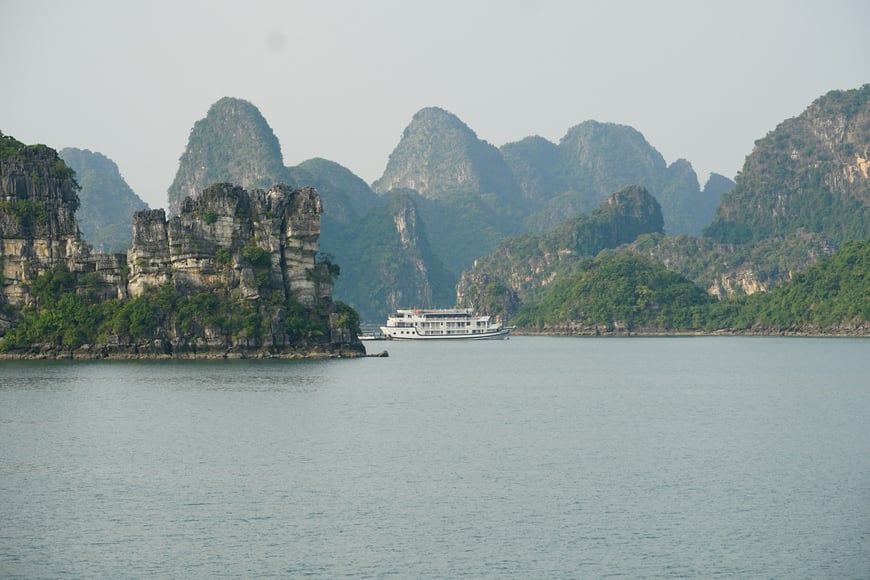
Halong Bay 2-day-1-night cruise is the largest discretionary line item on most Vietnam trips. Four tiers in 2026:
- 3-star cruise ($75-150 per person): small cabin with shared deck, basic kayak session, set lunch and dinner, mixed-language tour groups. Older boats, smaller windows.
- 4-star deluxe ($190-250): private balcony cabin, English-only tour guide, cooking class or kayak choice, better food. The mid-tier most first-timers should pick.
- 5-star luxury ($250-400+): larger cabin, sun deck pool, full-service spa, premium itinerary often into Lan Ha Bay (less crowded).
- Day cruise ($30-65): 6-hour boat trip out and back, no overnight. Real value if Halong Bay is one stop on a tight itinerary.
Booking 30 to 60 days ahead during March-May or September-November typically gets the best price. May to September is low season with lighter crowds but higher rain risk.
Mekong Delta day trip from HCMC runs $25-50 (group of 25-40), $80-150 for small-group with English-only guide, or $200-300 for an overnight homestay version. Cu Chi tunnels half-day from HCMC is $15-25 for groups, $35-55 small-group. The two often pair into a full day for $45-65 combined. Buddhist temple visits in Thailand follow a similar pricing register if you are travelling the wider region.
eVisa and visa fees: 2026 rules
Since August 2023 the Vietnam eVisa policy applies to nationals of all countries and territories. The 2026 fee structure is simple and online only.
- Single-entry eVisa, up to 90 days: $25 USD. Apply at evisa.gov.vn (the official portal; thithucdientu.gov.vn is the same system on a parallel domain). Processing 3 to 5 working days.
- Multiple-entry eVisa, up to 90 days: $50 USD. Same portal, same processing time.
The decision rule: pick single-entry if you fly in and out of Vietnam without crossing borders. Pick multiple-entry if you plan a side trip to Cambodia or Laos and return overland; the $25 saved on a re-entry is gone the moment you have to pay a second visa fee at the border. The fee is paid online by card; refunds are not granted if the application is refused, so name and passport number entries must match the passport exactly.
Travellers should apply only at evisa.gov.vn or thithucdientu.gov.vn. Third-party intermediaries charge $50 to $130 for the same service with no operational advantage.
Daily budget by traveller type (2026)
Approximate per-person daily totals, two travellers sharing accommodation, before international flights and the eVisa fee:
- Backpacker tier (USD 25-40 per day): hostel dorms, street food only, sleeper bus for long-haul, public-transport day trips, one Halong day cruise instead of overnight.
- Mid tier (USD 55-95 per day): 3-star hotel rooms in central neighbourhoods, mix of street food and sit-down meals, soft-sleeper trains, one 4-star Halong cruise (split over two days).
- Comfort tier (USD 130-200 per day): 4-star boutique hotels, daily restaurants, domestic flights for long-haul legs, 4-star cruise, private guides for Mekong and Cu Chi.
- Luxury tier (USD 280-500+ per day): 5-star hotels, fine-dining, private transfers, 5-star Halong cruise, internal flights in business class where available.
Single travellers add roughly 30% to the mid-tier total because hotel rates rarely halve for solo occupancy.
7-day, 14-day, and 21-day totals
Per-person ground-cost estimates, two travellers sharing, before flights and visa fees:
- 7 days (north only or south only): $175-280 backpacker, $385-665 mid, $910-1,400 comfort.
- 14 days (full north-to-south, 1 Halong cruise, 1 Mekong day trip): $400-600 backpacker, $850-1,400 mid, $2,000-3,000 comfort.
- 21 days (full circuit plus Sapa and Phu Quoc): $650-900 backpacker, $1,300-2,200 mid, $3,200-4,500 comfort.
For sibling cost-breakdown reads, see our how much does a trip to Iceland cost piece (very different price register, same methodology) and the where to stay in Bali guide for South-East Asia comparison.
Money-saving strategies that actually work
- Book sleeper buses or trains the day before, not weeks ahead. Domestic transport rarely sells out off-peak; agency bookings 4 weeks ahead are 20-30% above bus-station counter prices.
- Eat where the locals eat. A pho place packed with Vietnamese diners at 7 a.m. is the right answer; the empty restaurant on the tourist street with a glossy menu is twice the price for worse food.
- Use Grab or Be ride-hailing apps in cities. Set fares before you ride; tourist taxi meters routinely run double the Grab estimate on the same route. Grab Bike for solo riders cuts the Grab Car cost in half.
- Skip the Halong Bay overnight and take a day cruise. If Halong is one stop in a tight itinerary, $30-65 for a day boat captures 80% of the photo material at 25% of the cost.
- Shop in Hoi An, not Saigon. Tailoring and souvenir prices in Hoi An’s Old Town are fixed within a 10-15% range; Bangkok-style bargaining culture barely applies here. Saigon’s Ben Thanh Market is the exception with serious haggling.
- Pay in dong (VND) cash where possible. Card surcharges run 2-3%; many family-run guesthouses and street food stalls are cash only. Use ATMs at Vietcombank, BIDV, or Techcombank for the lowest withdrawal fees ($1.50-2 per pull plus your home bank charge).
Common questions
How much money do I need per day in Vietnam?
Backpackers spend $25-40 per day, mid-range travellers $55-95, comfort-tier $130-200, luxury $280+. The biggest variable is whether you book a 4-star Halong Bay overnight cruise during your trip.
Is the eVisa really the best option?
Yes. Single-entry $25, multiple-entry $50, up to 90 days, 100% online at evisa.gov.vn or thithucdientu.gov.vn, processing 3-5 working days. Visa-on-arrival exists but requires a pre-approval letter and is not cheaper.
Sleeper bus or train for long-haul?
Train if you want a private 4-berth cabin and don’t mind paying double; sleeper bus if cost is the priority and a reclining seat is enough sleep. Fly Hanoi to HCMC if you have only 7 days.
Is the Halong Bay overnight cruise worth it?
A 4-star ($190-250 per person) is the right tier for first-timers. Skip the 3-star tier; the cabins are cramped and English-language tour quality is mixed. Take the day cruise ($30-65) if Halong is one stop on a tight itinerary.
What’s the cheapest city to base in?
Hanoi. About 10-15% cheaper than HCMC at every accommodation tier, the densest street-food economy, and the best launch point for Halong Bay and Sapa.
Can I pay by card everywhere?
No. Hotels and tourist restaurants accept cards. Street food, family guesthouses, sleeper buses, train stations, and most local businesses are cash only. Carry small VND notes.
Sources
Operational facts cross-checked against the agencies and operators below. Visa fees, train fares, and cruise pricing move; the live links carry the current numbers.
- Vietnam National Electronic Visa Portal – the only official portal for the 2026 eVisa application, fee structure ($25 single, $50 multiple), and 90-day rules.
- Vietnam National Tourism (Vietnam.travel) – official destination authority, regional travel notes, and current Halong Bay access updates.
- Vietnam Airlines – domestic flight schedules, baggage rules, and the cabin-class pricing reference for the Hanoi-HCMC corridor.
- Vietjet Air – low-cost domestic schedules and ancillary-fee structure (the carrier that sets the floor on internal fares).
- Vietnam Railways (Duong Sat Viet Nam) – the Reunification Express timetable, soft sleeper classes, and 2026 fare ladder.
- Vietnam (Wikipedia) – geographic and demographic overview, regional climate boundaries, and currency reference.
- XE Currency (USD to VND) – live VND exchange rate for cross-checking the dong values quoted in this guide against current US dollar pricing.