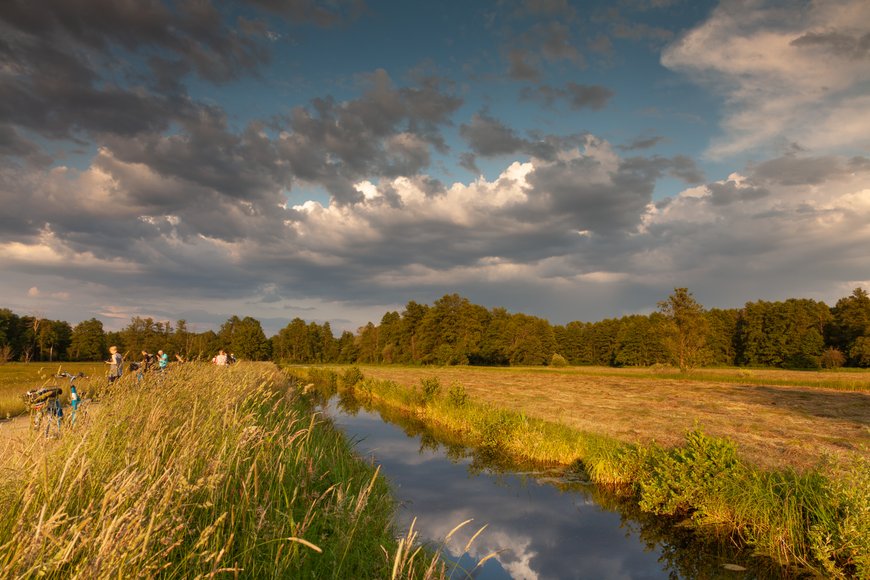
The Spreewald covers 475 square kilometres of river delta in Brandenburg, 90 minutes southeast of Berlin, where the Spree River splits into 276 kilometres of navigable canals and streams before reforming on its way north. The UNESCO Biosphere Reserve designated in 1991 protects the Sorbian cultural landscape alongside the wetlands, since the Slavic Sorbian minority has worked this waterway country for over 1,400 years and still speaks its own language in villages like Lubbenau and Burg. Punted flat-bottomed boats (Spreewaldkahn) remain the main way to move between hamlets that roads never reached. This guide covers the biosphere reserve, Sorbian culture and language, the Spreewaldkahn tradition, canal cruising from the two main base villages, food traditions including the protected Spreewald gherkin, and the train logistics for a day trip from Berlin.
What the Spreewald Is
The Spreewald (Sorbian: Blota) is a vast inland river delta unlike anything else in Germany. The Spree River, flowing north from the Lusatian Mountains toward Berlin, encounters a flat alluvial plain here and breaks into countless distributary channels before slowly recombining. The result is a maze of waterways running through mixed floodplain forest, meadow, and small farming settlements accessible mainly by boat.
The delta formed during the post-glacial period as meltwater and the Spree deposited sediment across a shallow basin. Human settlement dates to the 6th century when Slavic tribes, ancestors of today’s Sorbs, moved into the area and established a culture adapted to the wetland environment. The waterways have been used continuously since then for transport, fishing, and agriculture.
UNESCO designated the region as a Biosphere Reserve in 1991 under the Man and Biosphere Programme. The designation protects both the natural ecosystem (otter, beaver, white stork, black stork, sea eagle, and rare wetland plants) and the traditional Sorbian cultural landscape as a living heritage rather than a frozen museum.
The Sorbian People and Their Language
The Sorbs (Serbja in their own language, Wends in historical English) are a West Slavic people who have inhabited the Lausitz region of Saxony and Brandenburg since the 6th century migration period. Roughly 60,000 people identify as Sorbian today, with about 20,000 native speakers of Lower Sorbian (spoken in Brandenburg including the Spreewald) and about 40,000 speakers of Upper Sorbian (spoken further south in Saxony).
Lower Sorbian is the more endangered of the two languages, classified as seriously endangered by UNESCO. Native speaker numbers have declined across the 20th century due to assimilation pressure during the Nazi period, industrial relocation during the GDR era, and ordinary generational language shift. Revitalisation programmes through the Domowina (the Sorbian umbrella organisation) and bilingual schools in Cottbus and several Spreewald villages aim to reverse the decline.
Road signs in the Spreewald appear in both German and Lower Sorbian, a visible marker of the bilingual status. Village names often have two forms: Lubbenau is Lubnjow in Sorbian, Burg is Borkowy, Lehde is Ledy. The dual naming reflects legal bilingual status in several Brandenburg administrative districts.
Sorbian Festival Traditions
Several distinctive Sorbian festivals still run in the Spreewald annually, drawing Sorbs from across the Lausitz and visitors who want to see the traditions live rather than in a museum.
- Zapust: a pre-Lent carnival running late February through early March, with costumed processions through the villages and formal dances
- Easter egg decoration (Ostereierverzierung): elaborate wax-resist and etching techniques, demonstrated publicly at markets and workshops through Holy Week
- Maibaum raising: 1 May maypole ceremonies in village centres
- Ptaci kwas (Bird’s Wedding): 25 January children’s festival with decorated treats representing bird nests and weddings
- Stollenmarkt: pre-Christmas markets with Sorbian baked goods and handicrafts
Traditional Sorbian dress (Narodna nosnja) appears at major festivals and weddings. The female costume is visually striking with a large starched lace headdress, colourful embroidered bodice, and multiple pleated skirts. Men’s traditional dress is plainer, usually dark wool with embroidered details.
The Spreewaldkahn Punting Tradition
The Spreewaldkahn is a flat-bottomed wooden boat 8 to 10 metres long, steered by a standing punter using a long wooden pole against the shallow canal bottom. The design developed for the specific conditions of the Spreewald: stable in narrow channels, shallow enough to pass under low bridges, and capable of carrying 12 to 20 passengers plus luggage or farm cargo.
Historic use was entirely practical. Families moved between farmstead and field by boat during wet seasons. Schoolchildren rowed to school in villages connected only by water. Post and freight arrived by boat before the post office switched to road delivery in the mid-20th century. Some outlying hamlets, such as parts of Lehde, still have their post delivered by boat today.
Tourism-oriented Kahn trips began after 1900 but expanded significantly in the 1990s post-reunification. Current operators include dozens of registered punters (Kahnfahrer) based in Lubbenau, Burg, and smaller villages, offering 2-hour, 4-hour, and full-day trips. Prices range from 12 to 25 euros per adult for standard routes, with children at reduced rates.
The punter narrates the trip in German (or sometimes English by arrangement), covering the natural history, village architecture, Sorbian traditions, and sometimes Spreewald folk legends. Most trips include at least one village stop with a chance to walk around Lehde or to visit a traditional farmstead museum.
Lubbenau and Burg: The Two Main Bases
Lubbenau in the Unterspreewald (Lower Spreewald) serves as the busiest tourist base. The small town has direct regional train service from Berlin (RE2 line, about 90 minutes from Berlin Hauptbahnhof) and a large Kahnhafen (punt harbour) on the edge of the old town where most boat tours originate. The town centre preserves a Baroque Schloss with a landscaped park, plus several traditional Sorbian guesthouses and restaurants.
Burg (Spreewald) in the Oberspreewald (Upper Spreewald) offers a quieter alternative. The village spreads across 15 kilometres of waterway with scattered hamlets accessible only by boat or on foot. Burg is less commercial than Lubbenau and appeals to visitors who want a slower pace and overnight stays rather than day-trip tourism. Train access requires a change at Cottbus.
Lehde, a small village reached by a 30-minute punt from Lubbenau or a flat cycling path, houses the Freilandmuseum Lehde (Open-Air Museum). The museum preserves traditional Sorbian farmhouses, kitchens, animal pens, and working tools, with interpreters in Sorbian-style dress explaining the daily life of 19th and early 20th-century rural residents.
The Spreewald Gherkin
Spreewaldgurken are small pickled cucumbers produced in the region and protected under the European Union Protected Geographical Indication scheme since 1999. The protected status means that cucumbers labelled Spreewaldgurken must be grown and processed within the designated area using traditional recipes.
The pickling tradition developed in the 19th century when Sorbian farmers supplied Berlin markets with preserved vegetables. Regional specialisation grew when rail connections shortened the transport time to urban markets in the 1870s. By 1900 the Spreewald produced significant quantities annually, and the preserved cucumber became a recognisable regional product.
Modern production runs through several local cooperatives and family businesses. Visitors can tour processing facilities such as Spreewaldhof Golssen or visit the annual Gurkentag festival in Golssen (July). Gherkins appear in nearly every Spreewald restaurant as a side dish, salad ingredient, or savoury bar snack.
Food traditions beyond the gherkin include carp dishes (the region still has active freshwater fishery), horseradish (Meerrettich) from local farms, and traditional Sorbian baked goods such as Pampuschen (yeast pastries) and Zemiki (potato pancakes).
Cycling and Kayaking Alternatives
Cyclists can follow marked trails that run along many of the wider canals and through the mixed forest between villages. The Gurken-Radweg (Gherkin Trail) covers 260 kilometres in a loop through the Oberspreewald and Unterspreewald, passing through all the main villages and most of the smaller hamlets. Bike rental is available in Lubbenau, Burg, and several smaller points.
Kayakers and canoeists can rent boats from operators in Lubbenau, Burg, and Luebben. Self-guided routes follow marked channels with detailed maps available from the tourist offices. The narrow side canals (Fliesse) offer more intimate exploration than the wider tour routes but require careful attention to navigation signs and passing etiquette with punted Kahn boats.
The biosphere reserve restricts access in some zones during the bird breeding season (roughly mid-March to late June). Marked closed channels exist primarily in the Innerer Unterspreewald and certain nature-protection zones. Navigational maps mark these clearly, and respecting the closures protects nesting storks, herons, and other water birds.
Day Trip From Berlin: Practical Logistics
The Spreewald ranks among the most practical day-trip destinations from Berlin. The Regionalbahn RE2 departs from Berlin Hauptbahnhof, Berlin Ostbahnhof, or Berlin Sudkreuz and runs direct to Lubbenau in about 90 minutes. Trains run roughly hourly during daylight hours, with frequency increases on summer weekends.
A practical day-trip itinerary:
- 09:00: Depart Berlin Hauptbahnhof on RE2
- 10:30: Arrive Lubbenau station, walk 10 minutes to Kahnhafen
- 11:00: Join 2-hour punt tour to Lehde village
- 13:00: Lunch in Lehde (traditional Sorbian food)
- 14:00: Visit Freilandmuseum Lehde
- 16:00: Walk or cycle back to Lubbenau along canal path
- 17:30: Return train to Berlin
Overnight stays work well in Burg for visitors wanting a slower pace. Traditional guesthouses (Pension) and small hotels operate across the region, with rates from 60 to 140 euros per night depending on season. Booking ahead for summer weekends is advised given the popularity among Berlin residents.
Best Season
May through September offers the longest daylight and warmest weather for punt trips and cycling. June and July show the Spreewald at its greenest, with mature summer foliage along the canals and active bird life. The water temperature allows swimming from June through early September in designated bathing areas.
Spring (April and early May) brings leaf emergence and spring bird migration but cooler water temperatures. Autumn (October) brings beech and oak colour in the floodplain forests and good photography conditions. Winter punt tours operate in limited numbers from December through February, using covered Kahn with small coal stoves, appealing to a specific winter-atmosphere market.
The Zapust carnival period in February draws Sorbian festival interest but requires cold-weather gear and limits boat-tour options. Easter weekend is a peak time for egg-decoration workshops and smaller family-focused festivities.
Frequently Asked Questions
Is the Spreewald touristy?
Lubbenau in peak summer weekends is busy with punt tourism. Burg and the smaller outlying villages stay quieter even in peak season. Mid-week visits and off-season dates offer substantially lower crowds across all villages.
Can I speak English with the Kahn punters?
Some punters offer English tours by advance booking through the main Kahnhafen offices in Lubbenau. Most tours run in German with occasional English summaries. Phrasebook-level German helps with restaurant and shop interactions in the smaller villages.
What about mosquitoes?
Wetland environment means mosquitoes in June through August, particularly in still air after rain. Bring repellent and long sleeves for evening walks. Punt tours during midday rarely encounter serious mosquito problems thanks to movement over water.
Are the Sorbs separate from Serbs in the Balkans?
Yes. The Sorbs (Serbja) are a West Slavic people historically settled in Lausitz. The Serbs (Srbi) are a South Slavic people in the Balkans. The name similarity reflects shared Slavic heritage but the two groups are distinct, with different languages and separate historical paths.
Is the Spreewald suitable for families?
Yes. Punt tours accommodate children from infancy, the Freilandmuseum Lehde has interactive exhibits for school-age children, and the cycling paths suit families with older children. Summer festivals include child-focused programmes.
What if I only have half a day?
A half-day visit from Berlin works with a shorter punt tour (75 or 90 minutes instead of 2 hours) plus lunch in Lubbenau before returning. The experience is compressed but still conveys the canal landscape and culture. For deeper engagement, budget a full day.
If the Spreewald fits a broader north German itinerary, see our Wadden Sea mudflat walking guide for a very different wetland landscape. For themed German drives, our Fairy Tale Road guide covers the 600-kilometre Brothers Grimm route further west.
Sources and Further Reading
- UNESCO Man and the Biosphere Programme, Spreewald Biosphere Reserve documentation
- Domowina, umbrella organisation of Sorbs, cultural publications
- Freilandmuseum Lehde, permanent collection catalogue
- European Commission, Protected Geographical Indication register (Spreewaldgurken)
- Ludwig Ela, Sorbian Language and Culture, academic monograph series
- Hero photograph: Im Spreewald 02 by Peter Becker, Wikimedia Commons, CC BY-SA 4.0