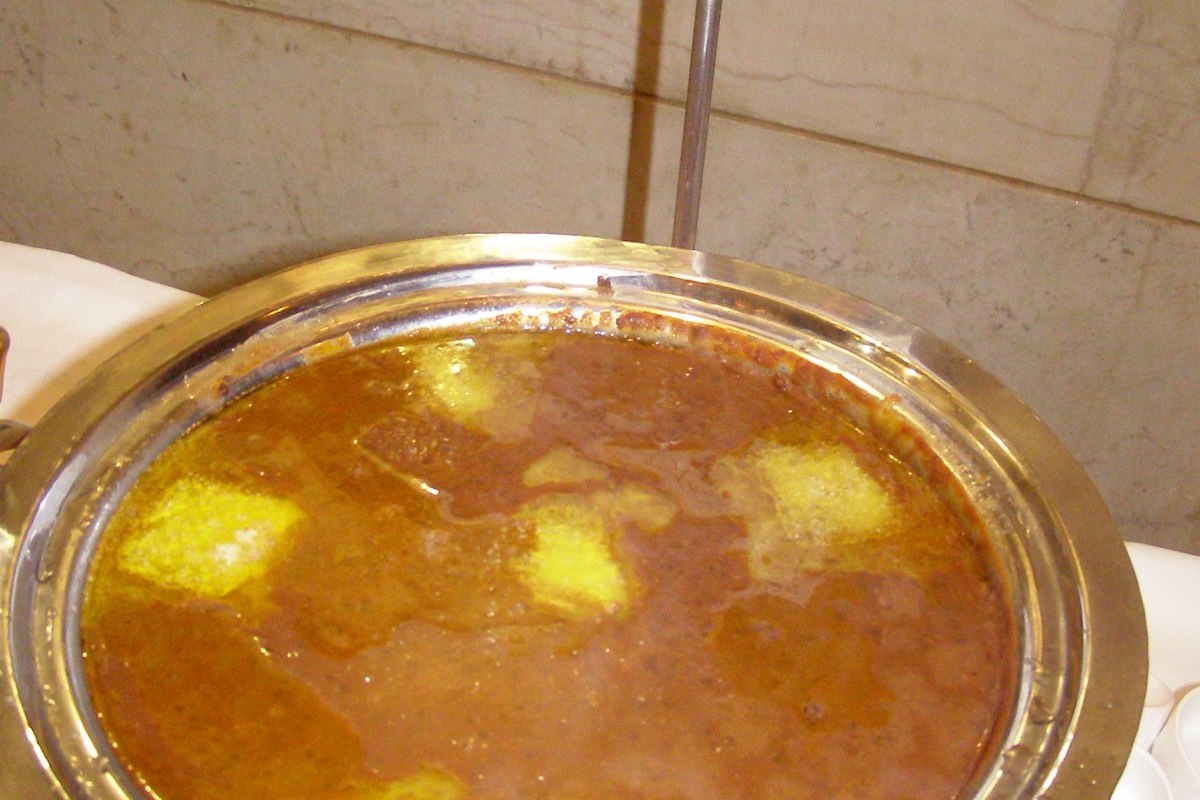
Dal makhani is younger than it tastes. The slow-cooked black dal that anchors every North Indian restaurant menu was put together in a Delhi kitchen in the 1950s, by the same cook who gave the world butter chicken. Before that, Punjabi villages ate their black gram plain, as maa ki dal, with no cream and no tomato. This dal makhani recipe follows the restaurant version Kundan Lal Gujral built at Moti Mahal: whole urad and kidney beans soaked overnight, simmered for hours until they collapse on their own, then finished with butter, cream and a charcoal smoke. The result sits next to butter chicken on the menu because the two share a makhani gravy and a single inventor.
What dal makhani is, and where the cream came from
The name means buttered dal, and the butter is the point. The base is whole black gram, called urad, with a handful of red kidney beans, the rajma, for body. In Punjabi the black lentil is mah or manh, which is why the village dish carries the name maa ki dal. That older dish was a long-cooked black dal seasoned with little more than ginger, garlic and chili. It had no cream.
The cream and tomato are a restaurant addition. The food writer Vir Sanghvi and Moti Mahal’s own history agree on the point: Punjabi home cooking had no creamy black dal until a Delhi kitchen invented one. A regular at Moti Mahal asked the cooks to make something special from the everyday urad, and the answer was to fold in tomato, butter and cream. Knowing that history fixes the recipe. The dal underneath is the village dish. Everything rich on top of it is the part that made it famous.
The Moti Mahal origin and the Bukhara split
Kundan Lal Gujral and his partners reopened Moti Mahal in Delhi in 1947 after fleeing Peshawar at Partition. The same kitchen produced butter chicken and dal makhani, which is why the rival chain Daryaganj uses the tagline “by the inventors of butter chicken and dal makhani,” and why both dishes sit at the center of the Delhi High Court fight over who owns the claim.
The dish then split into two famous lines. Moti Mahal’s version keeps the rajma alongside the urad. The other line runs through Bukhara at the ITC Maurya hotel, where the dal is served as Dal Bukhara: whole urad only, no kidney beans, simmered for many hours and enriched at the end. Bukhara has fed Bill and Hillary Clinton and Tony Blair, and its dal earned the nickname the black gold of India. If you have eaten dal makhani that tasted cleaner and deeper than the usual, it was probably built on the Bukhara idea of fewer ingredients cooked longer.
The Bukhara method is a lesson in restraint. The pot of whole urad cooks beside the tandoor for hours, the lentils mashed by hand against the side as they soften, with butter worked in slowly and cream held until the end. There is no onion, no garam masala dump, no long spice list. The flavour is urad, butter, tomato and time. Home cooks who chase the restaurant taste with more and more spices are usually working against the dish, which wants fewer ingredients given longer.
The names: maa ki dal, kaali dal and the langar pot
The same black lentil cooks into several dishes with different names, and the differences are real.
| Name | Where | What it is |
|---|---|---|
| Maa ki dal / maah di dal | Punjab, home kitchens | Plain slow-cooked whole urad, ginger-garlic-chili, no cream |
| Dal makhani | Delhi restaurants | The buttered version with tomato, butter and cream |
| Kaali dal | North India, general | Black dal, a loose term covering both the plain and the rich versions |
| Langar wali dal | Sikh community kitchens | Communal black dal cooked in vast pots, smoky from scale, no cream |
The langar version is worth knowing, because it shows the dish at its oldest and plainest. At the Golden Temple in Amritsar, the free community kitchen feeds tens of thousands of people every day, and the black dal it ladles out is slow-cooked in cauldrons over hours. There is no cream in it. That communal pot, not the restaurant, is where the long-simmered black dal comes from. Gujral’s contribution was to take that base and make it rich enough for a menu.
Ingredients for a proper dal makhani
This serves four to six as a side. The ratio that matters is urad to rajma, because too many kidney beans turn the dal grainy.
| Ingredient | Amount | Role |
|---|---|---|
| Whole urad (sabut, black gram) | 1 cup | The body; cooks down to cream |
| Rajma (red kidney beans) | a quarter cup | Bite and depth |
| Butter | 4 tablespoons, plus more to finish | The named fat |
| Heavy cream or malai | a third of a cup | Richness, added late |
| Tomatoes | 2 large, pureed | The restaurant addition |
| Ginger-garlic paste | 1 tablespoon | Base aromatics |
| Kashmiri chili | 1 to 2 teaspoons | Color and mild warmth |
| Kasuri methi | 1 teaspoon, crushed | The finishing aroma |
Use fresh lentils. Black gram that has sat in the cupboard for a year never reaches the melting texture, and no amount of cooking rescues it.
How to make dal makhani step by step
Soak and boil
Rinse the urad and rajma and soak them together overnight, at least eight hours, in plenty of water. Drain, cover with fresh water, and pressure-cook until both are soft enough to crush between two fingers. Undercooked rajma is the fastest way to ruin the dish, so give it longer rather than less.
Hold the salt until the lentils are soft. Salt added early in the boil firms the skins of rajma and urad and slows them from breaking down, which is the opposite of what this dal needs. Season once the beans crush easily, then carry on into the simmer. A pinch of baking soda in the soaking water helps hard local water along, but use a little, since too much turns the dal slippery.
Build the base and the long simmer
- Melt butter and cook the ginger-garlic paste, then the pureed tomato and Kashmiri chili, until the fat separates.
- Tip in the cooked lentils with their water and a little extra. Drop the heat low.
- Simmer with the lid off for at least an hour, longer if you can, stirring now and then and mashing some lentils against the pot. The dal thickens on its own as the starch releases. This is why a real dal makhani needs no flour.
- Off the heat, stir in the cream, a final knob of butter and the crushed kasuri methi.
The gospel among cooks who make this well is simple: the longer the slow simmer, the better the dal. A pot held on low for three or four hours beats any shortcut, because the texture comes from time, not thickener.
The dhungar smoke that mimics the coal fire
Restaurant dal makhani carries a faint smokiness, the trace of dishes once cooked overnight on coal or wood. To reproduce it, use dhungar. Hold a piece of natural lump charcoal in tongs over a flame until it glows red, three to four minutes. Set it in a small steel cup on top of the dal, pour over a quarter teaspoon of ghee so it throws smoke, and clap the lid on for three to four minutes. Lift the lid, take the cup out, and stir. The dal now tastes of slow fire without an overnight pot.
The butter, the tadka and the day-after rule
Cooks who make this dish well are generous with butter, and they add it in two places. Some goes into the base at the start, and a final spoon melts in off the heat so a glossy layer sits on top. A separate tadka finishes many versions: butter or ghee heated with cumin and a little chili, then poured over the dal at the table so it sizzles. Restaurant kitchens lean on whole black and green cardamom and a bay leaf in that tempering, which perfume the dal as it cooks down over hours in a way ground spice cannot. That last pour is about aroma as much as fat, and it is the step home cooks skip most.
How much butter is right is the argument that never settles. Restaurant dal carries far more than most home cooks expect, often a tablespoon or two per portion. You can cut it, but only if you pay the difference in time, holding the dal on a low simmer for hours so the lentils give up their own richness. Halve both the butter and the cooking and you get a thin, dull dal.
The creaminess itself comes from the lentils, not the dairy: cooked long enough, the urad breaks down and turns the dal velvety on its own, so a dal simmered for hours needs far less cream than a rushed one to taste rich. Dal makhani also keeps a useful secret: it tastes better the next day. The spices settle, the lentils keep softening, and a pot cooked in the evening and reheated at lunch is closer to the restaurant version than one served straight away. Make it ahead when you can, hold back some of the cream, and stir fresh cream in when you reheat.
The mistakes that flatten a home dal makhani
- Rushing the simmer. The creamy texture is a function of time. Pressure-cooking the lentils soft is not the same as the long, low finish that gives the dal its body.
- Old lentils. Aged urad and rajma stay firm and chalky. Buy fresh stock and use it.
- Short soak. Less than eight hours and the lentils never reach the melt-in-the-mouth stage.
- Cutting butter and cream while also cutting time. You can use less fat, but only if you slow-cook longer. Cut both and the dal tastes thin.
- Too much rajma. Kidney beans are a supporting note. Past a quarter cup to a cup of urad, they take over and the dal turns grainy.
Why restaurant dal makhani tastes different
A good North Indian restaurant rarely cooks your dal makhani from scratch when you order it. A master pot of black dal simmers from morning, sometimes set near the tandoor to catch its heat, and individual portions are finished to order with butter, cream and a fresh tadka. That is the real secret behind the restaurant flavour: not a hidden spice, but a base that has cooked far longer than any home batch. The home version closes the gap with two habits, a long unhurried simmer and an honest amount of butter, rather than with a longer ingredient list.
It also explains why the dish reheats so well. Restaurant dal is, in effect, always reheated, drawn from a pot that has been going for hours. A home cook who makes it a day ahead is copying that rhythm without meaning to.
What to serve with dal makhani
The dal is rich, so the plate around it should stay plain. Bread and rice both work, and a sharp pickle cuts the cream.
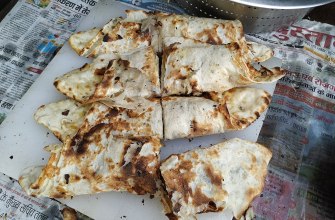
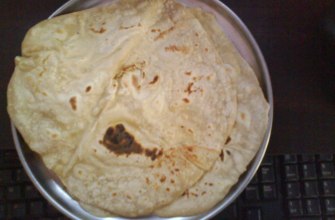
- Naan or roti. A hot naan or a plain roti carries the dal without competing with it.
- Jeera rice. Cumin-tempered basmati is the classic restaurant pairing.
- Raita and pickle. A cooling yogurt raita and a sharp mango or lime pickle balance the fat.
For the wider pantry these gravies share, the guide to Indian cuisine and spices sets out how the makhani family relates across dishes.
Frequently asked questions
Is dal makhani the same as maa ki dal?
They start from the same lentil but they are not the same dish. Maa ki dal is the older Punjabi village version, a plain slow-cooked black dal with no cream. Dal makhani is the buttered, tomato-and-cream restaurant elaboration invented in Delhi.
Can I make dal makhani without a pressure cooker?
Yes, though it takes longer. Soak the lentils overnight, then simmer them in an open pot until soft before you build the gravy. The whole point of the dish is long cooking, so a slow pot suits it.
Why is my dal makhani not creamy?
Usually one of three reasons: the lentils were old, the soak was too short, or the simmer was rushed. The creaminess comes from urad breaking down over hours, not from extra cream.
What is the difference between dal makhani and dal bukhara?
Dal makhani in the Moti Mahal style includes rajma, the kidney beans. Dal Bukhara, the version from Bukhara at the ITC Maurya, uses whole urad only and leans on very long cooking and butter rather than beans.
Can I use split urad dal or canned beans?
Use whole urad, the black sabut kind with the skin on. Split or skinless urad cooks into a different, paler dal and will not give the dark, creamy result. Canned kidney beans work in a pinch, added near the end since they are already soft, but dried rajma soaked overnight has better texture.
Do I need the charcoal smoke?
No, but it closes the gap to a restaurant version. Without a tandoor or an overnight coal pot, the dhungar trick is the only quick way to add that smoky note at home.
Sources
- Dal makhani, origin and ingredients overview
- Vir Sanghvi, on Moti Mahal and the modern dal makhani
- Moti Mahal, “Who invented dal makhani”
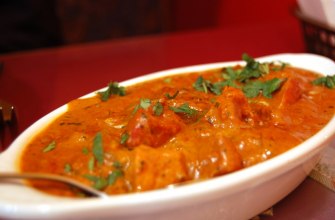
- Image: Dal Makhni, Wikimedia Commons, CC BY-SA 3.0, by Maccess Corporation