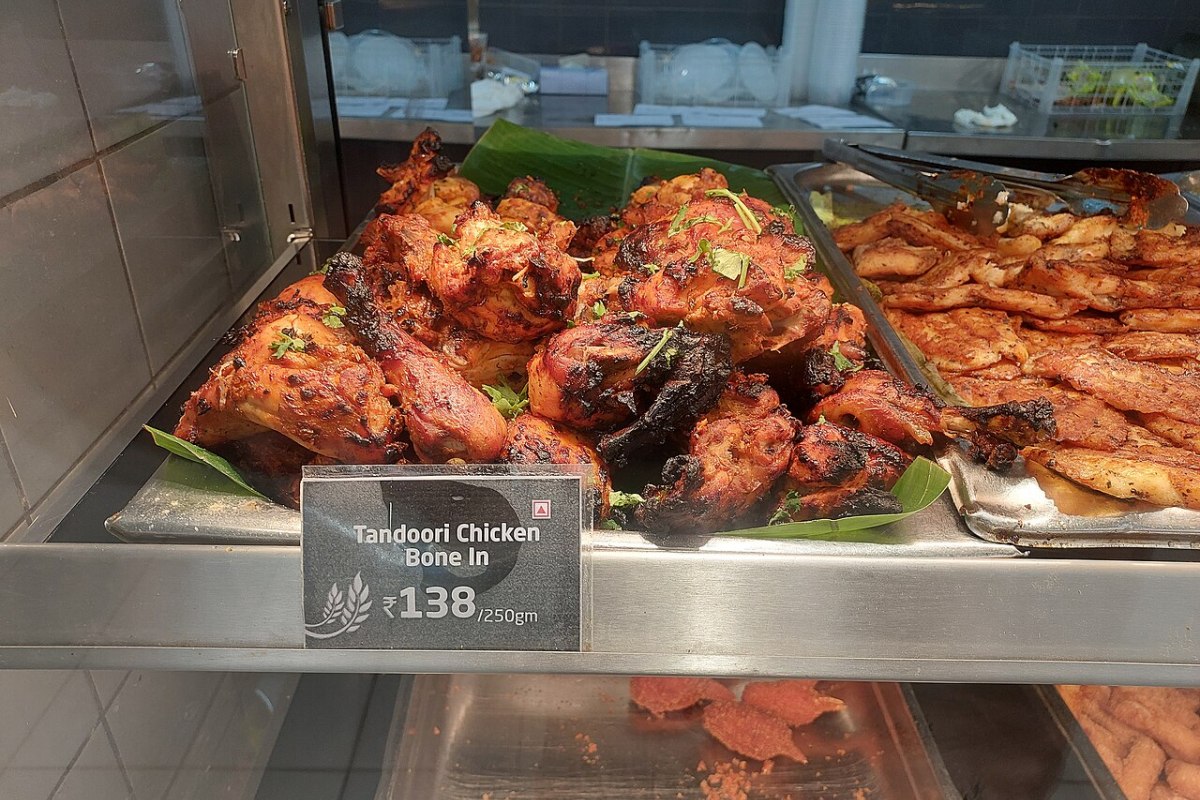
The tandoor was a bread oven until someone put chicken in it. In a Peshawar eatery in the 1920s, a young cook named Kundan Lal Gujral skewered yogurt-marinated chicken and lowered it into the clay oven that until then had baked only naan. The dish he pulled out, charred and stained red, became tandoori chicken. This tandoori chicken recipe follows that method: a two-stage marinade, the red from Kashmiri chili rather than dye, mustard oil, and a charcoal char that stands in for the clay oven at home. It is also the parent dish of butter chicken, which began as a way to use up tandoori pieces that had dried overnight.
Why tandoori chicken is red, and what the color hides
The color is the most misunderstood thing about the dish. A proper tandoori chicken is brick red, not fire-engine red, and the color comes from two honest sources: Kashmiri red chili, which stains deep red with little heat, and the char of high-heat cooking. That is the whole story in a home kitchen done right.
The neon red of many restaurant and takeaway versions is a different thing. It comes from artificial food coloring, most often Red Dye 40, also sold as Allura Red, added to brighten the plate. There is no flavor in it, and there are health questions around the dye that keep it controversial. If you want a deeper natural red without more chili, a spoon of beetroot juice in the marinade does the job, though too much turns the meat pink and faintly bitter. The point worth keeping is simple: real tandoori color is a side effect of good ingredients and real heat, not a bottle.
- Authentic red: Kashmiri chili powder, or deggi mirch, plus char.
- Restaurant neon: Red Dye 40 (Allura Red), cosmetic only.
- Natural booster: a little beetroot juice, used with restraint.
From a Peshawar bread oven to Delhi state banquets
Gujral learned to cook at a small eatery called Moti Mahal in Peshawar, owned by Mokha Singh Lamba, around 1920. The idea of cooking marinated meat in the bread tandoor was the leap. When Partition came in 1947, Gujral migrated to Delhi and opened his own Moti Mahal in Daryaganj, carrying the tandoor technique with him. He did not arrive alone: a second cook of the same first name, Kundan Lal Jaggi, was a partner in that first Delhi kitchen, which is why the modern court fight over who invented the Moti Mahal dishes turns on a tale of two Kundan Lals.
In Delhi the dish became a state asset. Jawaharlal Nehru, India’s first prime minister, ate it often and had it served to visiting heads of state, among them Richard Nixon and John F. Kennedy. A roadside grill technique became diplomatic food. The clay oven itself is far older than any of this: tandoor-style ovens turn up in the Harappan and Mohenjo-daro sites of the Indus Valley, thousands of years back. Gujral did not invent the oven. He changed what went into it.
That history also explains butter chicken. Tandoori chicken dries fast once it leaves the oven, and to rescue unsold pieces Gujral simmered them in a tomato, butter and cream gravy. The makhani dishes, butter chicken and dal makhani, all trace back to this one grill.
What a tandoor actually does
Understanding the oven explains why home tandoori is hard. A tandoor is a deep clay pot, often sunk into the ground or clad in brick, fired by charcoal or wood at the base. The clay walls hold radiant heat near 480 degrees and throw it back at the food from every side. Chicken goes in on long metal seekh skewers, lowered vertically into the heat.
Three things happen at once that a home oven cannot match. The radiant heat sears the surface in minutes, sealing juice before the meat can dry. Fat and marinade drip onto the coals and flare into smoke that perfumes the chicken from below. And the dry, fierce environment crisps the yogurt coating into the charred crust that defines the dish. A home oven gives the heat but not the smoke, which is why the charcoal trick matters so much. A grill gives the smoke but rarely the all-around radiant heat. Knowing what you are missing tells you what to add back. The faint pink band you sometimes see just under the crust is a smoke ring, the same reaction that prized barbecue shows, formed when charcoal smoke meets the meat surface. It is a sign of real fire, and it is one more thing a plain oven cannot fake without the charcoal step.
Ingredients and the two-stage marinade
This does about 1 kg of chicken, four to six pieces. Use bone-in thighs and drumsticks. Breast dries out under the heat the dish needs. Skin comes off, because the marinade has to reach the meat.
| Stage | What goes in | Why |
|---|---|---|
| Prep | Skin removed, deep slits cut to the bone | Lets the marinade and heat reach the center |
| First marinade | Lemon juice, salt, ginger-garlic paste, a little Kashmiri chili | Acid opens the meat and seasons it |
| Second marinade | Hung curd, mustard oil, Kashmiri chili, garam masala, cumin, coriander, turmeric, black pepper, kasuri methi | Builds the coating and the tandoori crust |
First marinade
Rub the slit chicken with lemon juice, salt, ginger-garlic paste and a teaspoon of Kashmiri chili. Leave it fifteen to twenty minutes. This short step seasons the meat from the inside and is the reason restaurant tandoori tastes flavored all the way through rather than only on the surface.
Second marinade
Whisk thick hung curd with mustard oil, more Kashmiri chili, garam masala, ground cumin and coriander, turmeric, black pepper and crushed kasuri methi. Coat the chicken and rest it in the fridge for six hours, up to overnight. Mustard oil is the traditional fat here and gives the sharp, slightly pungent depth that marks real tandoori. Full-fat curd matters: thin or low-fat yogurt slides off the meat and carries less spice.
How to cook tandoori chicken without a tandoor
A clay tandoor runs near 480 degrees. No home oven reaches that, so the trick is to get as hot as you can and add the smoke separately.
- Oven: heat to 240 degrees, roast the chicken on a rack over a tray for around 30 to 40 minutes, then finish under the broiler for a few minutes to char the edges.
- Grill or barbecue: a hot charcoal grill is the closest thing to a tandoor and gives real smoke. Cook over direct heat, turning, until the edges blacken.
- Dhungar smoke: if you use the oven, add the tandoor aroma with charcoal. Heat a piece of lump charcoal until red, set it in a small cup among the cooked pieces, pour over a little ghee, cover for three to four minutes, then remove.
Brush the chicken with a little oil or butter as it cooks. The fat carries spice and keeps the surface from drying to leather before the inside is done.
Doneness, basting and the rest
Bone-in tandoori needs to reach about 74 degrees at the thickest part, near the bone, which a probe thermometer reads in seconds. Color lies here: the charred, red-stained surface looks done long before the center is, so judge by temperature or by juices that run clear, not by the crust.
Baste twice as it cooks. A brush of melted butter or oil partway through keeps the surface from drying to leather and helps the char form evenly. Once the chicken is out, let it rest five minutes before serving. The juices that rushed to the center under heat settle back through the meat, and a rested piece tastes far moister than one cut straight off the grill. On a charcoal grill, keep a cooler zone to move pieces to once they have taken their char, so they finish cooking through without burning.
Why home tandoori chicken comes out dry
Dryness is the universal complaint, and it almost always traces to one of these, not to the recipe.
- Marinating too long. The acid in yogurt and lemon slowly cures the meat like a ceviche. Past a day, the fibers break down so far they cannot hold moisture under heat. Overnight is the ceiling, not a starting point.
- Breast instead of thigh. Lean breast has no fat to lose. Thighs and drumsticks stay juicy through the char.
- Thin or low-fat curd. It slides off and leaves the meat bare. Use full-fat, 4 to 6 percent, or strained hung curd.
- Cooking it fridge-cold and crowded. Cold meat on a hot tray steams instead of searing, and pieces packed together trap moisture. Bring it to room temperature and space it out.
- Too much spice. A long spice list can bury the chicken. The balance is chili, char and smoke, not every powder in the cupboard.
Tandoori, tikka and the cream variants
One marinade spawns a family of dishes, and the names are not interchangeable. Knowing them helps you order and cook with intent.
| Dish | What changes | Character |
|---|---|---|
| Tandoori chicken | Bone-in pieces, full red marinade | The original, charred and smoky |
| Chicken tikka | Boneless cubes, same marinade | Quicker, the base for tikka masala |
| Hariyali tikka | Green marinade of mint and coriander | Fresh, herby, less red |
| Malai or reshmi tikka | Cream and cheese in place of chili | Mild, pale, silky |
| Achari tikka | Pickling spices, mustard and fennel | Tangy, sharp |
The split between tandoori chicken and chicken tikka is the one to remember. Tandoori chicken is bone-in and built for the skewer. Chicken tikka is boneless cubes of the same marinated meat, and those cubes, simmered in a spiced gravy, become chicken tikka masala. The whole British curry-house canon grows out of this one tandoor.
The tandoori masala blend
Tandoori masala is not the same as garam masala, though they overlap. The tandoori blend leans on Kashmiri chili for color, with cumin, coriander, black pepper, dried ginger, a little clove and cinnamon, and crucially kasuri methi and sometimes black salt for the tang. Garam masala is a finishing warm-spice mix; tandoori masala is built to color and crust meat under fierce heat. Shop blends vary, and many add the red dye, which is one more reason to mix your own from Kashmiri chili and whole spices ground fresh.
What to serve with tandoori chicken
Tandoori chicken is dry-cooked, so it pairs with cooling, sharp sides rather than another rich gravy.
- Mint chutney made with coriander, mint, green chili and a little yogurt, the standard partner.
- Onion and lemon, raw sliced onion rings with a squeeze of lemon and a dusting of chaat masala.
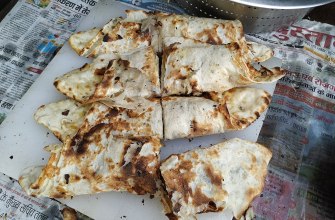
- Naan or roti, a hot naan to wrap the meat, since both come off the same tandoor.
For how the tandoor sits within the wider kitchen, the guide to Indian cuisine and spices places it among the other techniques.
Frequently asked questions
Does authentic tandoori chicken need red food coloring?
No. The traditional red comes from Kashmiri chili and the char of high heat. The bright red of many restaurants is artificial Red Dye 40, added for looks. A little beetroot juice deepens the color naturally if you want it.
Can I make tandoori chicken in a regular oven?
Yes. Heat the oven as high as it goes, roast the chicken on a rack, and finish under the broiler for char. Add the charcoal dhungar trick for the smoky tandoor aroma the oven cannot give.
Should I use chicken breast or thighs?
Thighs and drumsticks. They hold their moisture under the high, dry heat the dish needs. Breast turns dry and stringy in the same conditions.
Why is my tandoori chicken dry?
The usual causes are marinating longer than overnight, using lean breast, thin yogurt that slides off, or cooking the meat straight from the fridge on a crowded tray. Fix those and the chicken stays juicy.
What oil should I use in the marinade?
Mustard oil is traditional and gives tandoori its characteristic pungency. If you cannot get it, a neutral oil works, but the flavor will be milder.
What is the difference between tandoori chicken and chicken tikka?
Tandoori chicken is bone-in pieces cooked on the skewer. Chicken tikka is boneless cubes of the same marinated meat. Those cubes simmered in a creamy gravy are what became chicken tikka masala.
Can I marinate the chicken ahead and freeze it?
Yes. Chicken in the second marinade freezes well, and many cooks freeze it in the marinade so it keeps seasoning as it thaws. Thaw it fully in the fridge before cooking, and do not count the frozen days as extra marinating time, since the acid keeps working and can over-cure the meat.
What can I do with leftover tandoori chicken?
Turn it into butter chicken, which is exactly how the dish was born. Simmer the pieces in a tomato, butter and cream gravy to revive meat that has dried after cooking.
Sources
- Tandoori chicken, origin and Moti Mahal history
- Kundan Lal Gujral, Moti Mahal and the tandoor
- Indian As Apple Pie, on tandoori color and food dye
- Image: Tandoori chicken, Wikimedia Commons, CC BY-SA 4.0