Indian food is not one cuisine. A Tamil idli breakfast and a Punjabi butter chicken share almost no ingredients, no cooking technique, and no eating ritual. The subcontinent stretches across more latitude than the United States, holds at least a dozen distinct regional food cultures, and feeds more than a billion people from a pantry that would not fit in a single shop. This guide is the map to that pantry: where the word curry actually comes from, how the regional schools differ, the grammar of technique and oil that separates them, and which dishes to cook to understand each one.
Why “curry” is a British word, not an Indian dish
There is no dish called curry in India, and there never was. The word is a colonial flattening. It traces to the Tamil kari, which names a spiced dish of vegetables or meat eaten with rice, a specific thing, not a category. British traders and officials heard it, spelled it “currey,” and stretched it to cover every spiced gravy on the subcontinent. The first English recipe under the name appears in Hannah Glasse’s 1747 book, “The Art of Cookery Made Plain and Easy,” as a dish “to make a currey the India way.”
The bigger invention was curry powder. Indian kitchens have never used a single pre-mixed curry powder. Spices are ground fresh for each dish, in proportions that change with the cook, the region and the season. The jar of yellow “curry powder” on a Western shelf is a British standardisation from the eighteenth century, made so homesick Raj officials could approximate the flavours they had left behind. Knowing this changes how you read an Indian menu: there is no generic curry to order, only specific dishes, each with its own name, technique and home. The food historian K.T. Achaya made the point plainly, that the colonial label hid more than it described.
The regional schools of Indian cooking
Treating India as one kitchen is the mistake that the word curry encourages. There are many schools, and they disagree on almost everything: the staple grain, the cooking fat, the souring agent, the bread. These are the ones worth knowing.
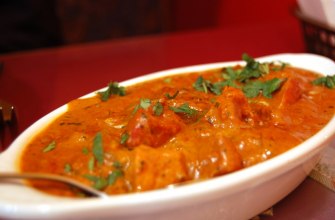
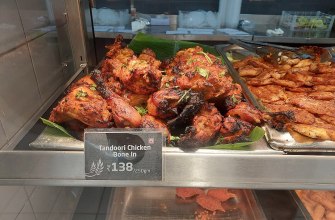
- Mughlai (Delhi, Awadh). The court cooking of the Mughal and Nawabi kitchens. Slow-braised meat, dried fruit and saffron, cream and ghee, the tandoor. This is the school that gave the world butter chicken, dal makhani and tandoori chicken.
- Punjabi. Wheat country: tandoor breads, dairy in every form, robust onion-tomato gravies. Overlaps with Mughlai but earthier and home-rooted, the source of the dhaba cooking that spread along India’s highways and became most people’s idea of North Indian food.
- Awadhi (Lucknow). Refined, subtle, built on the pakki dum method and gentle aromatics, the Nawabi counterpoint to the bolder Hyderabadi style. Its kitchens prize slow, low cooking and a delicacy that prefers fragrance over force.
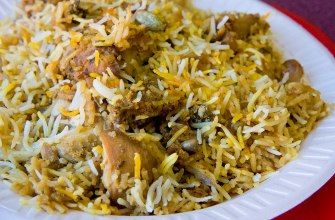
- Hyderabadi (Deccan). A blend of Mughlai and southern Deccani spicing, fierce and fragrant, home of the kacchi Hyderabadi biryani.
- Bengali and Odia (East). Rice and freshwater fish, mustard oil and the five-spice panch phoron, a meal eaten in strict courses that open with something bitter and close with a sweet. Bengal also runs a parallel sweet tradition built on fresh chenna cheese that the rest of India does not share.
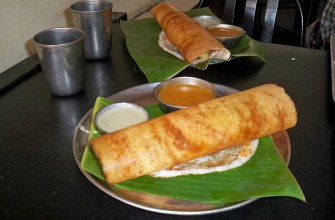
- South Indian, which is four cuisines. Tamil and Chettinad lean on tamarind, black pepper and gingelly oil; Kerala on coconut and curry leaf; Andhra on the hottest chillies in the country; Karnataka and Udupi on a gentler, often vegetarian temple style that gave the world the standardised masala dosa. Lumping them as “South Indian” is its own small error, like calling French and Italian the same because both sit in Europe. Each has its own rice dishes, its own ferments and its own festival food.
- Goan and Konkani (West coast). Four centuries of Portuguese rule left vinegar, pork and the chilli itself, folded into a coastal seafood tradition. The chilli that now defines Indian heat arrived here first, carried by the Portuguese from the Americas, before it spread inland.
- Maharashtrian and Gujarati. Mumbai street food and the coastal Malvani fish cooking on one side, the sweet-sour vegetarian thali of Gujarat on the other, two more distinct grammars that share a coast but little else.
K.T. Achaya devoted a whole chapter of his “Indian Food: A Historical Companion” to these regional cuisines, tracing each to its geography, crops and faith. The plate is a thousand kitchens answering a thousand growing seasons, not one tradition with accents.
The grammar of Indian technique
Indian dishes taste deep because flavour is built in stages, never dumped in at once. A handful of techniques, each with its own name, make up the grammar every regional school shares.
- Tadka (also tarka, chhonk or baghar): tempering whole spices in hot fat to bloom their oils, either at the start of a dish or poured over it at the end. The single most important Indian technique.
- Bhuna: stir-frying the masala base at steady heat until the fat separates and the raw smell goes, which concentrates flavour and gives a gravy its body.
- Dum: slow-cooking in trapped steam under a sealed lid, the method behind biryani and the richest braises.
- Talna: deep-frying, which gives samosas, pakoras, puris and the fried onions that crown a biryani.
The order of a tadka is the part home cooks abroad get wrong. Whole spices go into the hot fat first, cumin or mustard seeds, bay, cardamom, because they need the most heat. Then asafoetida and dried chilli, then onion cooked down properly, then ginger and garlic, then tomato, and only near the end the ground spices, which scorch if added too early. Garam masala goes in last of all, off the heat. Follow that sequence and a simple dish tastes layered. Break it and the same ingredients taste flat.
The oils that define a region
You can place an Indian dish on the map by its cooking fat alone. The oil is not incidental; it is a regional signature with its own flavour.
| Oil or fat | Region | Character |
|---|---|---|
| Mustard oil | Bengal, Bihar, eastern UP, Kashmir | Sharp and pungent raw, mellow and nutty heated |
| Coconut oil | Kerala, coastal Karnataka, the south | Sweet, fragrant, the base of southern coastal cooking |
| Sesame (gingelly) | Tamil Nadu, Andhra | Nutty, made for sambar and rasam |
| Groundnut (peanut) | Gujarat, Maharashtra, central India | Neutral, versatile, everyday |
| Ghee | Punjab, Mughlai cooking, festive food everywhere | Rich, nutty clarified butter |
Swap the oil and you change the dish. A Bengali maacher jhol cooked in coconut oil is no longer Bengali; a Kerala fish curry in mustard oil tastes displaced. When a recipe abroad says only “vegetable oil,” it has quietly erased one of the strongest regional markers there is.
The souring agents, the other regional map
Indian cooking almost always carries a sour note, and which souring agent a kitchen reaches for is as regional as its oil. The acid balances the fat and the spice, and the choice is rarely interchangeable.
| Souring agent | Region | Used in |
|---|---|---|
| Tamarind (imli) | Tamil Nadu, Andhra, the south | Sambar, rasam, most southern gravies |
| Kokum | Konkan, Goa, coastal Maharashtra | Fish curries, solkadhi |
| Amchur (dried mango) | North India | Chaat, dry sabzis, chana |
| Yogurt and tomato | North and Mughlai | Kadhi, makhani and korma gravies |
| Lime and lemon | Everywhere, as a finish | Marinades, dals, street food |
A southern rasam soured with tamarind tastes nothing like a north Indian kadhi soured with yogurt, even though both are tangy. Goa’s kokum gives its fish curry a soft pink sourness that tamarind cannot copy. Read the souring agent and you have read another line on the regional map, one that recipe writers abroad usually replace with a generic squeeze of lemon.
The pantry: ten spices that hold every kitchen together
Master these ten and you have half the technique. Indian cooking is not about owning a hundred jars; it is about knowing where each one belongs.
- Cumin (jeera) – whole seeds in hot oil, the smoky base of dals and northern gravies.
- Coriander (dhania) – seed and ground, the mild citrussy workhorse that tolerates long cooking.
- Turmeric (haldi) – the deep-yellow rhizome, added early, staining everything.
- Cardamom (elaichi) – green pods for sweet and savoury, black pods for biryani and braises.
- Cinnamon (dalchini) – whole bark in pulao and meat dishes.
- Cloves (laung) – sharp and warming, used sparingly.
- Mustard seeds (rai) – popped in oil, constant in the south, rare in the north.
- Fennel (saunf) – sweet anise, in Bengali panch phoron and after-meal mixes.
- Asafoetida (hing) – sulphurous raw, onion-like in oil, essential to onion-free Jain and Brahmin cooking.
- Garam masala – the warming finishing blend, different in every household, added at the end, never the start.
There is no fixed garam masala. A Punjabi blend leans on cinnamon and clove, a Bengali garam masala is gentler and often just cardamom, cinnamon and clove, a Kashmiri one runs to fennel and ginger. The “garam masala” in a single supermarket jar flattens that variety the way the word curry flattens the dishes.
Masala: how a spice blend is actually built
Masala simply means a spice mixture, and it is the closest thing Indian cooking has to the idea Westerners reach for when they say curry. The difference is that a masala is built, not bought, and it comes in two forms. A dry masala is ground roasted spices, a powder. A wet masala is a paste, spices blended with onion, ginger, garlic, chilli or coconut. Most gravies start from a wet masala fried down by the bhuna method until the fat separates, the moment a cook watches for.
Every region has its signature blends, and they are not interchangeable.
- Panch phoron, the Bengali five-seed mix of fenugreek, fennel, cumin, mustard and nigella, tempered whole and never ground.
- Sambar podi, the South Indian blend of roasted lentils, coriander, chilli and fenugreek that defines a sambar.
- Goda masala, the Maharashtrian sweet-dark blend built on stone flower, sesame and coconut.
- Chettinad masala, the fierce Tamil blend of black pepper, star anise and many chillies.
- Recheado and xacuti masalas, the Goan wet pastes built on Kashmiri chilli, vinegar and coconut.
- Kashmiri ver, a fermented spice cake dried and crumbled into Kashmiri gravies.
This is the heart of the matter. There is no single “curry” blend because there is no single cuisine. Each of these masalas belongs to its own kitchen, its own grain and its own oil, and using one in another region’s dish is the surest way to make food that tastes of nowhere.
The rice and wheat line
One broad line runs across the country and explains more than any other. The north and west, drier and cooler, grow wheat, so the staple is bread: roti, paratha, naan, kulcha. The south and east, wetter and warmer, grow rice, so the staple is rice in every form, steamed, fermented into dosa and idli batter, soaked into pongal. The line is not absolute, rice reaches the north as basmati and pulao, wheat reaches the south as the odd chapati, but it shapes the whole meal. A northern plate is built to be scooped with bread; a southern one is built around a mound of rice with small bowls of gravy poured over it. Knowing which side of the line a dish sits on tells you how it is meant to be eaten.
Curry leaves, bay leaf and the markers of place
Two aromatics tell you instantly which half of the country a dish comes from. Curry leaves, fresh and glossy, fried in the tempering, belong to the south and the coasts; they have nothing to do with curry powder despite the name. The Indian bay leaf, tej patta, broader and more cassia-scented than a Mediterranean bay, belongs to the north. Kasuri methi, dried fenugreek leaf, marks the Punjabi and Mughlai gravies. A southern coconut curry finished with curry leaves and a northern korma scented with tej patta and kasuri methi are using their aromatics as a kind of passport. Put the southern leaf in the northern pot and the dish loses its place.
The cluster: which dish teaches which school
The fastest way to understand a regional school is to cook its signature dish. Each of these is a doorway into a whole tradition.
- Butter chicken and dal makhani teach the Mughlai makhani gravy, tomato, butter and cream, both invented in one Delhi kitchen after Partition.
- Tandoori chicken teaches the tandoor and the marinade that the makhani dishes grew out of.
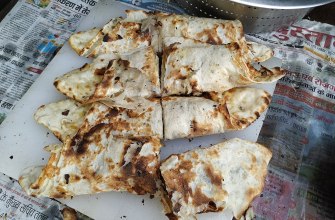
- Naan teaches the tandoor bread, and the difference between restaurant bread and the daily roti.
- Hyderabadi biryani teaches dum and the kacchi method, and how four regions cook the same word differently.
More doorways follow as the cluster grows: the South Indian fermented dosa, the Goan vinegar vindaloo, the Mumbai street plate of pav bhaji, the mithai of the sweet shops and the spiced chai of the roadside. Each one earns its own page because each one belongs to a different kitchen.
A signature dish from every region
If the schools sound abstract, their dishes are not. Here is one plate that defines each, a tasting menu of the whole country.
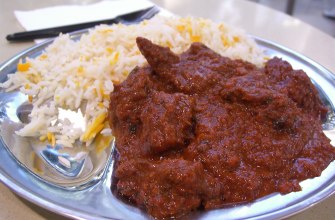
- Kashmir: rogan josh, lamb braised in a red gravy coloured by Kashmiri chilli and ratan jot, and the multi-course wazwan feast.
- Punjab: sarson ka saag with makki di roti, mustard greens slow-cooked and eaten with cornbread and white butter.
- Awadh (Lucknow): galouti kebab, minced meat so tender it was made for a toothless Nawab, and the pakki dum biryani.
- Bengal: shorshe ilish, hilsa fish steamed in a mustard paste, the festival dish, with maacher jhol the everyday one.
- Tamil Nadu (Chettinad): pepper chicken and a tamarind kuzhambu, among the most pepper-forward cooking in India.
- Kerala: meen curry in coconut and kokum with appam, and the vast vegetarian sadya served on a banana leaf.
- Andhra: gongura mutton and the fiercely hot pickles that travel the world.
- Goa: the vinegar vindaloo and a recheado-stuffed fish, the clearest Portuguese inheritance on the plate.
- Gujarat: undhiyu, a slow winter casserole of root vegetables and beans, in the sweet-savoury Gujarati balance.
- Maharashtra: misal pav and the Kolhapuri mutton that carries a famous fiery red masala.
- Rajasthan: dal baati churma and gatte ki sabzi, desert cooking built to last without fresh greens.
- Hyderabad: the kacchi biryani and haleem, the wheat-and-meat porridge of Ramadan that holds its own GI tag.
No single restaurant, and no single cook, masters all of these. That is the point of a cuisine this large: depth lives in the region, not in a menu that tries to cover everything.
Street food, the other half of the cuisine
Restaurant food is only one register. The street is where Mumbai eats vada pav and pav bhaji, where the north shares the golgappa that the east calls puchka, where Kolkata fries kathi rolls and the south griddles dosa to order. Chaat, the family of tangy snacks built on crisp fried bases, yogurt, tamarind and chutney, is a cuisine in itself, and it shifts name and form every few hundred kilometres. The same filled-and-cracked water ball is golgappa in Delhi, puchka in Kolkata, pani puri in Mumbai and gup chup in Odisha, four names for one snack and a small map of the country in itself. No survey of Indian food that stops at the restaurant table has seen most of it.
Vegetarian India, by tradition not trend
Roughly a third of the country is vegetarian by community and faith, among the largest such populations on earth, and the cooking reflects centuries of refinement rather than recent fashion. Jain kitchens omit onion, garlic and root vegetables entirely and lean on asafoetida for depth. Gujarati and South Indian Brahmin traditions built whole festive cuisines without meat. This is why a vegetarian thali in India tastes complete rather than compromised: the techniques were designed around vegetables, lentils and dairy from the start.
Breads, sweets and the drink that is not “chai tea”
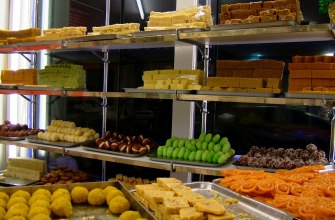
The bread depends on the region: leavened tandoor naan and kulcha in the wheat north, unleavened roti and paratha at the daily table, rice in the south where bread gives way to dosa and idli. The sweets, the mithai, split along the same line, milk-reduced khoya sweets in the north and west, fresh-cheese chenna sweets in Bengal and the east. And the drink most foreigners call “chai tea” is simply chai, which already means tea: spiced, milky, boiled on the roadside, a story of its own.
The thali: a whole meal on one plate
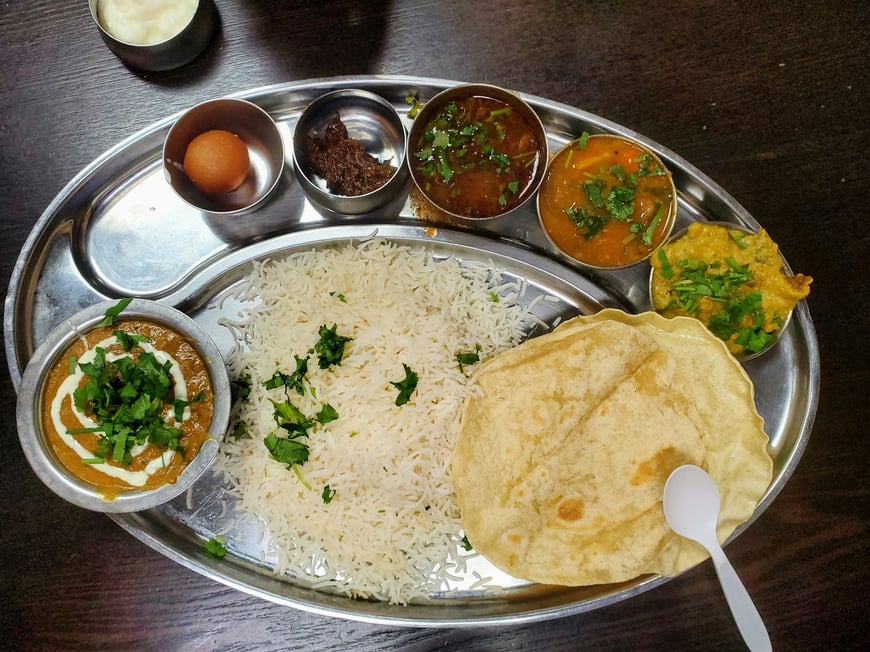
The thali is how much of India actually eats, and it explains the cuisine better than any single dish. A thali is a platter of many small bowls eaten together rather than in courses: a grain, one or two dals, two or three vegetable dishes, a yogurt or raita, a pickle, a papad, a sweet. The balance is the point. Each bowl answers another, hot against cooling, dry against gravied, sour against sweet, so a single mouthful can carry several flavours at once. A Gujarati thali leans sweet and is endlessly refilled; a South Indian meals plate spreads rice with sambar, rasam, poriyal and curd; a Rajasthani thali carries the dry, long-keeping dishes of the desert. Eating a thali teaches the lesson the word curry hides, that an Indian meal is a composition, not a bowl of sauce.
Food and the festival calendar
Indian food runs on a calendar as much as a map. Diwali fills the sweet shops with mithai and the home kitchen with fried snacks. Holi brings gujiya and thandai. Eid centres on biryani, haleem and sheer khurma. Onam in Kerala builds the enormous vegetarian sadya, Pongal in Tamil Nadu cooks the harvest rice dish that shares its name with the festival, and Durga Puja turns Bengal into a season of feasting. Many of the dishes a visitor meets are tied to a day in this calendar, which is why the same kitchen can taste entirely different depending on the week you arrive. To eat well in India is partly to eat in season and in festival.
The authorities worth reading
A handful of writers turned Indian food from folklore into a documented field, and they are the sources to trust over any single recipe blog.
- K.T. Achaya, an oil chemist turned food historian, whose “Indian Food: A Historical Companion” won the Premio Langhe Ceretto in 1995 and remains the standard history.
- Pushpesh Pant, whose “India: The Cookbook” gathered a thousand regional recipes into one authoritative volume.
- Camellia Panjabi, whose “50 Great Curries of India” set the restaurant standard for the very dishes the word curry confuses.
- Madhur Jaffrey, who taught the English-speaking world to cook Indian food at home without flattening it.
How to eat in India
Eat regional, not pan-Indian. A restaurant that offers butter chicken, dosa, biryani and chow mein on one menu does none of them well. Pick the local specialty: fish in Bengal, the thali in Gujarat, biryani in Hyderabad, the sadya banana-leaf feast in Kerala. Eat with the right hand, use bread or rice to scoop rather than a fork where that is the custom, and trust a crowded local place over an empty tourist one. The country’s food rewards the eater who chooses with intent over the one who orders from a vague Anglo-Indian template.
Recipes in this cluster
Each dish below opens a door into one of the regional schools mapped above. Cook across them and you taste the whole argument this guide makes.
- Mughlai and Punjabi: butter chicken, dal makhani, tandoori chicken, palak paneer, Kashmiri dum aloo, with naan and roti for the bread.
- Hyderabadi: the kacchi Hyderabadi biryani.
- South Indian: the fermented masala dosa.
- Goan: the vinegar vindaloo.
- Street food and drinks: the samosa, Mumbai pav bhaji and a cup of masala chai.
- Sweets: see the mithai guide for gulab jamun, jalebi and rasgulla.
Frequently asked questions
Is there really no such thing as curry in India?
There is no single dish called curry. The word is a British generalisation of the Tamil kari and of many separate dishes, each with its own name. Indians cook sabzi, korma, vindaloo, jhol, salan and dozens more, not “curry.”
Is Indian food always spicy?
No. Heat varies enormously by region. Andhra and parts of the south cook very hot, while Gujarati, Awadhi and many Mughlai dishes are mild and aromatic. Spice in India means fragrance and complexity, which is a different thing from chilli heat.
What is the difference between a roti and a naan?
Roti is the daily unleavened whole-wheat bread cooked on a griddle. Naan is a leavened white-flour bread baked in a tandoor, eaten mainly in restaurants and on occasions. Roti, not naan, is the everyday Indian bread.
Should I use curry powder to cook Indian food?
For authentic dishes, no. Indian cooking blends spices fresh per dish. Curry powder is a British convenience blend. Building your own tadka and garam masala gives a far truer result.
Where should a first-time Indian-food traveller go?
Follow the regional specialty. Hyderabad for biryani, Amritsar for Punjabi food and kulcha, Kolkata for Bengali fish and sweets, Chennai or a Kerala backwater for the south. One region cooked well beats a tour of everything cooked loosely.
Sources and further reading
- Curry, etymology and colonial history
- Britannica, Curry: ingredients and history
- K.T. Achaya, food historian, and “Indian Food: A Historical Companion”
- The science of the Indian tadka and tempering