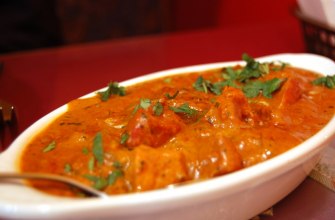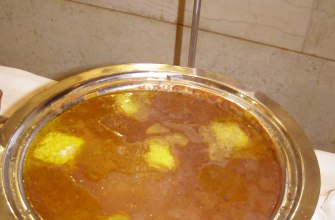
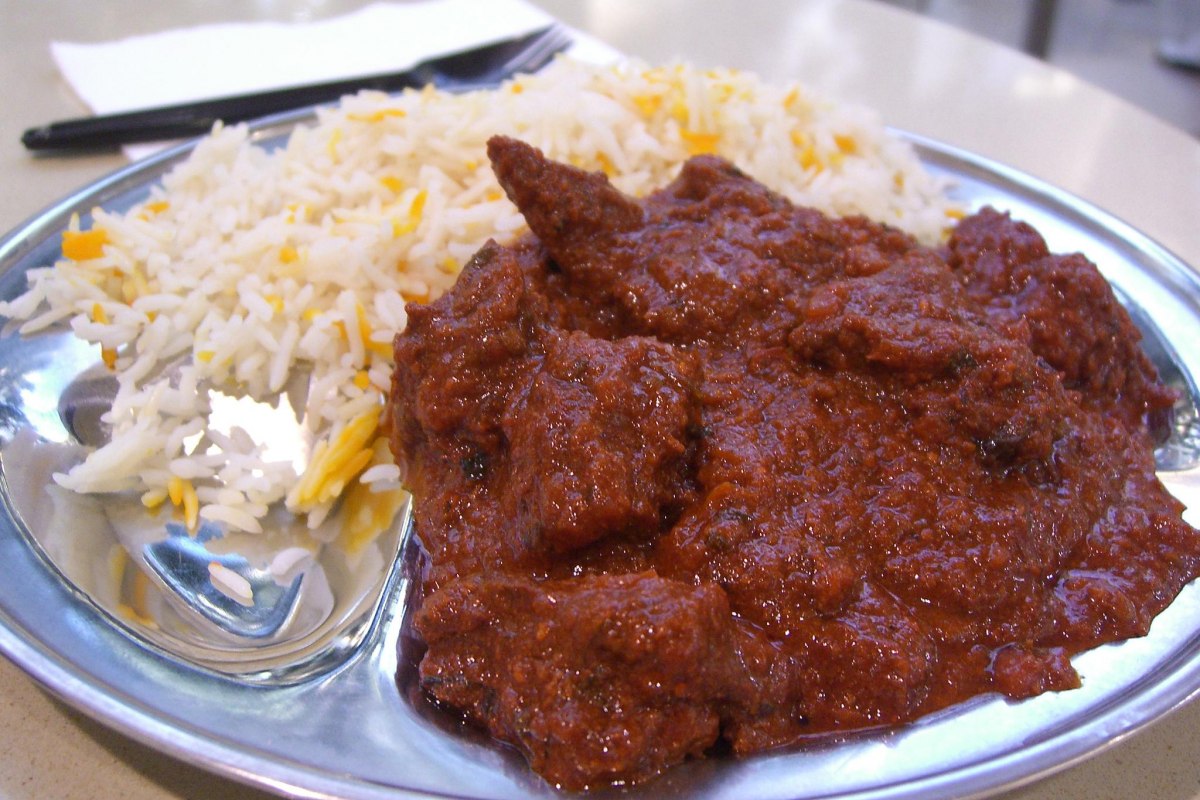
Vindaloo is a Portuguese dish that learned to speak Konkani. The fiery red pork curry that British menus rank as their hottest started as a sailors’ way of preserving meat on the long voyage to India, and its name has nothing to do with the potato that English restaurants drop into it. This Goan vindaloo recipe makes the real thing: a tangy, garlicky pork braise sharpened with vinegar and coloured deep red by Kashmiri chili, where the heat is one note in a balance rather than the whole point. Understanding where it came from is the fastest way to stop cooking it wrong.
The name means wine and garlic, not potato
The word vindaloo is a Goan reshaping of the Portuguese carne de vinha d’alhos, meat in wine and garlic. Vinha is wine, alhos is garlic, and that is the whole recipe in its name: meat marinated in a sour wine and crushed garlic. When the dish settled in Goa, “vinha d’alhos” slurred into “vindaloo.”
That last syllable causes endless confusion. Because “aloo” is the Hindi word for potato, cooks and restaurants across the world assume a vindaloo must contain potato, and many add it. It does not. The “aloo” in vindaloo is a corruption of alhos, garlic, not the vegetable. A traditional Goan vindaloo holds no potato at all, and adding one is a foreign misunderstanding dressed up as a recipe. If you want one fact to carry from this page, that is it: vindaloo is wine and garlic, never potato.
How a Portuguese sailors’ dish became Goan
When Portuguese ships under Afonso de Albuquerque took Goa in 1510, they brought carne de vinha d’alhos with them. The dish had a practical job at sea: meat packed in wine vinegar and garlic kept for weeks on a voyage with no refrigeration, the acid and garlic holding off spoilage. In Goa it met new ingredients and changed.
Goan cooks made two key swaps. They replaced the Portuguese wine vinegar with local toddy vinegar, made from fermented coconut palm sap, which gives Goan vindaloo its particular sourness. And they reached for the chili the Portuguese themselves had just carried from the Americas, which reached India around the 1520s, using dried Kashmiri chilies more for deep red colour than for fierce heat. Garlic stayed central, cumin, cinnamon, cloves and cardamom went in, and a little jaggery balanced the vinegar. The Catholic Goan community, free of the pork taboo, kept the dish on pork, and pork vindaloo became a fixture of Goan Christmas and feast tables.
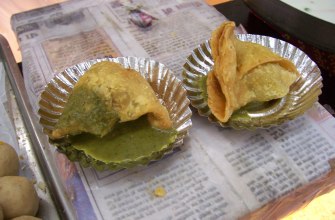
It is worth pausing on the chili, because it changed far more than this one dish. Before the Portuguese, Indian food drew its heat from black pepper and long pepper; the fiery chili that now seems essential to Indian cooking is a New World plant that arrived on Portuguese ships in the early sixteenth century and spread inland from Goa. The same voyages brought the potato, the tomato and the cashew, all of which Indian kitchens absorbed so completely that they feel native today. The potato that wrongly ends up in a vindaloo, and the one that rightly fills a samosa, came off the same ships as the chili that colours the dish.
The balance the curry house stripped out
The British vindaloo and the Goan one are almost different dishes. In Goa, vindaloo is a balance: sour from the vinegar, sweet from a touch of jaggery, warm from the sweet spices, and hot from the chili, with the Kashmiri chili contributing colour more than fire. The original is a brightly flavoured, relatively mild braise.
The heat-bomb reputation is a British invention. As a postwar curry-house dish, vindaloo became the curry you ordered after the pubs closed, a test of nerve, and kitchens cranked the chili to meet the dare. That version, often soupy, sometimes thickened with potato and lemon juice in place of vinegar, drifted far from the Goan original. Cooking a real vindaloo means rebuilding the balance the curry house stripped out. It should make you reach for water, but for the vinegar tang as much as the chili.
Ingredients for Goan pork vindaloo
This serves four to six. Fatty pork is right here; the fat carries the spice and stands up to the long marinade.
| Ingredient | Amount | Role |
|---|---|---|
| Pork shoulder or belly, cubed | 1 kg | The traditional meat, fat and all |
| Dried Kashmiri chilies | 10 to 15 | Deep red colour, gentle heat |
| Palm (toddy) or cider vinegar | half a cup | The defining sourness |
| Garlic and ginger | a whole head, plus a thumb | The other half of the name |
| Cumin, cinnamon, cloves, cardamom, black pepper | to grind | The warm spice base |
| Jaggery | 1 to 2 teaspoons | Balances the vinegar |
Use Kashmiri chilies for the colour. If you want more heat, add a couple of hotter dried chilies on top, but do not replace the Kashmiri ones, or you lose the red without gaining the balance. Some Goan cooks add a few peppercorns and a small piece of cinnamon to the grind for depth, and a single clove of extra garlic is never a mistake in a dish whose name is half garlic.
How to make Goan pork vindaloo step by step
Grind the vindaloo masala
Soak the dried chilies in warm water until soft. Blend them with the garlic, ginger, cumin, cinnamon, cloves, cardamom, black pepper and the vinegar into a smooth, thick paste. The vinegar, not water, is the liquid that carries the paste, which is what makes a vindaloo a vindaloo.
Marinate and braise
- Rub the masala paste through the pork and marinate it, covered, in the fridge for at least a few hours and ideally overnight, so the vinegar and spice penetrate the meat.
- Brown the marinated pork in its own fat with a little oil, then add any leftover marinade and just enough water to keep it from catching.
- Cover and simmer slowly until the pork is tender, an hour or more, stirring now and then.
- Stir in the jaggery near the end, taste, and balance the sour, sweet and salt. The gravy should be thick and clinging, not soupy.
Like many braises, vindaloo is better the next day. The vinegar mellows, the spices settle into the pork, and a vindaloo cooked ahead and rested overnight tastes rounder than one served straight from the pot.
Why the vinegar is the heart of it
Strip a vindaloo back and the one thing it cannot lose is the vinegar. It does three jobs at once. It tenderises the pork, its acid breaking down the meat over the long marinade so the braise turns silky. It preserves, which was its original purpose at sea and the reason a vindaloo keeps for days. And it gives the dish its defining tang, the sour backbone that the sweet spices and jaggery play against. Toddy vinegar, fermented from coconut palm sap, carries a faint funk that white vinegar cannot, which is why Goan cooks guard their source of it. Cider vinegar is the nearest stand-in abroad because it shares that mellow, fruity edge. The mistake is to treat the vinegar as a seasoning to add at the end; in a vindaloo it is the cooking medium itself, present from the marinade through to the pot.
Goan home cooks add two rules that the export recipes drop. Marinate the meat drained and patted dry, never wet, because any clinging water dilutes the vinegar and weakens its grip on the pork. And use a fatty, bone-in cut, shoulder, belly or neck with marbling, since the fat carries the spice and the bone deepens the gravy. Lean, boneless pork makes a thinner, duller vindaloo. With those two habits and a long marinade, the dish reaches its best a day or two on, the vinegar mellowed and the spice settled into the meat.
The mistakes that ruin a vindaloo
- Adding potato. The defining error, born of the aloo confusion. A Goan vindaloo has none.
- Chasing heat alone. Drowning the dish in hot chili buries the vinegar-and-spice balance that makes it vindaloo rather than just a hot curry.
- Watering down the marinade. Vinegar is the cooking liquid, not water. Use it generously and let it do the work.
- A short marinade. The flavour lives in the soak. A few hours is the minimum, overnight is better.
- A thin, soupy gravy. Authentic vindaloo is thick and clings to the meat. Reduce it down rather than serving it loose.
Vindaloo beyond pork
Pork is the Catholic Goan original, but the masala adapts. Chicken vindaloo cooks faster and is common where pork is avoided; lamb and beef versions exist; prawn vindaloo turns up on the coast. Hindu Goan kitchens, which lean away from beef and sometimes pork, build the same vinegar-and-chili profile around other proteins and add more jaggery. The same toddy vinegar and chili paste underpins recheado masala, the red Goan paste stuffed into fried fish, so a cook who masters vindaloo has half of Goan red cooking in hand. What stays constant across all of them is the vinegar, the garlic and the Kashmiri colour, not the meat. A vegetable vindaloo built around potato, of all things, or around mushrooms and chickpeas is a modern restaurant invention rather than a Goan tradition, but it works as a dish in its own right as long as the vinegar balance is kept. The test of any version is whether you can taste the sour and the garlic through the heat.
The Portuguese kitchen that stayed in Goa
Vindaloo is one dish in a whole Indo-Portuguese cuisine that four and a half centuries of colonial rule left behind, and the family is worth knowing because the techniques overlap.
- Sorpotel, a pork-and-offal stew cured with vinegar, the great Goan Christmas dish, traditionally cooked days ahead so the vinegar matures.
- Xacuti, a complex curry of roasted coconut and a long list of spices, often with chicken or lamb.
- Balchao, a tangy prawn or fish pickle-curry, vinegar-sharp and red.
- Recheado, the red masala paste, built on the same toddy vinegar and Kashmiri chili, stuffed into whole fish before frying.
- Bebinca, the layered coconut-and-egg dessert that closes a Goan feast.
The British, who ruled the rest of India, prized Goan cooks precisely because they had this Portuguese repertoire and could produce what colonial households called Portuguese curry. Goan men cooked on ships and in the clubs of Bombay and the Gulf, carrying vindaloo and sorpotel far beyond Goa. The cuisine is a small, sharp argument against the idea that Indian food is one thing: here is a corner of India that eats pork, cooks with vinegar, bakes leavened bread and ends the meal with a Portuguese pudding.
What to serve with vindaloo
Vindaloo is rich and sharp, so it wants a plain, soft starch beside it.
- Steamed rice, the everyday Goan partner that soaks the thick gravy.
- Sannas, the soft, slightly sweet Goan steamed rice cakes leavened with toddy.
- Goan pao, the soft bread rolls a Goan home buys fresh each morning to mop the plate.
Vindaloo sits in the Goan and Konkani school of the guide to Indian cuisine and spices, the clearest case of how a colonial encounter rewrote a regional kitchen. It is the sharp, sour opposite of a mild Mughlai butter chicken, and the two together show how wide the word curry has to stretch.
Frequently asked questions
Does authentic vindaloo have potato?
No. The name comes from the Portuguese vinha d’alhos, wine and garlic, not the Hindi aloo, potato. Traditional Goan vindaloo contains no potato; adding it is a foreign misunderstanding.
Is vindaloo actually Indian?
It is Goan, but its roots are Portuguese. The dish descends from carne de vinha d’alhos, a meat-in-vinegar-and-garlic preparation the Portuguese brought to Goa in the sixteenth century, then adapted with palm vinegar and Indian spices.
Why is restaurant vindaloo so much hotter than Goan vindaloo?
The fierce heat is a British curry-house development. The original Goan dish is a balanced, relatively mild braise where Kashmiri chili gives colour more than fire. Restaurants abroad raised the chili to make it a heat challenge.
What vinegar should I use for vindaloo?
Goan toddy or palm vinegar is traditional. If you cannot get it, cider vinegar is the closest easy substitute. Avoid plain white vinegar, which is too harsh, and do not swap in lemon juice, which changes the character.
Can I make vindaloo with chicken instead of pork?
Yes. Chicken vindaloo is common and cooks faster, though it lacks the richness pork fat gives. Keep the vinegar, garlic and Kashmiri chili the same; only the meat and the cooking time change.
How long does vindaloo keep, and does it really taste better the next day?
It keeps three to four days in the fridge, longer than most curries because the vinegar acts as a preservative, and it genuinely improves overnight as the sourness mellows and the spice settles into the pork. Goan cooks often make sorpotel and vindaloo days before a feast for exactly this reason. Reheat it gently and check the balance again, since the flavours shift as it rests.
Is Goan vindaloo the hottest Indian dish?
Not in Goa. The authentic version is moderately spiced and balanced by vinegar and jaggery. The reputation for extreme heat belongs to the British curry-house vindaloo, which was deliberately overloaded with chili as a test of nerve.
Sources
- Vindaloo, etymology and Portuguese origin
- Taste of Lisboa, the Portuguese origins of vindaloo
- Maunika Gowardhan, Goan pork vindaloo
- Image: Vindaloo, Wikimedia Commons, CC BY-SA 2.0, by Alpha