No other city is shaped by one architect the way Barcelona is shaped by Antoni Gaudí. Seven of his works carry UNESCO World Heritage status, from the rising towers of the Sagrada Família to a mosaic park and a row of houses that look grown rather than built. This guide covers every Gaudí site worth your time, places him inside the wider Modernisme movement that filled the city with stained glass and wrought iron, and teaches you to read the buildings so you see far more than the queue in front of you. It then routes the whole thing on foot and by metro and hands off to the deep guides for the two big landmarks.
This is the Gaudí branch of the wider things to do in Barcelona guide. Work through it to plan a half-day or a three-day architecture trip.
Who Gaudí was, in brief
Gaudí trained as an architect in Barcelona and spent his whole career in and around the city, almost entirely funded by one wealthy patron, the industrialist Eusebi Güell. He came from a family of coppersmiths, which left him thinking in three dimensions and metal from the start, and he grew steadily more radical, moving from decorative early houses to structures that abandoned the straight line altogether. A devout Catholic, he gave his final years to the Sagrada Família and died in 1926 after being struck by a tram. His work was dismissed by some as gaudy in his own lifetime and is now the foundation of the city’s identity and its tourism.
The seven UNESCO works
UNESCO lists seven Gaudí sites under a single heading. Five sit in central Barcelona, one in the Gràcia district, and one just outside the city. Two have their own full guides; the rest are covered in depth here.
Sagrada Família
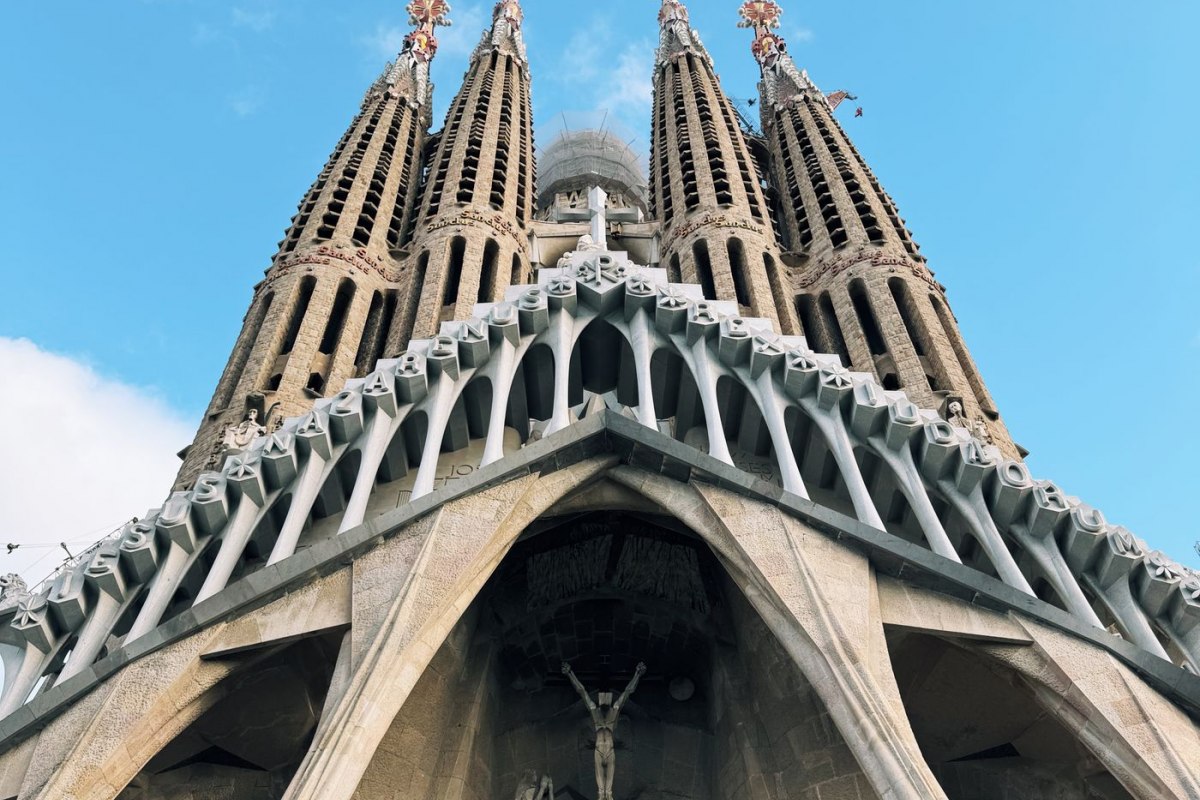
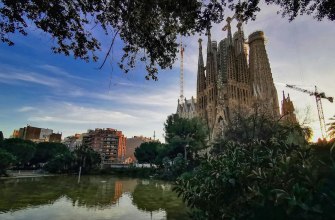
The basilica that became the tallest church in the world while still under construction is the one site no visitor should skip. Begun in 1882 and funded entirely by donations and tickets, it carries Gaudí’s structural genius at full scale, with columns that branch like trees and three facades carved generations apart. It needs a timed ticket booked well ahead. The full story, the facades, the funding and the visiting detail are in the dedicated Sagrada Família guide.
Park Güell
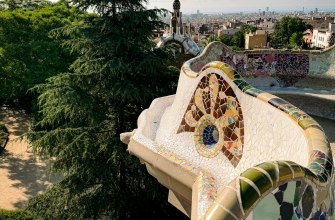
A failed luxury housing estate turned public park, Park Güell holds the mosaic dragon, the serpentine tiled bench and a columned hall that secretly works as a cistern. Much of the park is free; the Monumental Zone with the famous features needs a timed ticket. The origin story, the hidden water system and the access logistics are in the Park Güell guide.
Casa Batlló
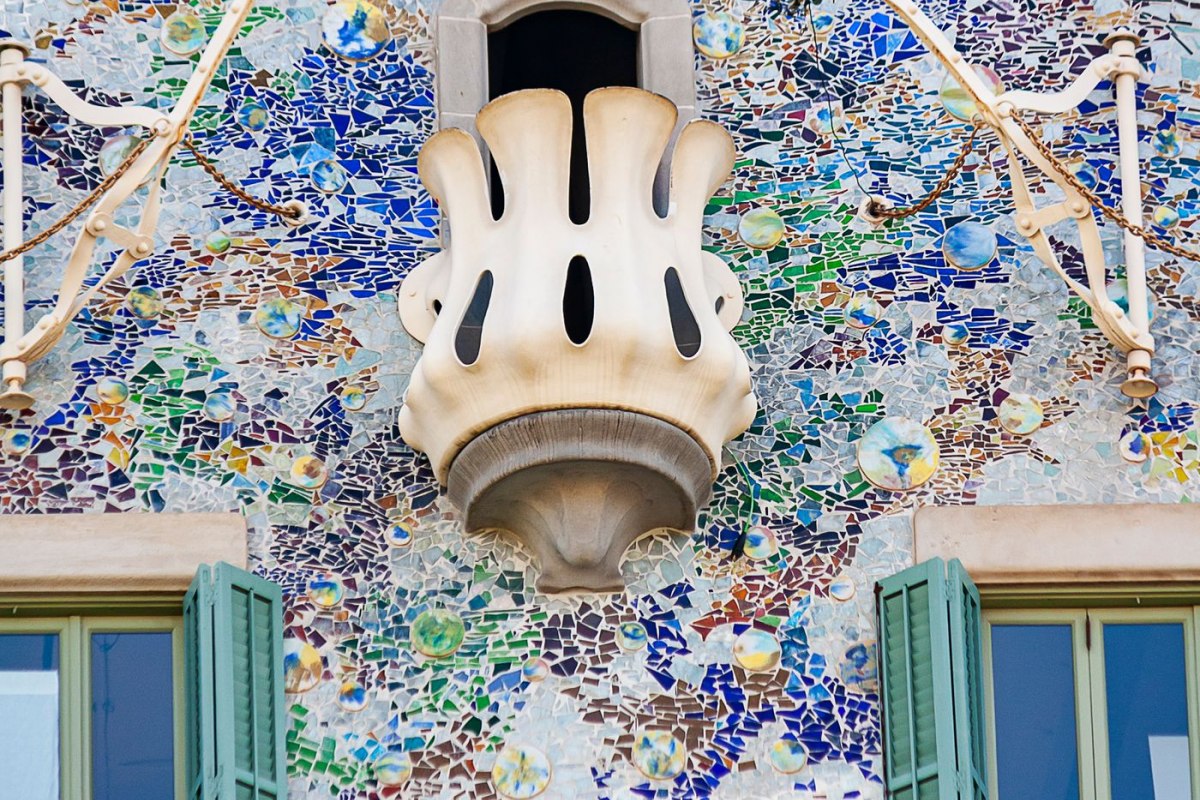
On the Passeig de Gràcia, Casa Batlló is Gaudí’s remodelling of an ordinary apartment block into something that looks alive. Locals call it the house of bones for its skull-shaped balconies and columns like femurs, and the scaled roof reads as the back of a dragon pierced by Saint George’s lance.
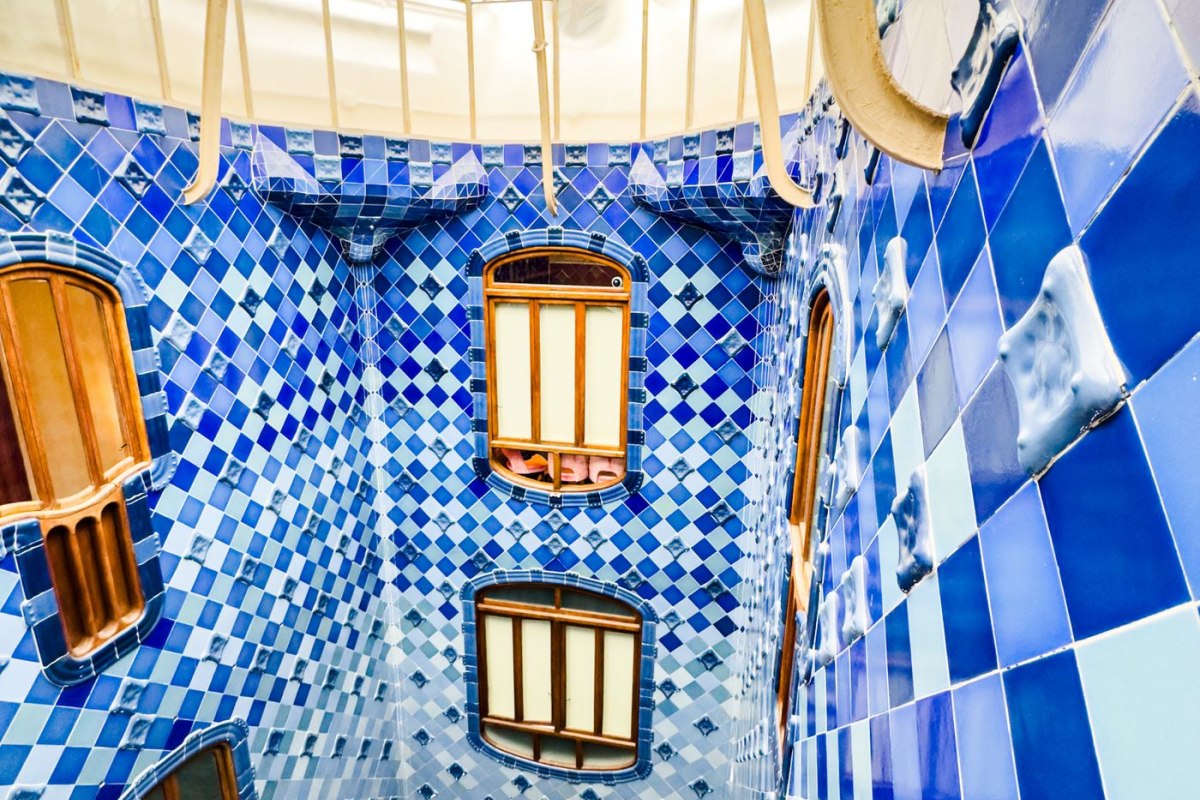
- The light trick: the central lightwell is tiled in blues that grade from deep cobalt at the top to near-white at the bottom, so the light looks even all the way down rather than fading. Gaudí also made the windows larger lower down for the same reason.
- No straight lines: the facade ripples like water, the window frames curve like bone, and the whole front is studded with trencadís that shifts colour as you move.
Casa Milà, La Pedrera
A few doors up, Casa Milà earned the nickname La Pedrera, the quarry, for its heavy, wave-like stone facade. It is the boldest of Gaudí’s houses and the last before he gave himself to the basilica.
- The attic: a long loft of brick catenary arches, now the Espai Gaudí museum, shows the curve logic behind all his structures in one ribcage-like space.
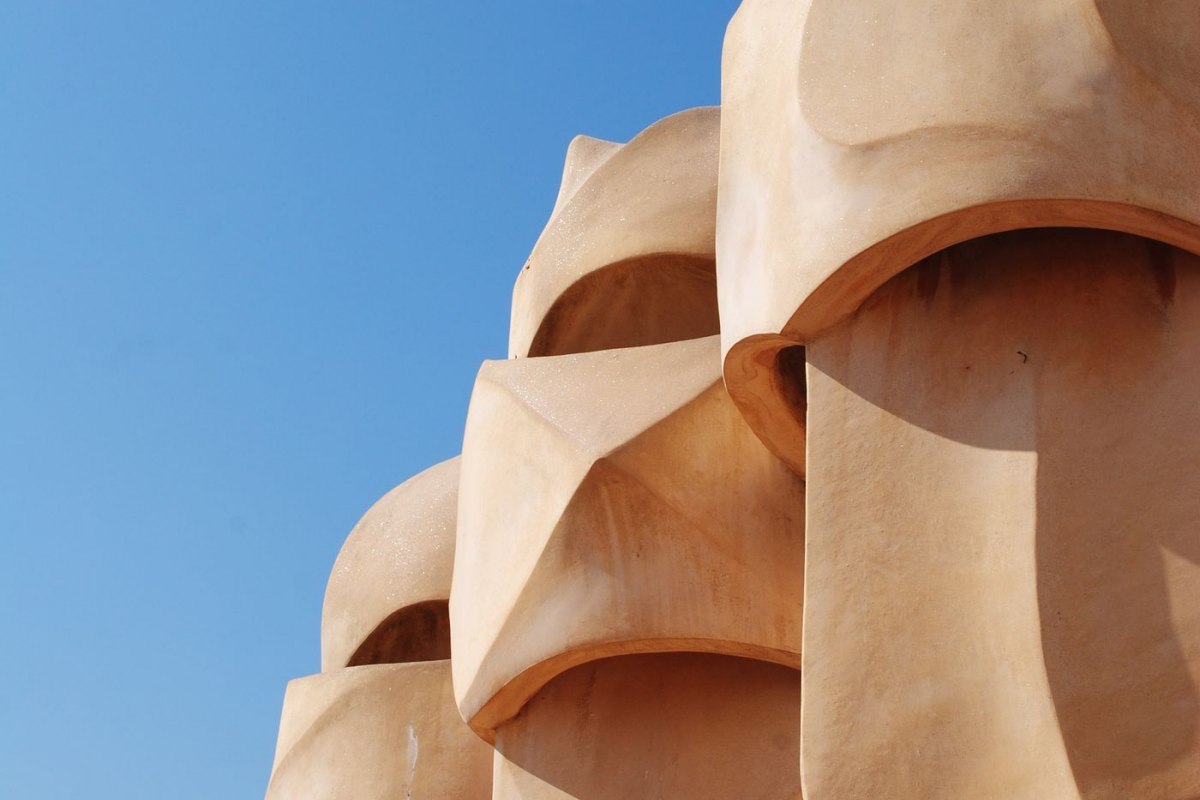
- The roof: the terrace is crowned by chimneys and vents shaped like helmeted warriors, the most photographed rooftop in the city.
- The structure: the facade carries no load. The floors hang off an internal frame, so the walls could curve freely and the apartments inside have no structural walls at all.
Palau Güell
Just off the Ramblas in the Raval, Palau Güell is the town mansion Gaudí built early in his career for his patron. From the street it is restrained, but inside it opens into a soaring central hall under a parabolic dome pierced with small holes so it glows like a night sky during the day. The rooftop is an early playground of tiled chimneys, a first run at ideas he would perfect at La Pedrera.
Casa Vicens
In the Gràcia district stands Gaudí’s first major house, built for a tile manufacturer and only opened to the public in recent years. It is unlike his later work: a riot of green and white tiles, marigold-flower patterns and Moorish and oriental influence that shows the young architect before he found the flowing forms of his maturity.
Colònia Güell crypt
Outside the city at Santa Coloma de Cervelló, the crypt of the Colònia Güell is the least visited of the seven and the most important for understanding the others. Here Gaudí spent roughly a decade building his most famous tool: a model hung upside down from the ceiling, with strings weighted by little sacks of lead pellets that fell into perfect catenary curves under their own weight. Photographed and flipped, it gave him the leaning columns and branching vaults he would later trust to the Sagrada Família. Only the crypt was ever finished, which makes it a rare, quiet place to stand inside the experiment that made the basilica possible.
Modernisme beyond Gaudí
Gaudí was the most extreme figure of a whole movement, Catalan Modernisme, the local branch of Art Nouveau. Two other architects left work every bit as worth seeing, and missing them is the most common mistake visitors make.
- Lluís Domènech i Montaner built the Palau de la Música Catalana, a concert hall lit by an enormous inverted stained-glass skylight, and the Hospital de Sant Pau, a sprawling pavilion hospital that is among the largest Art Nouveau sites anywhere. Both hold UNESCO status in their own right.
- Josep Puig i Cadafalch designed Casa Amatller, right beside Casa Batlló, and the Casaramona factory that now houses the CaixaForum arts centre.
- The Illa de la Discòrdia, the block of discord on the Passeig de Gràcia, sets three of these architects side by side: Gaudí’s Casa Batlló, Puig i Cadafalch’s Casa Amatller and Domènech i Montaner’s Casa Lleó Morera, three clashing styles competing for attention on one street.
How to read a Gaudí building
Knowing what to look for is the difference between a photo stop and actually seeing the work. A handful of recurring ideas run through everything Gaudí built.
- Trencadís: the mosaic of broken tiles, often factory rejects and smashed crockery, that covers his benches, roofs and facades in shifting colour. Look closely and you find whole fragments of plates and bottles.
- The catenary arch: the gentle pointed curve a hanging chain makes under its own weight. Gaudí used it everywhere because it carries load in pure compression, which let him drop the flying buttresses of Gothic building.
- Ruled surfaces: hyperboloids, paraboloids and helicoids, the warped geometric shapes that let straight stones build curved walls and vaults. They are why his interiors feel organic but stand up.
- Nature copied directly: columns that branch like trees, ceilings like honeycomb, balconies like bone, roofs like reptile skin. Gaudí treated nature as the master engineer and copied its solutions.
- Iron and colour: hand-forged wrought iron from his metalworking background, and bold polychrome tile, on buildings most of his peers kept grey.
Spend two minutes finding these on the first building and you will see them on every one after.
Practical: tickets, passes and what to book ahead
Gaudí sites are among the most visited places in Europe, and several sell out. Plan the bookings before the trip.
- Book early: the Sagrada Família, Park Güell Monumental Zone and Casa Batlló sell timed slots that go days to weeks ahead in season. Reserve these first.
- Book a few days out: La Pedrera, Casa Vicens, Palau Güell and the Colònia Güell crypt rarely sell out and can be left a little later.
- Combined tickets: Gaudí bundles pair the Sagrada Família and Park Güell with the houses at a discount, and a separate pass covers the three Gaudí houses together. They save money only if you will actually visit every site included.
- The Ruta del Modernisme is a dedicated pass and map covering Gaudí plus the wider Modernisme buildings at reduced entry, sold with a guidebook that doubles as a self-guided walking route.
- Free from outside: the facades of Casa Batlló, La Pedrera, Casa Vicens and the Sagrada cost nothing to admire from the street, and the Illa de la Discòrdia is a free open-air gallery of the movement.
Gaudí routes for any length of stay
The sites split cleanly into a central cluster and a few outliers, so the order matters more than the distance.
One full Gaudí day
Start early at the Sagrada Família on a pre-booked slot, then take the metro to Park Güell for late morning before the heat and crowds peak. Head down to the Passeig de Gràcia after lunch for Casa Batlló and La Pedrera, walking the Illa de la Discòrdia between them. This covers four of the seven works and the best of the Modernisme block in one demanding day.
Half a day if time is short
Pair the Sagrada Família with the Passeig de Gràcia houses and skip the uphill trip to Park Güell. The basilica and Casa Batlló alone give you Gaudí’s structural and decorative extremes within a short metro ride.
The free, exterior-only route
Walk the Passeig de Gràcia past Casa Batlló, Casa Amatller and La Pedrera, cut across to the Sagrada Família to see it from its reflecting pond, and finish in Gràcia at the facade of Casa Vicens. A full morning of Gaudí and Modernisme without buying a single ticket.
The second day, for the committed
Give a second day to Palau Güell near the Ramblas, Casa Vicens in Gràcia, and the train out to the Colònia Güell crypt, the quiet trio that most day-trippers never reach and that completes the seven.
Frequently asked questions
How many Gaudí buildings are there in Barcelona?
Seven of Gaudí’s works hold UNESCO World Heritage status: the Sagrada Família, Park Güell, Casa Batlló, Casa Milà (La Pedrera), Palau Güell, Casa Vicens and the Colònia Güell crypt just outside the city. Several other smaller works survive around Catalonia.
Which Gaudí sites should you book in advance?
The Sagrada Família, the Park Güell Monumental Zone and Casa Batlló sell timed tickets that go days or weeks ahead in season, so book those first. La Pedrera, Casa Vicens, Palau Güell and the Colònia Güell crypt can usually be left until a few days before.
Can you see Gaudí’s work for free?
Yes, from outside. The street facades of Casa Batlló, La Pedrera, Casa Vicens and the Sagrada Família cost nothing, the wooded part of Park Güell is free, and the Illa de la Discòrdia block lines up three Modernisme houses in the open air.
How long do you need for the Gaudí sites?
One demanding day covers the Sagrada Família, Park Güell and the two Passeig de Gràcia houses. A second day adds Palau Güell, Casa Vicens and the Colònia Güell crypt for anyone who wants all seven UNESCO works.
Is Casa Batlló or La Pedrera better?
Casa Batlló is the more dreamlike inside, with the graded blue lightwell and the dragon roof. La Pedrera has the stronger structure story, with the catenary-arch attic and the warrior chimneys on the roof. With time for only one, Casa Batlló wins on spectacle and La Pedrera on understanding how Gaudí built.
What is Modernisme?
Modernisme is the Catalan branch of Art Nouveau, a turn-of-the-century movement of flowing forms, stained glass, wrought iron and bold tile. Gaudí was its most extreme figure, but Domènech i Montaner and Puig i Cadafalch left work across Barcelona that is just as worth seeing.
Sources
- Basílica de la Sagrada Família – Gaudí’s structural method and the basilica
- Casa Batlló – the lightwell, facade and Gaudí remodelling
- La Pedrera, Casa Milà – the attic, roof and structure
- Park Güell official site – the park and Gaudí’s house
- Palau de la Música Catalana – Domènech i Montaner and Modernisme
- Ruta del Modernisme – the wider Modernisme route and pass