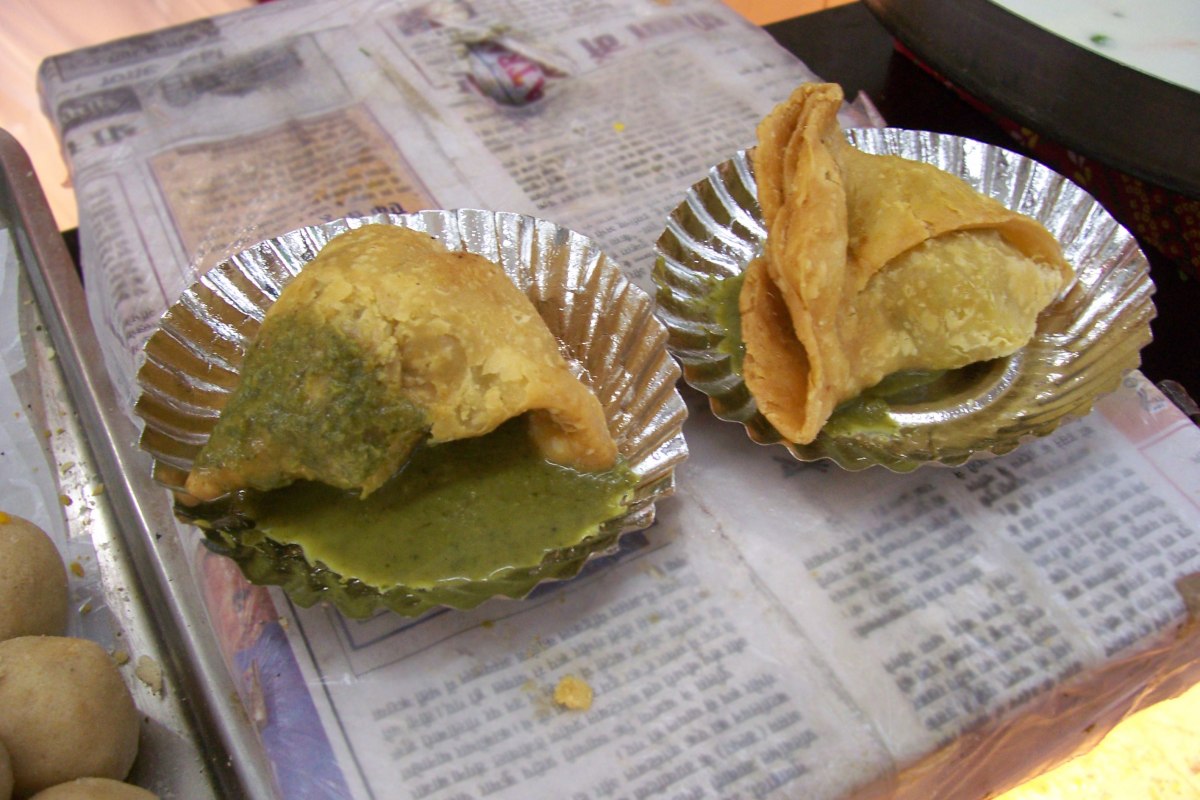
The samosa is not originally Indian, and for most of its history it held no potato at all. It arrived at the courts of the Delhi Sultanate as a Persian pastry of minced meat and nuts, recorded in a fourteenth-century traveller’s diary, and only became the potato street snack of today after the Portuguese brought the potato to India three centuries later. This samosa recipe makes the Punjabi potato version most people picture, and it treats the part that decides everything as seriously as it deserves: the slow, low-heat fry that gives a samosa its blistered-free, flaky, layered crust.
A Persian pastry at the Sultan’s table
The word itself is Persian. Samosa comes from the Middle Persian sambosag, a triangular pastry, and the same root gives the Arabic sambusak. Recipes appear in Arab cookery books from the tenth to thirteenth centuries under names like sanbusak and sanbusaj, long before the pastry reached India.
It came east with people. Chefs from the Middle East and Central Asia who cooked in the royal kitchens of the Delhi Sultanate brought the samsa with them in the thirteenth and fourteenth centuries. The Delhi Sultanate poet Amir Khusrau wrote around 1300 that the nobles enjoyed a samosa made of meat, ghee and onion. A generation later the Moroccan traveller Ibn Battuta, dining at the court of Muhammad bin Tughluq, described a small pie of minced meat with almonds, pistachios and walnuts, served before the pulao course, an ancestor of today’s biryani. That is the original samosa: a royal delicacy, rich with meat and nuts, eaten off a Sultan’s table, not a roadside snack.
How the samosa became Indian
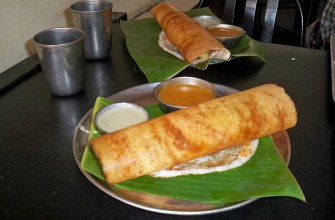
The potato changed everything, and it arrived late. The Portuguese introduced potato cultivation to India in the early seventeenth century, and the cheap, filling tuber gradually replaced the costly meat and nuts of the court version. The aloo samosa spread out of the palace and into the bazaar, and the pastry that had been a sign of wealth became the most democratic snack in the country, sold at every railway platform and tea stall the way the southern masala dosa rules the morning. The samosa you buy for small change today is the descendant of a dish once reserved for princes, and the swap from meat to potato is what made that journey possible.
The samosa’s global family
Because the pastry travelled with traders and empires, versions of it ring the old Islamic world, and they are all cousins of the Indian samosa.
- Somsa in Central Asia, baked rather than fried, often in a tandoor, stuffed with lamb and onion, sold across Uzbekistan and Tajikistan.
- Sambusa in the Horn of Africa, a Ramadan staple in Somalia, Ethiopia and Eritrea, usually filled with spiced minced meat or lentils.
- Sambousek in the Levant and the wider Arab world, smaller and often baked, the direct heir of the medieval Arab sanbusak.
- Chamuças carried by the Portuguese from Goa to Mozambique and on to Lisbon, where they are now a fixture of the snack counter.
Trace the names and you trace the trade routes. The same triangular pastry that an Uzbek bakes in a clay oven, a Somali fries for the iftar table and a Goan rolls thin into a chamuça is one idea, scattered and re-rooted across half the planet. India did not invent the samosa, but it gave the world its most famous version, and the East African and British samosa most Westerners know travelled there in turn with the Indian diaspora.
The samosas of India
There is no single samosa. The shape, size and filling change by region, and the names change with them.
| Samosa | Region | What changes |
|---|---|---|
| Punjabi samosa | North | Large, potato and pea, often with raisin and cashew |
| Singara | Bengal | Smaller, crescent-shaped, diced potato with peanuts and raisins |
| Lukhmi | Hyderabad | Square, thick crust, minced meat filling |
| Keema samosa | Karnataka, Karachi style | Spiced minced lamb, goat or chicken |
| Patti samosa | Gujarat, west | Thin spring-roll wrapper, often cabbage |
| Onion samosa | South | Small, thin, crisp, onion-filled |
The Bengali singara is the one outsiders most often mistake for a samosa proper. It is smaller, folded into a tighter crescent, and its potato is diced rather than crumbled, with peanuts that a Punjabi cook would never add. Hyderabad’s lukhmi goes the other way, a thick square pastry built around meat, closer to the original court version than to the potato snack. Even the shape carries meaning: the Punjabi triangle, the Bengali half-moon and the Hyderabadi square are regional signatures a practised eye reads before the first bite.
The dough is half the samosa
A samosa crust should be firm, flaky and bubble-free, and that comes from two things in the dough. The first is moyan, the fat rubbed into the flour before any water goes in. Work oil or ghee into the maida with your fingers until it looks like coarse breadcrumbs and holds its shape when pressed. Too little and the crust turns hard; too much and it falls apart in the oil. The second is ajwain, carom seeds, kneaded into the dough, which give the fried crust its distinctive savoury fragrance. The dough is kneaded stiff, much firmer than a roti dough, and rested under a cloth so it rolls out without springing back.
The potato filling
Boil the potatoes until just fork-tender, then crumble rather than mash them, because a crumbled filling stays light and a mashed one turns gummy. Temper cumin in oil, add ginger, green chili and peas, then the potato with coriander, garam masala and a good measure of amchur, dried mango powder, for the sour note that lifts the whole thing. Punjabi cooks often fold in a few cashews and raisins. The filling should be dry, savoury and a little tangy, and it should be cool before it goes near the dough, since warm filling softens the pastry and makes it harder to seal.
How to make samosa step by step
Make and rest the dough
Rub the oil into the flour with the ajwain and salt until it clumps, then bring it together with a little water into a stiff dough. Knead briefly, cover, and rest thirty minutes.
Shape the cones
- Roll a ball of dough into an oval and cut it in half across the middle.
- Take one half, fold it into a cone, sealing the straight edge with a dab of water.
- Fill the cone two-thirds with the cooled potato, then pinch the open top shut, pressing a small pleat so it sits flat.
The seal is where home samosas fail. Use water, not flour paste, to wet the edges, press them firmly between finger and thumb, and check there are no gaps before the samosa goes near the oil, because a single open seam lets oil rush in and the filling leak out. A small flat base, pinched at the bottom of the cone, lets the samosa stand upright, which is the mark of a well-folded one. None of this is hard, but it rewards a slow hand on the first few before the rhythm comes.
Fry low and slow
Heat the oil to medium-low. Slide the samosas in and fry them gently, turning, until they are pale gold and crisp, which takes far longer than most people expect. Drain and serve hot.
Why the low-heat fry is the whole secret
This is the step that separates a real samosa from a disappointing one, and it goes against instinct. Hot oil seems faster, but it ruins the crust. Fry a samosa in very hot oil and the surface blisters into bubbles and browns before the inside has cooked, leaving a doughy, raw-tasting pastry under a spotted skin. Fry it in medium-low oil and the crust cooks slowly all the way through, staying smooth, pale and flaky with the fine layers the moyan created.
The test is simple. Drop a small piece of dough into the oil. If it sizzles and shoots to the surface, the oil is too hot. You want it to sink, pause, and rise slowly with only tiny bubbles around it. A batch of samosas can take fifteen to twenty minutes at that gentle heat, and the patience is the recipe. Rushing the fry is the single most common reason a home samosa comes out wrong.
If you use a thermometer, aim for around 130 to 140 degrees to start, far cooler than the 180 you would use for most frying, and let the temperature drift up only towards the end to deepen the colour. A neutral oil with a high smoke point suits the long, slow cook; ghee is traditional in some kitchens but burns faster at length. Fry in small batches so the oil does not cool too far when the samosas go in, and give each one room, because crowding drops the temperature and steams the crust soft.
Make ahead, and frying from frozen
Samosas are made for batch cooking, which is how street vendors and home cooks alike handle the slow fry. Shape the whole batch, then freeze them raw on a tray before bagging them. They keep for a month or two, and the best part is that you fry them straight from frozen, no thawing, dropped into medium-low oil so the crust cooks through as the inside heats. Thawed samosas tend to go soggy and split, so frozen-to-fryer is the better route. You can also fry them halfway, cool them, and finish the fry just before serving, which is how a tea stall keeps a tray ready without sacrificing the crust. The filling itself can be made a day ahead and chilled, since it has to be cool before it meets the dough anyway.
The mistakes that ruin a home samosa
- Frying too hot. Blistered, bubbled crust and raw dough inside. Keep the oil medium-low and give it time.
- Soft dough. A roti-soft dough fries greasy and limp. Knead it stiff, firmer than you think.
- Mashed potato. It turns the filling heavy and gluey. Crumble it instead.
- Skipping the amchur. Without the sour note the filling tastes flat. Amchur, or a squeeze of lemon, is what makes it sing.
- Overfilling. A bulging samosa splits in the oil. Fill to two-thirds and seal firmly.
What to serve with samosa
A samosa is built for dipping, and the chutneys are part of the snack.
- Mint-coriander chutney, fresh, green and sharp with green chili.
- Tamarind chutney, sweet and sour, the classic foil to the savoury pastry.
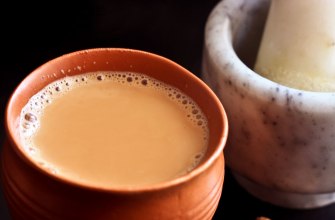
- Masala chai, since a samosa with a cup of spiced tea is the default Indian tea-time pairing, the snack that defines the evening break.
The samosa belongs to the wider world of chaat and street food set out in the guide to Indian cuisine and spices, where the same snack carries a different name in every region.
Frequently asked questions
Are samosas originally Indian?
No. The samosa came to India from the Persian and Central Asian world, reaching the Delhi Sultanate courts in the thirteenth and fourteenth centuries as a meat-and-nut pastry. The potato filling is a much later Indian adaptation.
Why do my samosas come out blistered and soft?
The oil was too hot. A samosa must be fried slowly in medium-low oil so the crust cooks through without bubbling. High heat blisters the surface and leaves the dough raw inside.
What is the difference between a samosa and a singara?
Singara is the Bengali version: smaller, crescent-shaped, with diced potato and often peanuts and raisins. The Punjabi samosa is larger, triangular and built around crumbled potato and peas.
Can I bake or air-fry samosas?
Yes, though the crust will be drier and less flaky than a deep-fried one, since the layers the moyan creates rely on frying. Brush them with oil and cook until golden if you prefer to avoid deep-frying.
What is moyan in samosa dough?
Moyan is the fat, oil or ghee, rubbed into the flour before water is added. It coats the flour and creates the flaky, layered crust. Too little makes the crust hard; too much makes it crumble.
What spices go in the potato filling?
The northern standard is cumin tempered in oil, then ginger and green chili, with coriander, garam masala and amchur stirred through the crumbled potato and peas. Some cooks add fennel or crushed coriander seed for crunch. The amchur, or a squeeze of lemon, is the one that should not be skipped.
Why is ajwain used in the dough?
Ajwain, carom seed, gives the fried crust its savoury fragrance and is also a traditional digestive, which suits a rich fried snack. A teaspoon kneaded into the dough is enough to flavour the whole batch.
Sources
- Samosa, etymology and history
- The Better India, the history of the samosa
- Bayt Al Fann, the story of the samosa and its Persian roots
- Image: Samosa, Wikimedia Commons, CC BY-SA 3.0, by Rajesh dangi