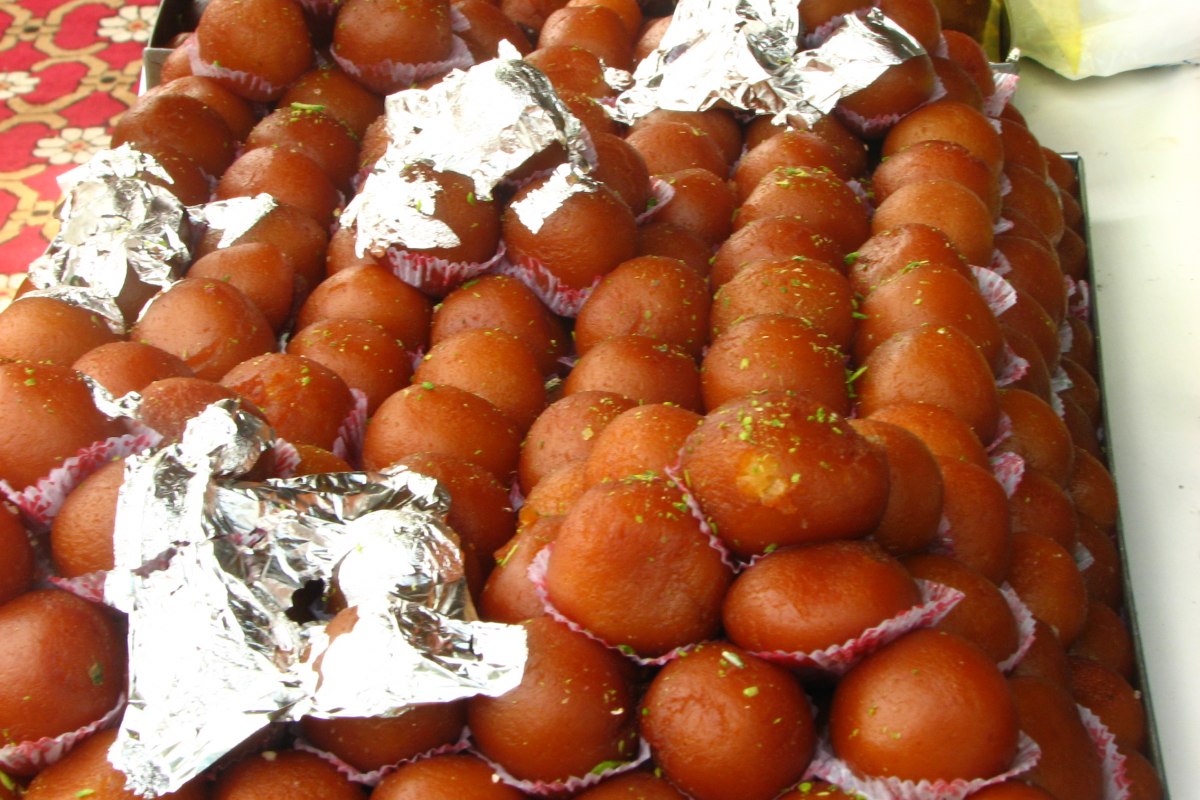
Gulab jamun contains neither rose nor the fruit it is named after. It is a Persian fritter that married Indian milk, a ball of reduced-milk dough fried dark and soaked in a rose-scented syrup, and its name describes the syrup and a passing resemblance rather than anything inside it. This gulab jamun recipe makes the soft, syrup-heavy version of the sweet shop, and it turns on three things home cooks rush: a lump-free khoya dough, a syrup cooked to exactly the right thread, and a slow fry that cooks the centre before the skin burns.
The name: rose water and a fruit it only resembles
Both halves of the name come from somewhere other than the ingredients. Gulab is Persian, from gul, flower or rose, and ab, water: rose water, the scent of the syrup the balls bathe in. Jamun is the Hindustani name for the Syzygium fruit, the Java plum or black plum, a small dark oval the fried dumpling happens to resemble in size and shape. So the sweet is named for the perfume of its syrup and a fruit it merely looks like, not for any rose petal or jamun in the recipe. Knowing that settles a common confusion: there is no jamun fruit in a gulab jamun, and the rose is only in the syrup.
A Persian fritter that became Indian milk
The sweet’s roots run back through the Persianate world that shaped so much of North Indian court food. A medieval Arab dessert, luqmat al-qadi, was a fried dough ball soaked in rose-scented syrup, and that rosewater-syrup idea is the thread that connects it to gulab jamun, though the doughs are different. The culinary historian Michael Krondl describes Persian arrivals bringing a round fritter that, over time, became gulab jamun on Indian soil. A popular legend places its invention in the kitchens of the emperor Shah Jahan, the builder of the Taj Mahal, a nice story but better treated as legend than fact.
The decisive Indian change was the dough. The early fritters were flour-based, but the Mughal royal kitchens, rich in dairy, turned to khoya, milk reduced to a soft solid, and that swap is what gave gulab jamun its melting, milky richness. The dish that resulted belongs to the reduced-milk tradition of North Indian sweets, the khoya half of the divide that splits the whole world of Indian mithai from its curdled-milk, chenna-based eastern cousins.
Ingredients for gulab jamun
This makes about twenty. Khoya gives the truest result, but good milk powder is a reliable shortcut that many home cooks now prefer.
| For the dumplings | Amount |
|---|---|
| Khoya (mawa), grated | 200 g |
| Refined flour (maida) | 3 to 4 tablespoons |
| Baking powder or a pinch of soda | a quarter teaspoon |
| Milk, to bind | a splash |
| Ghee or oil, to fry | to deep-fry |
| For the chashni (syrup) | Amount |
|---|---|
| Sugar | 2 cups |
| Water | 2 cups |
| Cardamom, crushed | 4 pods |
| Rose water | 1 teaspoon |
| Saffron and a squeeze of lemon | optional |
The flour is a binder, not a base. Use as little as holds the dough together, because flour is the first cause of a hard, heavy jamun. A teaspoon of fine semolina in place of some flour is a common trick for an even softer crumb.
How to make gulab jamun step by step
Cook the chashni to one thread
Boil the sugar and water with the cardamom until the syrup reaches one-thread consistency, the point where a drop pulled between finger and thumb forms a single short strand. Stir in the rose water, saffron and a little lemon to stop it crystallising, and keep it warm but not boiling. This stage decides the sweet: a thin syrup leaves the jamun bland and a thick one stays on the surface instead of soaking in.
Make the dough and fry low
- Mash the khoya completely smooth, with no lumps, then work in the flour and baking powder and just enough milk to make a soft dough. Do not knead it hard.
- Rest it ten minutes, then roll into smooth, crack-free balls. A crack now becomes a split in the oil.
- Heat ghee or oil to medium-low, around 150 to 160 degrees. Slide the balls in and fry gently, turning, until they are an even deep brown. Too hot and they brown before the centre cooks.
- Lift them straight into the warm syrup and leave them to soak at least an hour, ideally two, until they double and turn soft all through.
The low fry is the discipline. A jamun browned fast on high heat looks done but stays raw inside, and that raw core cannot drink the syrup, which is the single most common reason a home jamun ends up hard.
The science of a soft jamun
A good gulab jamun is soft to the centre and heavy with syrup, and a few simple mechanics make that happen. Khoya is the key because it is milk concentrated to its solids and fat, so a dough built on it stays tender and milky where a flour dough would turn bready. The pinch of leavening matters more than its size suggests: as the ball fries, the soda or baking powder releases tiny pockets of gas that open the crumb, and it is into those pockets that the syrup later travels. Fry the ball through gently and that open structure soaks up syrup like a sponge; leave the centre raw and the pockets never form, so the syrup stays out and the jamun sits hard.
The soak is osmosis at work. A warm, one-thread syrup is thin enough to move into the warm fried ball and sweeten it all the way through, which is why both the jamun and the syrup should be warm when they meet, never cold. Given an hour or two, the dumplings drink until they swell and double. This is also why gulab jamun is best a few hours after it is made rather than straight from the pan, the rare sweet that rewards a little patience after the cooking is done.
The halwai tips home cooks miss
The Indian sweet-makers and the Hindi food press are specific about a few points the standard recipe glosses over.
- Aim for a syrup lighter than one full thread. The sweet-shop standard is a syrup that is honey-sticky between the fingers but barely forms a thread, lighter than a one-string syrup. A fuller, thicker syrup will not soak into the ball.
- Drop them into hot syrup, not cold. The fried balls go straight from the oil into warm-to-hot syrup. Into cold syrup the outer skin slips off and the jamun falls apart, which is a mistake the recipe sites rarely warn about.
- Fry on medium and keep them moving. Turning the balls slowly in the oil colours them evenly all over. A still pan browns one side and leaves the jamun patchy.
Why home gulab jamun goes wrong
- Hard jamuns. Almost always too much flour, an over-kneaded dough, or frying too hot so the inside stays gummy and cannot soak. Use minimal flour, a gentle hand and a low flame.
- Hollow or collapsing centres. Under-frying at too high a heat leaves a doughy middle that deflates in the syrup. Fry slower and longer so the centre sets.
- Splitting in the oil. Cracks in the rolled balls, or too much leavening, make them burst. Roll them smooth and measure the soda carefully.
- Not soaking through. Syrup too thick, too cold, or too little time. Keep it at one thread and warm, and give the jamuns a couple of hours.
- Dense, heavy texture. Khoya not mashed smooth, or no rest before frying. Mash until silky and let the dough relax.
The jamun family
Gulab jamun has cousins across the subcontinent, and the differences are real.
| Sweet | What changes |
|---|---|
| Kala jamun | Sugar worked into the dough caramelises to a near-black, slightly crisp skin |
| Pantua | The Bengali version, made with chhena rather than khoya, fried slowly in ghee |
| Ledikeni | A Bengali pantua said to be created for Lady Canning, whose name it carries |
| Lal Mohan | The Nepali name and version of the same sweet |
| Golap jam | The Bangladeshi cousin, alongside the darker kalo jam |
The ledikeni is the best story in the family. The Kolkata confectioner Bhim Chandra Nag is said to have made an elongated pantua in honour of Lady Charlotte Canning, the wife of the Viceroy, in the nineteenth century, and the sweet has carried a Bengali slurring of “Lady Canning” as its name ever since. It is a small monument to the Raj built entirely of fried chhena and syrup. Stuffed versions exist too, the dumpling hiding a core of chopped nuts, saffron or a clove, a flourish the better halwais add for festivals.
Where the best gulab jamun comes from
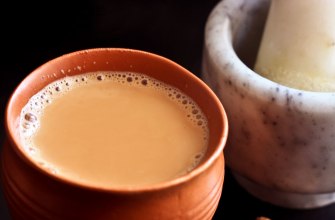
Gulab jamun is the sweet most people buy rather than make, and a few names are bywords for it. The Bikaner houses of Rajasthan, among them Bhikharam Chandmal, which began as a bhujia maker around two centuries ago, and Haldiram’s, which grew out of the same desert sweet-and-snack tradition, sell it across India and abroad, canned and boxed for gifting. At a festival or a wedding, warm gulab jamun from a trusted halwai is a fixture, and a tin of it is among the most common boxes carried to a door at Diwali, often alongside a flask of masala chai. The dish travels well, which is why it turns up on restaurant menus from London to New York as the default Indian dessert.
Gulab jamun around the world
Few Indian sweets have travelled as far. Wherever the Indian diaspora settled, gulab jamun went with it, and it took on local names and slight turns along the way. It is a staple in the Caribbean among the Indo-Caribbean communities of Trinidad and Guyana, in Mauritius, in the Gulf and across the United Kingdom, where it became the standard dessert at the end of a curry-house meal. Boxed, canned and as just-add-water instant mixes, it ranks among the most exported Indian sweets on earth, the sweet a homesick cook reaches for because it keeps and forgives.
That portability is no accident. A sweet soaked in sugar syrup keeps for days without refrigeration, the same preservation logic that once carried other dishes across oceans, and the instant mix made it foolproof enough for a kitchen with no khoya and no tradition behind it. For many people outside India, gulab jamun is the first Indian sweet they meet, often before they have heard the word mithai at all, served warm with a scoop of ice cream after a plate of curry.
What to serve with gulab jamun
Gulab jamun is rich and very sweet, so it is usually eaten on its own in small numbers, warm.
- Warm, just soaked, the way a sweet shop serves it, when the syrup is still soft inside.
- With rabri, the thickened, layered milk poured over for a doubly rich dessert.
- With vanilla ice cream, the modern restaurant pairing of hot jamun and cold cream.
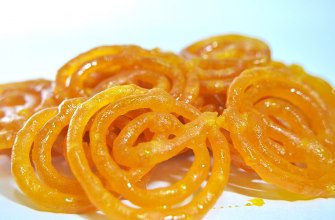
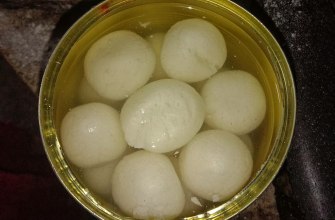
It belongs to the syrup-sweet shelf of the mithai guide, alongside jalebi and the spongy rasgulla that sits on the other, chenna side of the divide.
Frequently asked questions
Is there real jamun fruit in gulab jamun?
No. The sweet is named jamun because the fried ball resembles the dark Java plum, also called jamun, in size and shape. There is no fruit in it. The rose, too, is only in the syrup, as rose water.
Why are my gulab jamuns hard?
Usually too much flour, an over-kneaded dough, or frying at too high a heat so the centre stays raw and cannot soak up syrup. Use little flour, a gentle hand and a low frying temperature.
Can I make gulab jamun with milk powder instead of khoya?
Yes. Milk powder is a common and reliable shortcut that gives a very similar result. Khoya is the traditional base and tastes a little richer, but a good milk-powder dough is hard to fault.
What is one-thread syrup and why does it matter?
It is the syrup stage where a drop forms a single short strand between finger and thumb. Thinner and the jamun tastes bland; thicker and the syrup will not soak in. It is the consistency a gulab jamun needs to turn soft all through.
What is the difference between gulab jamun and kala jamun?
Kala jamun has sugar worked into the dough, which caramelises during frying to a darker, almost black, slightly firmer skin. Gulab jamun is lighter brown and softer. The base dough is otherwise much the same.
How long do gulab jamuns keep?
Kept in their syrup, they last four to five days in the fridge and a couple of days at room temperature, since the sugar syrup preserves them. Warm them gently before serving so they soften again. They also freeze, though the texture is best fresh.
Why did my gulab jamuns crack while frying?
Cracks come from a dough that is too dry or balls that were not rolled smooth, sometimes worsened by too much leavening. Bind the dough with a little more milk, roll each ball without seams or cracks, and keep the soda to a small pinch.
Should gulab jamun be served hot or cold?
Warm is traditional and best, when the inside is soft and the syrup loose. Many serve it warm with cold ice cream for the contrast. Straight from the fridge it firms up, so a brief reheat brings it back.
Sources
- Gulab jamun, etymology, history and variants
- The Better India, the history of gulab jamun
- Swasthi’s Recipes, gulab jamun technique reference
- Image: Gulab jamun, Wikimedia Commons, CC BY-SA 4.0, by Irfan ali k c