Why a 5-day Greece trip works as Athens plus two islands
Five days in Greece sits in an awkward middle: long enough to leave Athens, short enough that two islands is the honest ceiling. Most island-hopping guides on the open web punt to seven or ten days because the ferry network rewards a slower pace. The 5-day plan still works, but it works only if you fix the route in advance and book the ferries before you book the flights home.
This guide assumes one international arrival into Athens, no rental car, two travellers sharing a room, and reasonable mobility for stairs and uneven stone paths. The plan is one full Athens day, one ferry day to a middle Cyclades island (Naxos or Paros, with Mykonos as an option for a specific traveller), two days on Santorini, and one return-to-Athens day with a buffer for the international flight. Every other shape of the trip either sacrifices Santorini or burns half a day on a connection.
For broader Greek context before the trip, our history of Greece and Greek cuisine pages cover the cultural backdrop and food vocabulary worth knowing before you order at a taverna.
Day 1: Athens (Acropolis early, Plaka evening)
Land at Athens International (ATH, also known as Eleftherios Venizelos). The metro Line 3 runs from the airport to Syntagma in 40 minutes for €9. A taxi to the centre is a fixed €40 daytime, €55 from midnight to 5 a.m. Drop bags at a hotel in Plaka, Monastiraki, or Koukaki. Pick a neighbourhood within 15 minutes’ walk of the Acropolis south slope and stay one night only. A few notes on Greek body language and local customs will save misreads at tavernas and shops.
Book the Acropolis for the 8 a.m. timed-entry slot. The 2026 ticket is €30 standard, €15 for EU seniors and non-EU youth aged 6 to 25. Tickets release 2-hour entry windows that you must use; arriving 90 minutes late means a queue that often refuses entry. The summer schedule (April to October) runs 8 a.m. to 8 p.m. with last entry 19:30. Winter is 8 a.m. to 5 p.m., last entry 16:30. There is no winter discount on the standard adult ticket.
Important 2026 change: the multi-site combination ticket that covered the Acropolis plus six other Athens archaeological sites was discontinued on 1 April 2025. Each site now needs its own ticket. If you only have today, prioritise the Acropolis and the Acropolis Museum (€15 separate ticket) and skip the Forum unless you are an ancient-history regular.
Afternoon: walk down through Plaka and Anafiotika, the small island-style village glued to the north slope. Eat lunch at a sit-down taverna rather than a souvlaki window because tonight is the rushed dinner. Late afternoon, climb Lycabettus Hill (funicular €10 return, or 30-minute walk) for sunset over the Saronic Gulf and the Acropolis lit from below. Dinner in Psyrri or back in Monastiraki. Bed by 11.
Day 2: Ferry from Piraeus and arrival on a middle island
Take the metro Line 1 from the centre to Piraeus (about 25 minutes, €1.20). Most Cyclades ferries leave Piraeus, not Rafina; the Rafina port is closer to the airport but serves Mykonos and Tinos rather than Naxos and Paros. Aim for a 7:30 a.m. or 8:30 a.m. departure to land on the island by lunchtime.
Naxos (recommended for most 5-day trips): 4 to 5.5 hours from Piraeus on Blue Star, €38 to €52 standard seat in 2026 summer. Naxos is the largest of the Cyclades, with the cheapest food, the best beaches in the chain, and a quieter centre than Mykonos or Santorini. The Portara (the marble doorway of an unfinished temple of Apollo) sits on the islet beside the port and earns the 10-minute walk at sunset.
Paros (alternative): 3 to 4 hours from Piraeus, €40 to €60. Paros is smaller and more polished than Naxos; Naoussa village in the north is one of the prettier ports in the Cyclades. Pick Paros over Naxos if you want a shorter ferry leg or a more boutique-shopping evening.
Mykonos (only if nightlife is the point): 3 to 5 hours from Piraeus, €40 to €70 conventional or €60 to €100 high-speed. Mykonos costs roughly 50% more than Naxos for hotels and food, the beaches are crowded, and the ferry crossings on to Santorini are not faster than from Naxos. Honest opinion: skip Mykonos on a 5-day trip unless an organised club night is a non-negotiable for someone in the group.
Whichever island you pick, eat dinner at a small taverna in the chora (the main town) rather than the port strip. To Magazi in Naxos chora, with tables on the sea wall, is the kind of place that justifies the trip on its own.
Days 3 and 4: Santorini (caldera, Akrotiri, Oia sunset)
Day 3 morning: ferry from your middle island to Santorini’s Athinios port. Naxos to Santorini runs 1 to 2.5 hours, €31.50 to €59.70, with up to 8 daily summer crossings on Blue Star, Hellenic Seaways, and SeaJets. Paros to Santorini is similar timing. The Athinios port is on the south-west of the island and a road climb up the cliff sets the tone for the visit; arrange a hotel transfer in advance because taxis are scarce at peak crossing times.
Drop bags in Oia, Imerovigli, or Fira (see the where to stay section). Walk the caldera path between Fira and Oia in the late afternoon, when the heat drops and the light hits the white houses on the cliff. The full path is about 10 km and takes 3 to 4 hours; most travellers walk one direction and bus back.
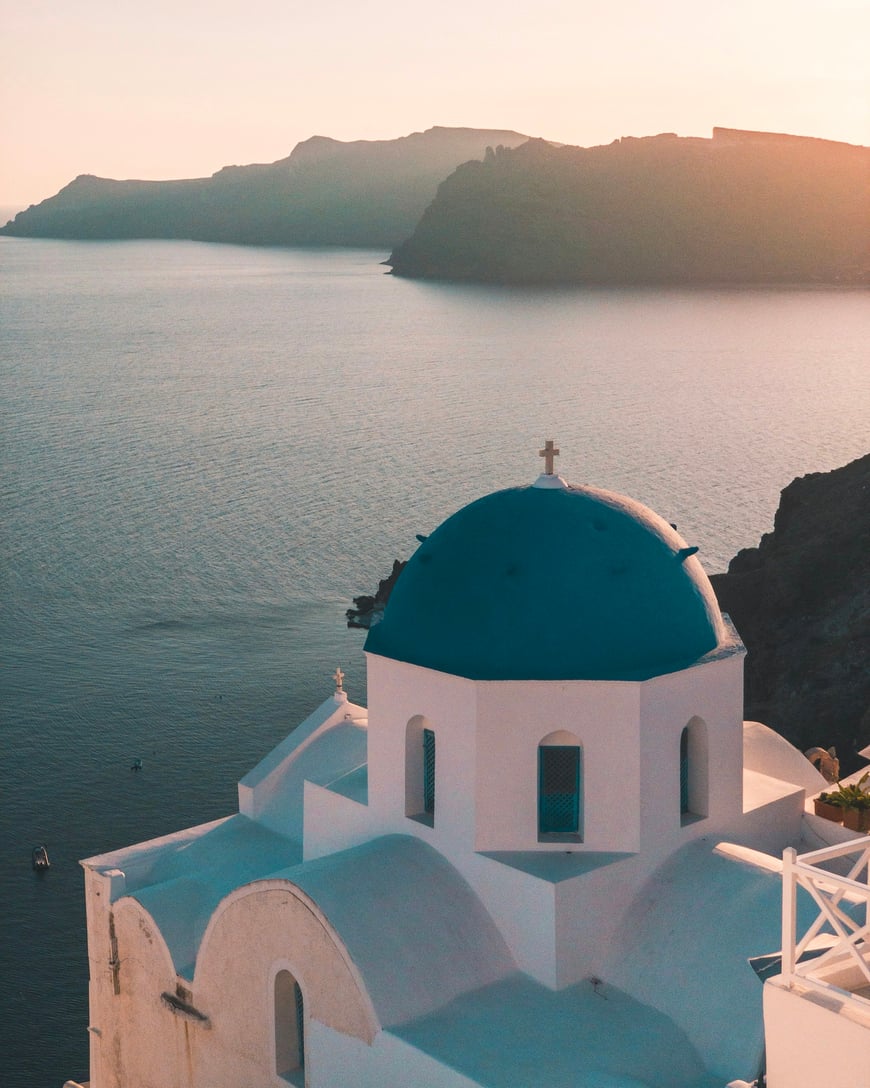
Oia sunset is real and worth the crowd, but the crowd is real too. The narrow sunset terrace fills 90 minutes before sundown in summer. Two pragmatic options: get there 2 hours early with a snack and a book, or skip the crowd entirely and watch from Imerovigli’s Skaros Rock cliff path, which has the same caldera light without the camera-phone wall.
Day 4 morning: visit Akrotiri, the Bronze-Age Minoan settlement preserved under volcanic ash since the Thera eruption around 1600 BCE. Entry is €12, open 8:30 a.m. to 3:30 p.m. winter, longer in summer. The site is roofed and air-conditioned, which makes it the right midday stop in July and August heat. Pair Akrotiri with a Red Beach swim; the cliff path was partly closed for rockfall safety in 2024 and reopens in stages, so confirm access on arrival.
Day 4 afternoon: a Santorini wine tour or a caldera catamaran trip. Local Assyrtiko wine grows in basket-pruned vines that protect grapes from the meltemi wind, and the volcanic soil gives the wine a salty edge that does not exist anywhere else. Estate Argyros, Domaine Sigalas, and Santo Wines all run cellar-door tastings; book one full visit rather than three rushed ones.
Day 5: Return to Athens and the airport buffer
Two routes home: ferry back to Piraeus, or fly Santorini (JTR) to Athens (ATH) on Aegean Airlines or Sky Express in 50 minutes. The flight is the safer choice for an international same-day connection. A morning ferry from Santorini to Piraeus runs 5 to 8 hours and lands at a port that is 70 minutes from the airport including taxi or two metro changes. A delayed ferry plus an international check-in cutoff is the most common way the 5-day Greece trip ends with a missed flight.
Hard rule: leave at least 3 hours between your scheduled arrival in central Athens and your international check-in opening. If you must take the ferry, pick the 7:30 a.m. departure, not the afternoon SeaJets, even though SeaJets is faster. The early Blue Star arrives in Piraeus by 4 p.m.; the afternoon SeaJets arrives at 8:30 p.m. and leaves no recovery slack if the boat runs late on a windy day.
Ferries, fares, and when to fly instead
Three ways to move between Athens and the islands: conventional ferry, high-speed catamaran, or domestic flight. Each has a use case.
Blue Star Ferries run the conventional fleet: large vessels, exterior decks, vehicle space, full cafeteria. Athens (Piraeus) to Santorini takes 7.5 to 8 hours and runs €57 and up in 2026 summer. The boats are the most stable in choppy conditions, which matters in July and August when the meltemi wind picks up. Business class adds €15 to €25 for assigned seats with table service.
SeaJets run high-speed catamarans on the same routes. Athens to Santorini takes 4.5 to 5.5 hours, €109 and up in 2026. The fastest service (Champion Jet 3 or Worldchampion Jet) reaches Santorini in around 5 hours direct. SeaJets bounce hard on swells; travellers prone to motion sickness should pre-medicate or pick Blue Star. SeaJets has both first-class and business-class cabins; Blue Star has business only.
Hellenic Seaways run mid-tier high-speed catamarans on inter-island legs (Mykonos-Naxos-Paros-Santorini), sometimes faster than SeaJets on shorter hops.
Domestic flights on Aegean Airlines or Sky Express link ATH to Santorini (JTR), Mykonos (JMK), and Naxos (JNX) in 45 to 60 minutes. Fares run €60 to €120 booked two months out. Flights make sense in three cases: the same-day international connection on Day 5, a missed ferry caused by wind, or off-season trips where the conventional ferry frequency drops to twice a day.
Booking platforms: Blue Star and SeaJets sell direct, but the all-in comparison view on Ferryhopper or GTP (Greek Travel Pages) is faster for picking the right combination. Most operators publish their full season schedule in March; book by April for July-August departures.
Best months and the meltemi wind
Mid-May to late June and early September to mid-October are the sweet spots: warm enough to swim, cool enough to walk the caldera path without burning through water bottles, and ferry routes running near full summer frequency. July and August are hot, crowded, and expensive (Santorini hotels run double winter rates) and bring the meltemi, the strong dry north wind that cancels SeaJets crossings on roughly 5 to 10 days each summer. Conventional Blue Star vessels run through most meltemi days but with a rougher crossing.
November to April is a different trip: most Santorini caldera-edge hotels close, ferry frequency drops to twice a day on the Athens-Santorini route, and several restaurants in Oia shutter until April. Greek Easter in April or early May is the one strong off-season exception with full island life and meaningful local atmosphere.
Where to stay (each island, each price tier)
Athens: Plaka, Monastiraki, or Koukaki. Plaka is the tourist core (closest to the Acropolis south slope), Monastiraki is louder and cheaper, Koukaki sits behind the Acropolis Museum and feels like a real Athens neighbourhood. Avoid Omonia for an overnight, especially with luggage, after dark.
Naxos or Paros: stay in the chora (main town). Naxos chora puts you 5 minutes from the ferry, the Portara, and the best evening tavernas. Paros chora is Parikia by the port, but Naoussa in the north is the more atmospheric overnight if you have a car.
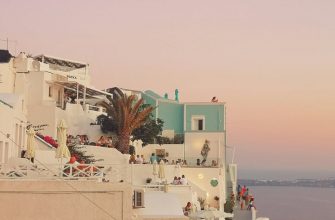
Santorini: three caldera villages. Oia is the postcard one and the most expensive; the sunset is here, but the village empties to ghost-town quiet by 10 p.m. Imerovigli sits at the highest point of the caldera rim (“Balcony of the Aegean”), gives the broadest panoramic view, and stays slightly cheaper than Oia. Fira is the lively island capital with cafes, banks, and the cable car down to the old port; pick Fira if you want late-night life and the ability to walk to a pharmacy. Sample named hotels: Astra Suites in Imerovigli (sunset-facing infinity pool), Esperas in Oia (terrace caldera view, smaller and less aggressive on price than Canaves), Aria Suites in Fira (caldera edge, central). Book Santorini 4 to 6 months ahead for May, June, and September; 8 to 10 months for July and August.
What this trip actually costs
Approximate per-person budgets, two travellers sharing, all attractions and ferries included, before flights to Athens:
- Budget tier (€80 to €110 per day): hostels or two-star hotels, taverna lunches and gyros dinners, Blue Star deck-class ferries, Acropolis and Akrotiri only.
- Mid tier (€170 to €230 per day): three-star hotels in central neighbourhoods, sit-down meals twice a day, mix of Blue Star and one SeaJets leg, Acropolis Museum + one wine tasting + sunset taverna.
- Caldera-view tier (€380+ per day): Santorini caldera-edge hotel for two nights (single biggest line item; expect €350 to €700+ per night in season), all SeaJets transfers, private wine tour, sunset cocktail at a cliff bar.
Fixed-cost line items: Acropolis €30, Acropolis Museum €15, Akrotiri €12, Lycabettus funicular €10, Athens-Naxos Blue Star €38 to €52, Naxos-Santorini ferry €31.50 to €59.70, Santorini-Athens domestic flight €60 to €120 booked early. The single biggest variable is the Santorini hotel, which can easily be 40 to 60% of the trip total.
Variants: 7 days, fewer islands, or different islands
7-day extension: add two nights. Best uses: stay an extra night in Athens for the National Archaeological Museum and a day trip to Cape Sounion, or add Crete (40-minute flight from Santorini) for hiking the Samaria Gorge or visiting the Knossos palace ruins outside Heraklion. A second island is more authentic value than a third one.
Fewer islands: 5 days with one island only. Spend three nights in Santorini, fly directly from Athens to Santorini on Day 2, and skip the ferry day. This is the lowest-stress version of the trip and works if Santorini specifically is the goal.
Different islands: swap Santorini for Milos. Milos is volcanic-pretty (the white-rock Sarakiniko coast) without the Santorini hotel premium. Ferry from Athens to Milos is 3 to 7 hours; the island is calmer and substantially cheaper. Pick Milos if you have been to Santorini before or if a quiet, photographer-friendly experience matters more than the postcard.
North to south: the Sporades are a separate ferry network from Volos and Agios Konstantinos and do not connect cleanly to the Cyclades; do not try to combine them on a 5-day plan. The Peloponnese is the right complement to Athens for travellers who prefer an inland road-trip register, and Mount Olympus plus the Pelion mountains work as a 4-day mainland add-on for hikers.
Common questions
Can I really see Athens, an island, and Santorini in 5 days?
Yes if you commit the route in advance and accept that you spend most of one day on a ferry. Trying to add Mykonos as a fourth stop on a 5-day plan is the most common reason people miss their flight home.
Is the Acropolis combination ticket still sold?
No. The official multi-site combination ticket that covered the Acropolis plus six other archaeological sites was discontinued on 1 April 2025. Each site now requires its own ticket.
Should I take Blue Star or SeaJets to Santorini?
Blue Star (€57+, 7.5 to 8 hours) if budget matters or if the wind forecast is poor; the conventional vessel is the more stable boat. SeaJets (€109+, 4.5 to 5.5 hours) if time matters and the day is calm. SeaJets cancels more often during meltemi conditions in July and August.
Should I fly back to Athens on Day 5 instead of taking the ferry?
If you have an international flight the same evening, fly the domestic leg. The 50-minute Aegean or Sky Express flight protects against ferry delays that routinely strand same-day international connections.
How far in advance should I book?
Ferries: as soon as the schedule opens (usually March for the summer season). Santorini caldera hotels: 4 to 6 months ahead for May, June, September; 8 to 10 months for July and August.
Is Mykonos worth it on a 5-day trip?
Usually no. Mykonos costs about 50% more than Naxos for similar hotels and food, and adds no operational advantage on the ferry chain to Santorini. Pick Naxos or Paros for the middle-island day unless an organised nightlife event is the reason for the trip.
Sources
Operational facts in this guide cross-checked against the operators and authorities below. Ferry schedules and prices move; the live links carry the current numbers.
- Blue Star Ferries – conventional Cyclades fleet schedules and 2026 fare ladder for Athens-Naxos and Athens-Santorini.
- SeaJets – high-speed catamaran timetables, Champion Jet 3 and Worldchampion Jet routes, first vs business class differences.
- Greek Travel Pages (GTP) – cross-operator schedule lookup and inter-island ferry timing reference.
- Santorini Official Tourism – Akrotiri opening hours, caldera path conditions, Red Beach access updates.
- Athens International Airport (ATH) – airport-to-centre transfer options, metro Line 3 timings, taxi flat-rate rules.
- Acropolis Tickets – 2026 timed-entry mechanics, the April 2025 multi-site combo discontinuation, summer vs winter hours.
- Cyclades (Wikipedia) – geographic overview of the Cyclades archipelago and inter-island distances.