Barcelona spent most of its history with its back to the sea. The beaches you sun on today did not exist before 1992: the shore was a wall of factories, rail tracks and a shanty town, all cleared for the Olympic Games, and the sand was trucked in from down the coast. That makes the city’s four and a half kilometres of free beach entirely man-made, and it explains why winter storms keep washing it away. This guide runs the city beaches one by one with their honest trade-offs, then covers the things that actually decide a beach day here: theft, touts, jellyfish, and the specific public services that the listicles never mention.
For the better sand outside the city and where to base yourself by the sea, this pairs with the day trips from Barcelona and where to stay guides; it sits inside the wider things to do in Barcelona guide.
How the beaches were built
Before the Olympics, this coast held the Somorrostro, a seafront shanty town of self-built shacks where the flamenco legend Carmen Amaya grew up. It was razed in 1966, and the rest of the industrial waterfront was demolished to build the Olympic beaches and marina for 1992. One stretch of sand still carries the Somorrostro name.
Because the sand was imported and the coast was reshaped, the beaches are fragile. They lose several metres of sand a year to storms, and in January 2020 the storm Gloria stripped much of it away in a single battering. The city and the metropolitan authority now truck in replacement sand each year and build breakwaters to hold it, an unseen effort that keeps the beach under your towel in place.
The city beaches, south to north
The beaches form one near-continuous strip, divided by stone breakwaters, getting quieter and more local the further north you walk from Barceloneta.
Sant Sebastià and Sant Miquel
- Who it suits: central stayers, and the W hotel crowd at the southern tip.
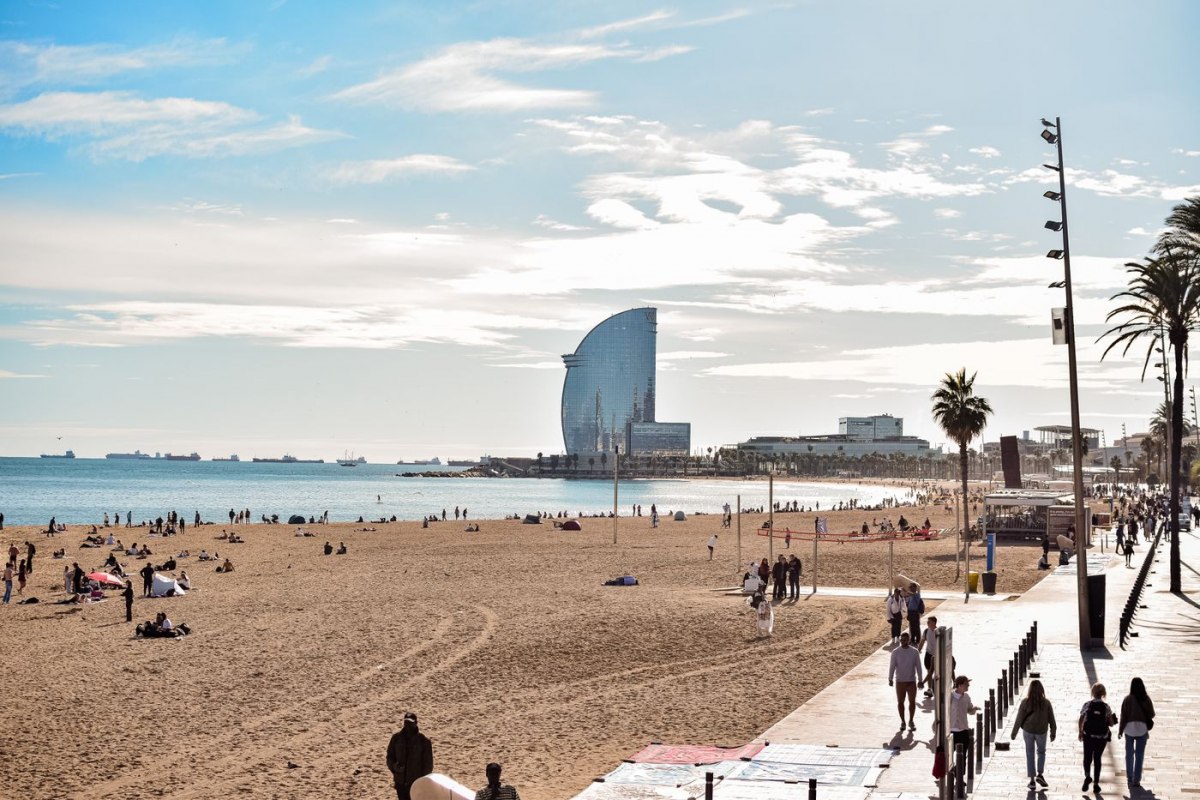
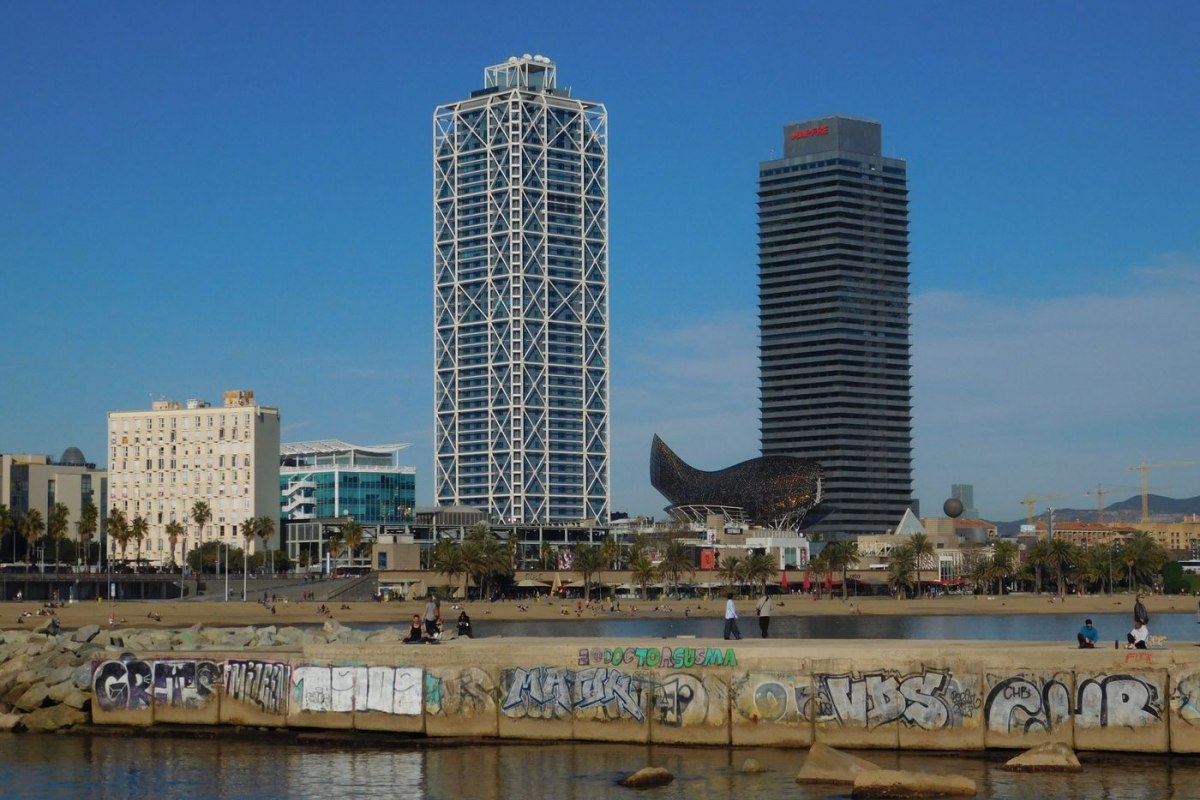
- The feel: the oldest bathing area, right below the Barceloneta district, anchored by the sail-shaped W hotel. The far southern end has long been an unofficial gay and nudist spot.
- Metro: Barceloneta.
Barceloneta
- Who it suits: first-timers who want the famous, social scene and do not mind crowds.
- The feel: the busiest, most photographed beach, backed by the seafood restaurants of the old fishermen’s quarter, lined with beach bars and the hardest hit by touts and pickpockets. Lively and central; never quiet.
- Metro: Barceloneta.
Somorrostro and Nova Icària
- Who it suits: families and anyone wanting a calmer patch near the centre.
- The feel: the beaches either side of the Port Olímpic marina. Nova Icària is among the quietest and most family-friendly, with the marina’s bars and restaurants behind it.
- Metro: Ciutadella-Vila Olímpica.
Bogatell
- Who it suits: locals and anyone who wants space and good facilities without the Barceloneta chaos.
- The feel: wide, well-kept and popular with residents, with full showers, ramps, bars and a sports zone. The best all-round balance of central and calm.
- Metro: Llacuna or Poblenou.
Mar Bella
- Who it suits: a sporty, young and LGBT-friendly crowd, and naturists.
- The feel: a skate park and a nautical centre with sailing, windsurf and kitesurf hire behind it, and a clearly marked, well-respected clothing-optional section at its northern end. The most relaxed and open of the beaches.
- Metro: Selva de Mar or Poblenou.
Nova Mar Bella and Llevant
- Who it suits: dog owners, and anyone chasing the quietest sand.
- The feel: the newest, calmest beaches at the residential Diagonal Mar end, well away from the tourist crush. Llevant holds the city’s only dog beach, covered below.
- The Banys del Fòrum: at the very northern tip there is no sand at all but a concrete bathing platform over calm, deep water, the easiest place to swim if you dislike sand, with steps and ramps into the sea.
- Metro: Selva de Mar or El Maresme-Fòrum.
Better sand within reach
The city beaches are convenient, not beautiful. For cleaner water and softer sand, locals take a short train out.
- Castelldefels and Gavà: long, broad beaches a short Rodalies ride south.
- Ocata and Montgat: the quieter local picks just north, also on the Rodalies line.
- Sitges and the Costa Brava: the proper day-trip beaches, with the full detail in the day trips from Barcelona guide.
The practical reality nobody tells you
This is the section that saves your day, your phone and your wallet. The city beaches run on a few hard truths.
- Theft is the number-one problem. Bag-snatching while you swim is constant on Barceloneta and the central beaches. Take as little as possible, never leave anything unattended, and keep your phone on you in the water in a pouch if you must bring it. This single habit prevents the most common ruined beach day.
- Ignore the touts. Unlicensed sellers walk the sand offering cold beer, mojitos and massages all day. The drinks are unrefrigerated and unsafe, the massages unregulated, and buying funds an illegal trade the city is fighting. A firm no is normal and expected.
- Everything is free. The beaches need no ticket or booking. You pay only for sunbed and umbrella hire, the chiringuito beach bars, and the lockers where provided. Showers, footbaths and toilets are free.
- Toplessness is normal, and full nudity is accepted at the marked Mar Bella section and the far end of Sant Sebastià. Elsewhere, keep your costume on.
- The dog beach: the only beach where dogs may swim is the marked area at Llevant, between the Selva de Mar and Rambla de Prim breakwaters, open roughly late May to mid-September in daytime hours, with a dog shower and water fountain.
- Accessible bathing: Barcelona runs a free assisted-bathing service in the high season, the servei de suport al bany, with trained staff who help you into the sea on an amphibious chair, plus shade, adapted changing rooms and accessible toilets. It operates at Sant Miquel, Nova Icària and the Fòrum bathing zone, and is worth arranging ahead for anyone with reduced mobility.
Things to do on the seafront
- Watersports: sailing, windsurf, kitesurf and paddleboard hire cluster at the Base Nàutica by Mar Bella and around the Port Olímpic.
- The Passeig Marítim: the seafront promenade is the city’s running, cycling and skating artery, flat and uninterrupted for kilometres.
- Beach volleyball and ping-pong: free public courts and tables sit along Bogatell and Mar Bella.
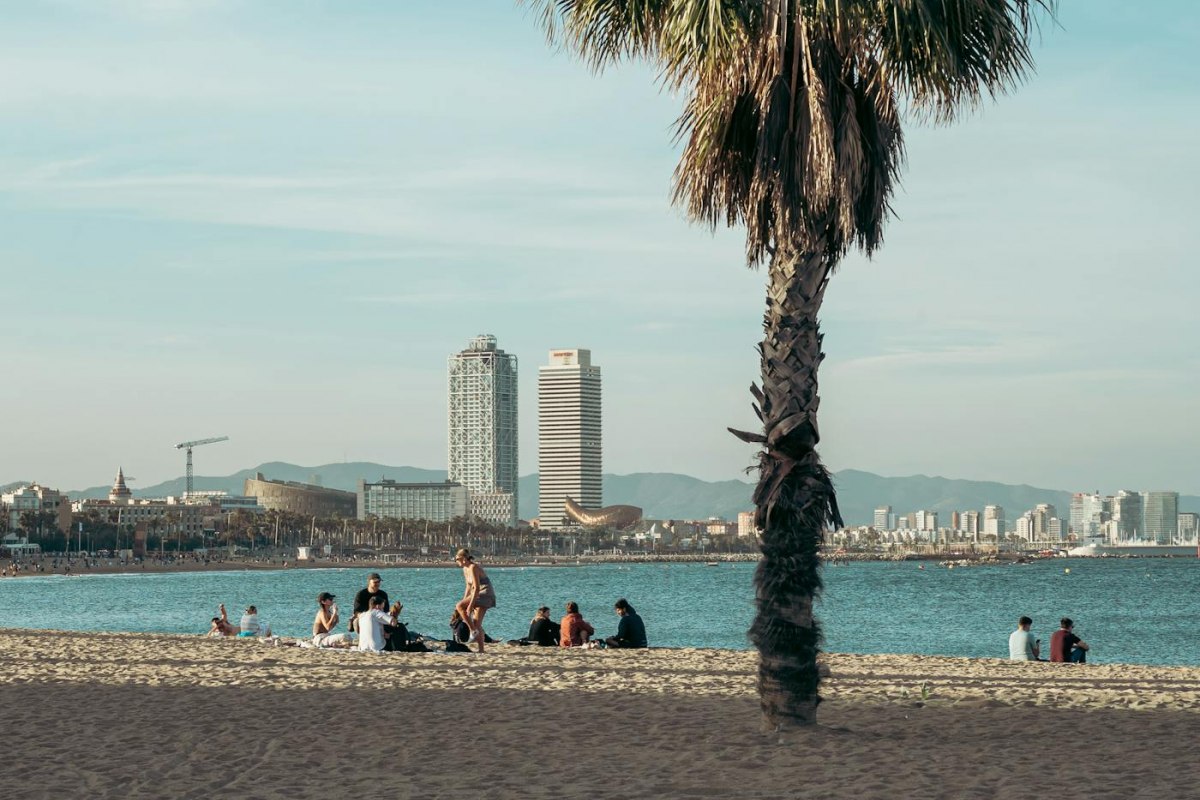
- Landmarks: Frank Gehry’s giant golden Fish sculpture and the twin towers mark the Port Olímpic, the marina’s bars and clubs run late in summer.
- Beach dining: the chiringuito beach bars open from about April to October; the long-running Xiringuito Escribà at Bogatell is the name to know for a proper paella with your feet near the sand.
The best beach for your day
- Families: Nova Icària or Bogatell, calmer and better equipped.
- First-time buzz: Barceloneta, for the scene if not the peace.
- Quiet: Nova Mar Bella and Llevant at the northern end.
- Sport and watersports: Mar Bella and the Base Nàutica.
- LGBT and naturist: Mar Bella’s northern section, or the far end of Sant Sebastià.
- With a dog: the Llevant dog beach, in season.
- Reduced mobility: Sant Sebastià or Nova Icària, for the assisted-bathing service.
When to go, and the jellyfish question
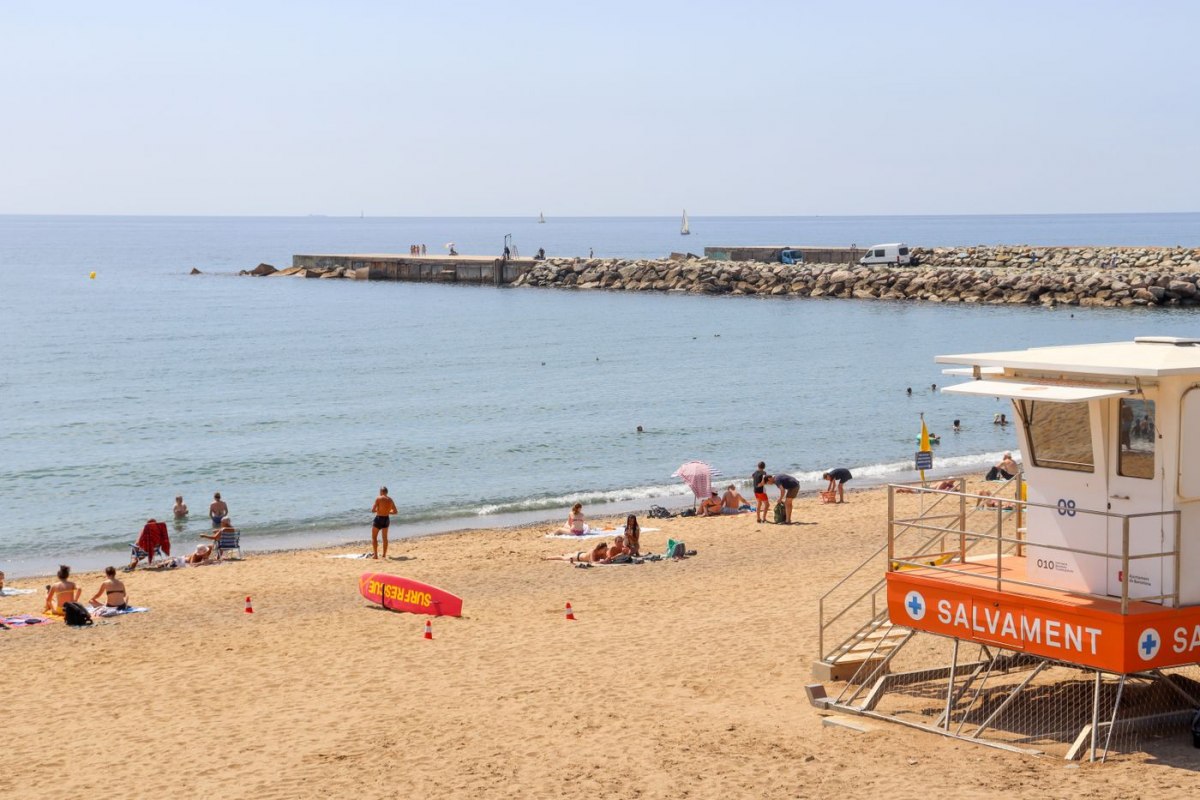
- Season: the supervised high season with lifeguards and full facilities runs from late May to late September. Outside it the beaches are open but unstaffed, fine for a walk, cold for a swim.
- Water temperature: warm enough to swim from roughly June to October, peaking in August; the sea stays mild well into autumn but turns cold by winter.
- The flags: lifeguards fly a green, yellow or red flag for swimming conditions, and post a separate warning when jellyfish, the medusa, drift in. Red means stay out; a jellyfish day means watch the shallows.
- Check before you go: the Generalitat’s Platges Cat app shows each beach’s safety flag, water quality and jellyfish status, the crowd-sourced Medusapp maps jellyfish sightings reported by other swimmers in real time, and the city publishes a live occupancy status, green to red, so you can see which beaches are already packed before you set out.
- Drought can switch off the showers. In dry years the city restricts or turns off the beach freshwater showers and footbaths to save water, so do not count on a rinse and bring a bottle if you want one.
- Jellyfish are seasonal and unpredictable, arriving on certain currents and winds, more common in late summer. A sting is painful but rarely serious; rinse with seawater, not fresh, and see a lifeguard.
- Timing: mornings and early evenings beat the midday crowds and heat, and any summer weekend is packed by noon.
- Sant Joan, the 23rd of June: the city pours onto the beaches at midnight for the year’s wildest party, with cava and coca. Bonfires and fireworks on the sand are now banned for safety, but the crowds still fill the beaches until dawn.
Frequently asked questions
What is the best beach in Barcelona?
Bogatell is the best all-rounder, wide and well-equipped but calmer than Barceloneta. For families choose Nova Icària, for quiet head to Nova Mar Bella and Llevant, and for the famous scene accept the crowds at Barceloneta.
Is Barceloneta beach worth visiting?
For the atmosphere and the seafood behind it, yes, but it is the busiest and most theft-prone beach in the city. Go for the scene, then walk north to Bogatell or Mar Bella if you want space and calm.
Are Barcelona’s beaches free?
Yes, all of them. There is no entry fee or booking; you pay only for optional sunbeds, umbrellas and the beach bars. Showers, footbaths and toilets are free.
Which beach is closest to the centre?
Sant Sebastià and Barceloneta, both reached from the Barceloneta metro and a short walk from the Gothic Quarter and the port. They are the most central and the busiest.
Is the water clean and safe to swim in?
The city monitors water quality and the beaches generally pass, though quality can dip briefly after heavy summer rain flushes the storm drains. Follow the lifeguard flags: green or yellow to swim, red to stay out, plus a separate jellyfish warning.
Can you swim in winter in Barcelona?
Few do. The sea is cold and the beaches are unsupervised out of season, so winter is for walking the promenade rather than swimming, apart from the hardy New Year dippers.
How do you avoid theft on the beach?
Take almost nothing: no laptop, minimal cash, and your phone in a waterproof pouch on you in the water. Never leave a bag while you swim, and do not trust strangers to watch your things. Theft while bathing is the most common problem on the central beaches.
Sources
- Ajuntament de Barcelona, bathing and beaches – per-beach services, accessibility, dog beach and water quality
- Pla Litoral de Barcelona – beach erosion and sand stabilisation
- Barcelona Tourism – beach visitor information