Indian weddings stretch across three to seven days and run through more rituals than most other wedding traditions in the world. The shape of the celebration depends on the family’s religion (Hindu, Sikh, Muslim, Christian, or Jain), regional origin (North Indian Punjabi, South Indian Tamil, Bengali, Gujarati, and others), caste customs, and modern preference. The pages below walk through the religious frameworks, the pre-wedding rituals, the wedding ceremony, attire, food, decor, and the way Indian families plan and budget for what is often the largest event of their lives.
Religious and regional landscape
Hindu weddings, the majority tradition in India and a continuing thread of cultural tradition, run through Vedic rituals adapted regionally. The core is the saptapadi, the seven steps the couple takes around a sacred fire, with each step representing a specific vow about food, strength, prosperity, family, descendants, friendship, and lifelong companionship.
Sikh weddings, called Anand Karaj, take place at a gurdwara in front of the Guru Granth Sahib. The couple walks four times around the holy book while four hymns called laavan are sung. The ceremony is shorter than a Hindu vivaha, typically two to three hours, and culminates in karah parshad (a sweet flour offering) shared with all guests.
Muslim weddings centre on the nikah, a contractual ceremony officiated by a qazi. The mahr, a deferred bridewealth promised to the bride, is declared and recorded on the nikahnama. The groom’s family hosts the walima reception the next day. The nikah itself is shorter than a Hindu or Sikh ceremony, but the surrounding events (mehendi, sangeet, walima) extend the celebration across days.
Christian weddings in Goa, Kerala, and Mumbai follow either Roman Catholic or Eastern Orthodox liturgy depending on the family. Goan Catholic weddings include a church service and a Western-style reception with Portuguese-influenced food. Jain weddings parallel Hindu vivaha in structure but use Jain-specific mantras and an entirely vegetarian feast. Buddhist weddings remain rare in India outside Tibetan-origin and certain Dalit communities.
Regional accents shape every wedding. North Indian Punjabi weddings lean toward big-fat-wedding scale: 500-plus guests, three to five days of events, and dhol drum-led baraat. South Indian Tamil and Telugu weddings favour shorter, more austere ceremonies with strict ritual sequencing. Bengali weddings centre on specific saree styles and fish-based feasts. Gujarati weddings include garba dance evenings and entirely vegetarian menus.
Pre-wedding rituals
The roka or shagun marks the formal engagement. Both families gather at the bride or groom’s home, exchange sweets and gifts, and confirm the alliance. Modern roka events have grown into mini-receptions with 50 to 100 guests; older traditional roka was a private family meeting.
The tilak ceremony involves the bride’s male relatives blessing the groom with a rice-and-turmeric tika applied to the forehead. The gesture welcomes the groom into the bride’s family. In some regions a parallel ceremony at the bride’s home blesses her in the same way.
Haldi, held one or two days before the wedding, applies turmeric paste to the bride and groom by family members. The paste serves both ceremonial and practical purposes: turmeric is auspicious in Hindu tradition and anti-inflammatory in fact, and the application aims to give the bride and groom glowing skin for the wedding day. Yellow clothing is worn for haldi, and the event runs as a family lunch or afternoon party.
Mehendi: the henna ceremony
Mehendi is among the most photographed Indian wedding rituals. The bride’s hands and feet are decorated with intricate henna patterns by professional mehendi artists, with the application taking four to eight hours. Traditional patterns include peacocks, paisleys, the groom’s hidden initials in the design, and the bride’s own family motifs.
The folk belief holds that the deeper the henna stains, the stronger the marriage will be. Brides leave the paste on overnight and apply lemon-and-sugar mixtures to deepen the colour. The bride’s mother-in-law’s name is sometimes hidden in the pattern as a small joke for the groom to find on the wedding night.
Mehendi is a women’s event in most traditional families, with the bride and her female relatives gathering to apply henna together. Modern urban mehendi runs mixed-gender with music and food in a casual atmosphere, often combined with the sangeet musical evening.
Sangeet: the musical evening
Sangeet is a musical and dance evening held one or two nights before the wedding. Family members (aunts, cousins, siblings) prepare choreographed dance performances to Bollywood and folk songs, often rehearsing for weeks. The bride and groom traditionally perform together to a song they have chosen.
The structure has shifted over the past decade. Older sangeet was an informal household sing-along; modern sangeet runs as a structured stage show with rented venue, professional sound, and 200 to 400 guests. Family rivalries play out through dance battles between the bride’s side and the groom’s side, and the choreography quality is a social signal of the celebration.
Bollywood music dominates modern sangeet playlists. Classical Hindi film songs from the 1960s through the 1990s mix with current chart hits. Punjabi bhangra tracks energise the dance floor late in the evening. Some families hire a professional choreographer six to eight weeks ahead to teach group routines.
The Hindu wedding ceremony
The Hindu wedding day starts early. Ganesh puja is performed at the bride’s family home as the first ritual, a prayer to Ganesha (the remover of obstacles) asking for a smooth ceremony. The bride dresses in her wedding attire with help from her female relatives, while the groom prepares at his own family’s location.
The baraat is the groom’s procession to the wedding venue. The groom traditionally rides on a horse, in a vintage car, or, for the most traditional weddings, on a decorated elephant. His family dances ahead of him to the beat of dhol drums, with sparklers and firecrackers marking the route. The procession arrives at the venue with full noise and visual spectacle.
Milni follows. The two families formally greet each other at the venue entrance. The groom’s father is garlanded by the bride’s father, and counterpart pairs (uncles, brothers) exchange garlands. The bride and groom then meet for jaimala or varmala, the garland exchange. The bride hangs a flower garland around the groom’s neck, and he reciprocates. In some traditions, the bride’s brothers lift her so the groom cannot easily place the garland, a playful struggle that lasts until both garlands are exchanged.
The mandap is the four-pillared canopy where the rituals happen. The couple sits on cushions facing the priest, who chants Sanskrit mantras and conducts the rituals in sequence. Kanyadaan is the bride’s father giving away the bride; he places her hand in the groom’s hand and recites a prayer entrusting her to the new family.
The saptapadi (seven steps) is the central ritual. The bride and groom walk seven steps around the sacred fire, each step accompanied by a vow. The seven vows traditionally cover food and nourishment, strength, prosperity, family welfare, descendants, friendship, and lifelong companionship. After the seventh step, the marriage is considered binding under Hindu personal law.
The mangalsutra, a sacred necklace of black-and-gold beads with a gold pendant, is tied by the groom around the bride’s neck. It marks the bride’s married status, comparable to a wedding ring in Western culture. Sindoor, red vermillion powder, is then applied by the groom to the parting of the bride’s hair, another visible marker of marital status.
Vidaai is the emotional farewell as the bride leaves her parental home. She traditionally cries during this moment, a ritualised expression of sorrow at leaving her family. The groom’s family receives her at their home with a small ceremony called grihapravesh that marks her arrival.
Sikh Anand Karaj specifics
The Sikh wedding ceremony takes place at a gurdwara in front of the Guru Granth Sahib, the Sikh holy scripture. The bride and groom sit on the floor, the bride to the groom’s left. The ceremony opens with shabads (sacred hymns) sung by the gurdwara musicians.
The four laavan are the heart of the ceremony. Each laav is a hymn from the Guru Granth Sahib. After each is sung, the couple stands and walks once around the holy book in a clockwise direction, with the bride’s father (or another senior male relative) leading by holding the end of her dupatta or a sash linking her to the groom. The four circuits represent four stages of love and union: meeting the divine, surrendering ego, attaining spiritual joy, and becoming one with the divine.
Karah parshad, a sweet flour offering of equal parts flour, ghee, sugar, and water, is shared with all guests at the end of the ceremony as a symbol of equality and shared blessing. The Anand Karaj typically runs two to three hours and is followed by a langar (community meal) at the gurdwara before guests move to the reception venue.
Muslim nikah ceremony
The Muslim nikah is officiated by a qazi at home, at a mosque, or at a banquet hall. The bride is asked three times whether she consents to the marriage in the presence of two male witnesses or one male and two female witnesses. The mahr, a deferred bridewealth promised to the bride as her financial right, is declared and recorded on the nikahnama. The groom signs first, then the bride; in some traditions, a representative (wali) signs on the bride’s behalf.
The nikah itself takes thirty to forty-five minutes. The walima reception, hosted by the groom’s family the day after, is the larger celebration: an evening dinner with up to 500 guests in urban Muslim families. Food at walima centres on Hyderabadi biryani, kebabs, and elaborate sweets. A Hyderabadi walima differs significantly from a Lucknow or Kashmir walima in menu and music.
Bridal attire
North Indian brides typically wear a red lehenga, a heavily embroidered skirt-and-blouse combination with a long matching dupatta worn over the head. The embroidery uses zari (gold-thread work), zardozi (raised metal-thread embroidery), and gota patti (gold ribbon work). Lehengas can weigh five to ten kilograms.
South Indian Tamil and Telugu brides wear a Kanjeevaram (Kanchipuram) silk saree, often draped in the regional nine-yard madisar style for Tamil Brahmin weddings. Bengali brides wear a white-and-red saree with a wide red border, paired with a red bindi between the eyebrows and red sindoor on the hair parting. Gujarati brides choose the panetar, a white saree with a red border, and the gharchola, a red-and-gold checked saree gifted by the groom’s family.
Sikh brides wear a red salwar kameez or red lehenga with a chunni draped over the head. Muslim brides vary by family origin: a Hyderabadi bride wears the gharara (a long flowing skirt-trouser with embroidered short jacket), while a North Indian Muslim bride may choose a sharara (similar but with even fuller bottom flare). Christian brides in Goa often wear a Western-style white gown for the church ceremony and change into a saree for the evening reception.
Bridal jewelry runs heavy, often including family heirlooms passed across generations as part of Indian gold jewelry tradition. Major pieces include the mangalsutra (sacred necklace), maang tikka (forehead jewelry hanging from the hair parting), nath (nose ring connected by chain to the ear), kundan or polki necklace sets, choodiyan (bangles in red, white, gold, or green), payal (anklets), and bichhua (toe rings).
Groom attire
The North Indian groom wears a sherwani, a long buttoned coat over churidar trousers, in cream, gold, ivory, or pastel shades. The sehra, a veil of pearls or flower strands, covers the groom’s face during the baraat. The kalgi, a feathered ornament, sits on his turban.
Sikh grooms wear a kurta-pajama with a kalgi-decorated turban, typically in pink, red, or gold for the wedding. South Indian grooms drape a dhoti or vesti in traditional pleated style and pair it with an angavastram, a long shoulder cloth, and a kurta. Muslim grooms wear a sherwani with a karakuli (lambskin cap) or a pagri (tied turban) depending on regional and family preference.
Wedding decorations and venue
The mandap is the visual centrepiece of a Hindu wedding. The four-pillared canopy is decorated with marigold and rose garlands, a carved wooden or metal frame, and silk drapes. Flower arrangements at the mandap base, along the aisle, and at the reception entrance carry significant decor budget, often 40 to 60 percent of total decor spend.
Marigolds are the headline flower for Hindu weddings, used in garlands (mala), torans (door garlands), and table arrangements. Roses, jasmine, and orchids fill in supporting roles. A rangoli, a powder-mandala design, decorates the entrance at the start of the wedding day, with intricate geometric or floral patterns drawn in coloured powder, rice flour, or flower petals.
Vehicle decoration for the baraat draws on the family’s preference. Horses are draped with ornamental cloth and ankle bells; cars are wrapped with marigold strings and have the groom’s name in flowers across the bonnet; elephants in the most traditional weddings are painted with chalk-white patterns and dressed with embroidered howdahs.
Modern destination wedding venues include Udaipur palace hotels (Taj Lake Palace, Oberoi Udaivilas, Leela), Goa beach resorts, Jaipur havelis (Samode Palace, Rambagh), and Kerala backwater houseboats. International destination weddings have grown to include Lake Como in Italy, Bali in Indonesia, and Phuket in Thailand for affluent families. Lighting runs warm: oil lamps (diya), fairy lights along the mandap, chandeliers in palace venues, and string lights across the reception canopy.
Wedding cards and invitations
Indian wedding invitations carry serious design weight. The traditional opening shows Lord Ganesha at the top of the card with a Sanskrit blessing; shubh vivah (auspicious wedding) is the most common phrase. The bride’s family invitation precedes the groom’s family invitation; both names of parents are listed, with the bride’s parents inviting guests on the bride’s side and the groom’s parents handling the groom’s side.
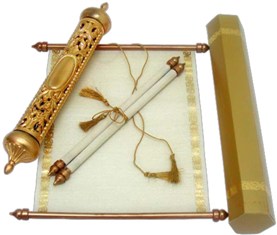
Material and finish trend toward elaborate. Thick cardstock, gold foil embellishment, embroidery thread tied through punched holes, satin ribbon ties, and red or maroon wax seals stamped with the couple’s monogram are common. Bilingual invitations are standard: English on one side, Hindi or the regional language (Punjabi, Tamil, Bengali, Gujarati, Marathi) on the other.
Modern variations include laser-cut intricate borders that imitate hand-cut Mughal jaali screens, video invitations sent over WhatsApp, and digital RSVP cards with personalised guest QR codes. E-invites accelerated after 2020 and have become acceptable even in traditional families.
Wedding food and reception
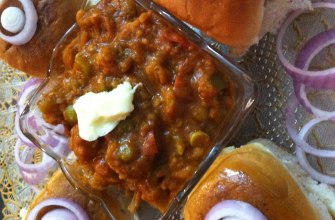
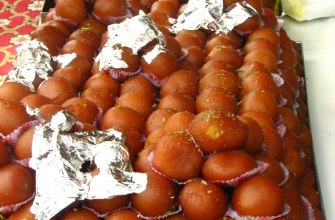
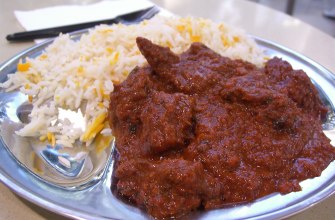
The reception meal varies by regional and religious tradition. North Indian Punjabi wedding feasts serve butter chicken, dal makhani, paneer dishes, biryani, naan, tandoori meats, and gulab jamun for dessert. The food runs creamy and rich, with ghee playing a central role.
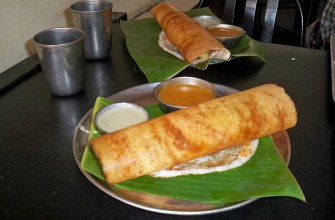
South Indian weddings serve a sadya, an elaborate vegetarian meal of 20 or more dishes presented on a banana leaf. Sambar, rasam, multiple vegetable curries, rice, papadam, pickle, and payasam (sweet milk-based dessert) make up the standard sequence. The leaf is laid out in a specific pattern with each dish in its assigned position.
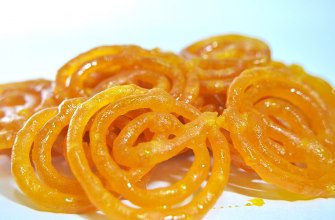
Bengali weddings centre on hilsa fish, mutton kosha, mishti doi (sweet curd), rasgulla, and sandesh. Punjabi weddings substitute butter chicken and tandoori meats. Gujarati weddings keep an all-vegetarian thali (multi-dish platter) with fafda, dhokla, undhiyu, kadhi, and jalebi for dessert; Gujarati wedding food often avoids onion and garlic in Jain-influenced families.
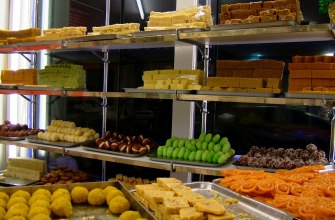
Drinks at religious ceremonies are typically alcohol-free. Sikh weddings strictly so, Hindu and Jain weddings generally so, Muslim weddings always so. Reception bars are common at urban modern weddings, with wine, whisky, and cocktails available alongside lassi and fresh juices. The wedding cake has crossed over from Western influence and now appears at most urban Indian weddings as a multi-tier white cake cut by the couple after the meal. Mithai (Indian sweets) is offered first to seal the marriage, mirroring the saying that the sweetness should flow first.
Cost and duration
The average urban Indian wedding stretches across three to four days and includes 200 to 500 guests. The big-fat-wedding tier crosses 700 guests with palace venues, multiple stage events, and choreographed performances by professional dancers. Cost ranges widely: middle-class urban weddings sit at the lower end, affluent families spend significantly more, and ultra-luxury destination weddings (palace hotels, multiple international flights) reach the highest brackets.
Spend reflects family standing as much as actual celebration cost. The most expensive elements are typically the venue, the catering, the bridal jewelry, and the photography-and-videography package. Decoration follows in fourth place. Booking timeline runs 12 to 18 months ahead for peak season (November through February, the dry winter months). Hot summer weddings (April through June) can be cheaper but stress the outdoor format. Monsoon season (June through September) is generally avoided for outdoor venues except in Kerala and the south, where the rain is less disruptive.
Modern trends
Destination weddings have moved beyond palace hotels in Rajasthan to international venues. Udaipur, Goa, and Jaipur remain dominant within India; Bali, Phuket, Lake Como, and the Maldives have become aspirational external destinations. The destination format typically compresses to two or three days, with a smaller and more selected guest list.
Pre-wedding photo shoots have replaced some traditional photos. The shoot happens two to four weeks before the wedding in a curated location (palace garden, beach, mountain pass), with the couple in informal romantic outfits. The output is a visual album shown at the sangeet or used as save-the-date imagery. Couple choreographed dances at sangeet have grown into showpiece events, with families hiring professional choreographers.
Smaller and more intimate “micro weddings” of 50 to 100 guests, single-day, tightly produced, grew significantly after 2020 as families adapted to gathering restrictions. The format has continued to attract couples who prefer quality over scale. Wedding planning in India draws on a long architecture of ritual that the modern format compresses but rarely abandons.
Frequently Asked Questions
How long does an Indian wedding last?
Traditional Indian weddings stretch across three to seven days. The minimum modern urban format compresses to two days (mehendi-sangeet evening plus wedding day). Traditional Punjabi or Marwari weddings run five to seven days with a separate event each day.
What is the saptapadi?
The saptapadi is the seven steps the bride and groom walk around the sacred fire during a Hindu wedding ceremony. Each step represents a specific vow about food, strength, prosperity, family welfare, descendants, friendship, and lifelong companionship. After the seventh step, the marriage is considered binding under Hindu personal law.
Why do Indian brides wear red?
Red signals fertility, prosperity, and auspiciousness in Hindu tradition. The colour has been associated with brides for centuries across most of North India. South Indian brides wear cream or gold silk sarees instead; Bengali brides wear white-and-red sarees; Gujarati brides combine white panetar with red gharchola.
What is mangalsutra?
Mangalsutra is a sacred necklace of black-and-gold beads with a gold pendant that the groom ties around the bride’s neck during the Hindu wedding ceremony. It serves as a public mark of the bride’s married status, comparable to a wedding ring in Western culture.
How much does an Indian wedding cost?
Cost varies by family income and ambition. Middle-class urban weddings spend at the lower end, affluent families spend significantly more, and ultra-luxury palace destination weddings reach the highest brackets. The most expensive elements are venue, catering, bridal jewelry, and photography. Booking 12 to 18 months ahead helps secure peak-season dates.
Sources and Further Reading
- Hindu Marriage Act of 1955, Government of India (legal framework for Hindu personal-law marriages)
- Manusmriti and Vedic texts on the saptapadi ritual sequence
- Sikh Rahit Maryada, the Sikh code of conduct, on Anand Karaj
- K.M. Sen, Hinduism (Penguin) on regional variation in Hindu marriage rites
- Indian Council for Cultural Relations publications on regional wedding traditions