A Turkish breakfast, kahvaltı, is not a quick bite on the way out the door. At its fullest it is a table covered edge to edge with small plates of cheese, olives, eggs, jam, honey and warm bread, washed down with glass after glass of tea, and on a weekend it can run for hours. One eastern city, Van, has turned it into a world record. This guide explains what the word means, what goes on the table, the regional versions, and why Van calls itself the breakfast capital of the world.
The word means “before coffee”
Kahvaltı comes from two Turkish words, kahve, coffee, and altı, under or before. The meal is the thing you eat “before coffee”. In Ottoman times coffee was an after-meal drink, sipped once the eating was done, so the morning food took its name from the cup it came before. The irony today is that almost nobody drinks coffee at breakfast. The breakfast drink is çay, black tea poured from a stacked double teapot and refilled all morning, while the coffee waits until later.
Tea, the real breakfast drink
The drink that rules the table is çay, Turkish black tea, grown on the wet hills around Rize on the Black Sea coast. It is brewed in a çaydanlık, a stacked double teapot, with strong tea in the top and hot water below so each glass is mixed to taste. It is served in small tulip-shaped glasses called ince belli, never with milk, and a good brew is judged by a deep red colour that Turks call tavşan kanı, rabbit’s blood. The glasses are refilled again and again through the meal, and it is tea, not the coffee the breakfast is named after, that keeps a kahvaltı going.
Serpme: the breakfast spread
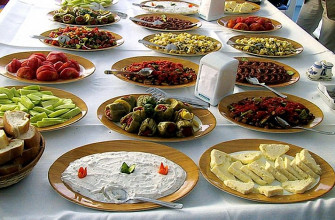
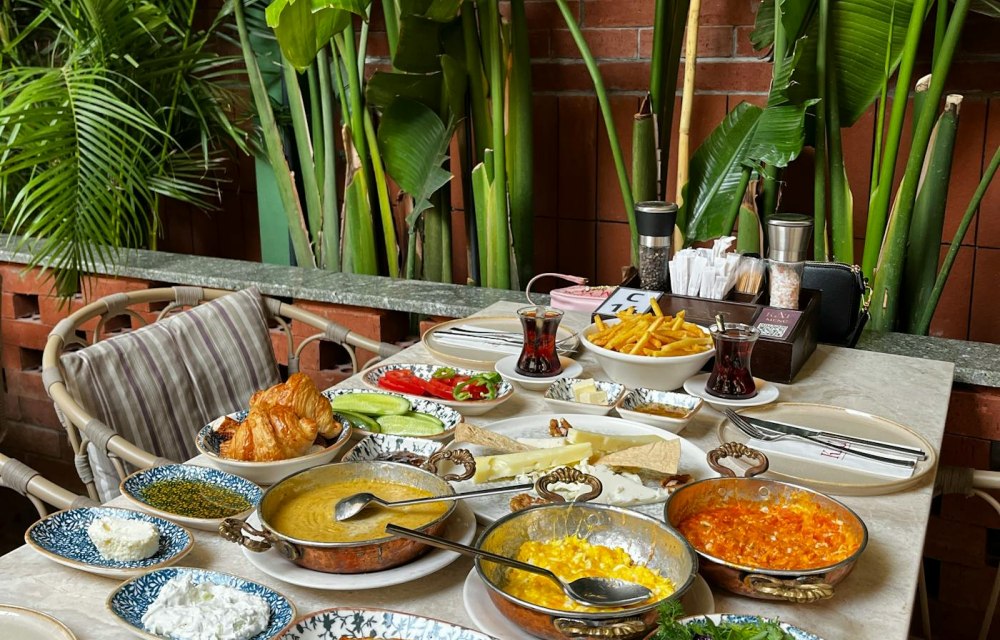
The Turkish style is to bring everything to the table at once rather than in courses, a layout called serpme kahvaltı, the scattered or spread breakfast.
- Serpme kahvaltı – many small dishes set out together, sweet beside savoury, so everyone picks and shares across the whole table.
- Köy kahvaltısı – the village breakfast, the same idea with homemade, local produce: farm eggs, village cheese, home-churned butter and just-baked bread.
On a workday breakfast might shrink to a simit and a glass of tea on the way to work. At the weekend it expands into a long, slow gathering where the table stays full and the tea never stops, closer to a social event than a meal.
What goes on the table
A full kahvaltı balances salty, fresh and sweet. The usual cast includes:
- Beyaz peynir – the white brined cheese at the centre of every spread, alongside kaşar (a firm yellow cheese), tulum (a sharp cheese aged in a skin) and herb-flecked otlu peynir.
- Zeytin – bowls of black and green olives, often dressed with olive oil and pepper.
- Bal-kaymak – clotted cream, traditionally from water buffalo milk, with honey or a piece of honeycomb spooned over it, the great sweet centrepiece.
- Sucuk – a spiced beef sausage with garlic, cumin and red pepper, fried until the fat runs, sometimes cooked with egg as sucuklu yumurta.
- Menemen – soft eggs cooked with tomato and green pepper, served straight from the pan. See the full menemen guide.
- Simit and bread – the sesame-crusted ring called simit and baskets of fresh white bread.
- Reçel and tahin-pekmez – jams of every fruit, and tahini swirled with grape molasses for a sweet, mineral dip.
- Tomatoes, cucumbers, butter and eggs – sliced raw vegetables, slabs of butter, and boiled or fried eggs round out the table.
Van, the breakfast capital of the world
If kahvaltı has a capital, it is Van, on the shore of its great lake in the far east of Turkey. Van breakfast halls are now among the busiest restaurants in Istanbul, but the city itself takes the meal to another scale. Van even had the first Sunday of June marked as a World Breakfast Day to carry its table abroad.
- Up to thirty dishes. A Van serpme kahvaltı can fill the table with as many as thirty separate plates in a single sitting.
- Breakfast Street. Van has a whole lane of breakfast halls, the Kahvaltıcılar Çarşısı, where the city goes to eat in the morning.
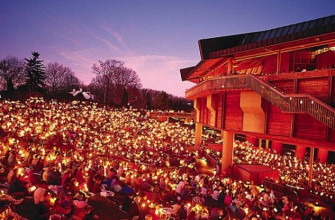
- A world record. On the first of June 2014, in the park below Van Castle, the city set a Guinness World Record for the most people at a single breakfast, with 51,793 diners at one sitting, overtaking the United States record of 18,941.
Van also has dishes found almost nowhere else on the breakfast table:
- Otlu peynir – a strong herb cheese laced with wild mountain herbs, above all a wild garlic the locals call sirmo.
- Murtuğa – a thick roux of butter and flour cooked with egg until crisp and golden.
- Kavut – a sweet paste of ground wheat toasted in butter and sugar, a warming start to a cold eastern morning.
- Kaymak – the clotted cream here is famous, eaten by the spoon with honey.
- Karakovan balı – prized wild comb honey from the highlands around Van, spooned over the kaymak.
Breakfast around Turkey
The spread shifts as you cross the country.
- The Aegean leans green and oily, with wild herbs, olive-oil dishes and plenty of olives.
- The Black Sea brings mıhlama, also called kuymak, a fondue-like dish of cornmeal, butter and melting cheese, eaten with corn bread.
- Gaziantep tilts sweet with katmer, a flaky pastry of pistachio and clotted cream, while the hungry reach for beyran, a hearty garlic-and-lamb soup eaten in the morning.
- The cities on a weekday settle for the simit-and-tea version grabbed from a street cart.
A short history of kahvaltı
The everyday breakfast of the Ottoman household was plainer than today’s loaded table. Bread, white cheese, olives and a few preserves carried most mornings, and labourers often started the day with a bowl of soup rather than a spread. The lavish serpme kahvaltı that fills cafe tables now grew across the twentieth century, as home tea farming made a cheap morning drink universal and, later, weekend breakfast culture and tourism turned the meal into a showpiece. The old core of bread, cheese and olives, though, has anchored the Turkish morning for centuries.
How to lay out a Turkish breakfast at home
- Think small plates. Use many little dishes rather than one big plate, and set them all out together.
- Balance the table. Pair salty cheese and olives with sweet honey, jam and kaymak so every bite can swing either way.
- Brew proper tea. Use a stacked çaydanlık so you have strong tea above and hot water below, and keep the glasses topped up.
- Cook one hot dish. A pan of menemen or some fried sucuk and eggs turns a cheese board into a real kahvaltı.
- Take your time. The point is to linger. Lay it out, sit down, and let breakfast stretch.
Breakfast opens the wider Turkish table. Read the full guide to Turkish cuisine, learn the breads that anchor the spread, and master the pan of menemen that belongs at its centre. The coffee the meal is named for comes after, as a proper cup of Turkish coffee.
Frequently asked questions
What does kahvaltı mean?
It means “before coffee”, from kahve (coffee) and altı (under or before). In Ottoman times coffee followed a meal, so breakfast was named as the food eaten before it.
What is the difference between serpme and köy kahvaltısı?
Serpme kahvaltı is the spread style, many small dishes brought out together. Köy kahvaltısı, village breakfast, is the same spread made with homemade, local farm produce.
Why is Van famous for breakfast?
Van serves a vast spread of up to thirty dishes, has a dedicated Breakfast Street, makes regional specialities like otlu peynir and murtuğa, and set a Guinness World Record for the most people at one breakfast in 2014.
Do Turks drink coffee or tea at breakfast?
Tea. Despite the name kahvaltı meaning “before coffee”, the breakfast drink is black çay, poured all morning. Coffee is saved for later in the day.
What is bal-kaymak?
It is clotted cream, traditionally from water buffalo milk, served with honey or honeycomb spooned over the top. It is the sweet highlight of a Turkish breakfast.
What tea is served at a Turkish breakfast?
Turkish black tea, çay, grown around Rize on the Black Sea, brewed strong in a stacked çaydanlık and served without milk in small tulip glasses, refilled throughout the meal.
How long does a Turkish breakfast last?
On a workday it can be a simit eaten in minutes. At the weekend a full serpme kahvaltı with family or friends often stretches over two hours, treated as a social occasion rather than a quick meal.
Sources
- Turkish breakfast – components and styles
- CNN – Van, the world capital of breakfasts
- Guinness World Records – largest full breakfast
- Hurriyet Daily News – Van sets the breakfast world record