A Turkish wedding stretches across multiple events: kız isteme, the formal asking; söz, the public promise; nişan, the engagement; kına gecesi, the women-only henna night; the civil ceremony at a municipal registrar; the religious nikah led by an imam; and the long evening reception with the takı töreni gold ritual at its centre. The customs blend Islamic religious rites, Anatolian folk practice from twenty centuries of village tradition, and modern urban Western influence. The balance shifts between Istanbul ballroom weddings that close in a single evening and rural Anatolian three-day celebrations with whole-lamb spits and davul-zurna procession. This guide walks through the engagement sequence, the henna night, the ceremony, attire, gold ritual, food, music, and reception structure across Turkey.
Pre-engagement: söz, nişan, and family negotiation
The path to a Turkish wedding starts with kız isteme, the formal visit during which the groom’s family asks the bride’s parents for permission. The visit takes place at the bride’s home, with Turkish coffee served by the prospective bride. Salt added to the groom’s coffee is a small joke: if he drinks it without flinching, he is considered worthy.
Söz, the formal word or promise, follows. Both families gather to confirm the union publicly. The nişan or engagement ceremony comes next, often weeks or months later, and includes a ring exchange. Engagement rings sit on the right hand and move to the left during the wedding ceremony itself, with a red ribbon tied between them and cut at the moment of transfer.
Family negotiations cover the çeyiz, the trousseau prepared by the bride’s family over years and including embroidered linens, copper kitchenware, and household textiles. The mehir, an Islamic-law marriage payment promised to the bride, survives in modern weddings as a notional figure recorded on the religious nikahname rather than a literal cash transfer.
The henna night (kına gecesi)
The henna night is held the evening before the wedding, traditionally at the bride’s family home or a banquet venue, and traditionally women-only. The bride wears the kına bindallısı, a red velvet dress embroidered with gold and silver thread, with a red veil over her face. Red signals fertility, continuity, and protection in Anatolian folk tradition.
An older female relative, often the bride’s grandmother, places a gold coin in henna paste and presses the paste into the bride’s palm. The hand is bound in muslin to set the stain. Folk songs, often melancholy, accompany the ritual. The most famous, “Yüksek Yüksek Tepelere”, carries the bride’s voice asking the mountains why she has been given away to strangers; tradition expects the bride to weep through the song as a sign that she values the family she leaves.
Henna patterns range from a single round dot in the centre of the palm to intricate Anatolian designs covering both hands. Modern urban kına gecesi often blends the traditional ritual with a bachelorette-style dinner, with mixed attendance and DJ music after the formal ceremony. Sugared almonds (badem şekeri) wrapped in tulle sachets are distributed to guests as keepsakes.
The civil ceremony and religious nikah
Civil marriage has been mandatory in Turkey since the 1926 Civil Code, part of the Atatürk-era reforms that replaced Islamic family law with a secular system based on the Swiss code. The civil ceremony takes place at a municipal building or, increasingly, at the wedding venue itself with an authorised registrar travelling to the site. Two witnesses sign the register alongside the bride and groom.
The civil vow is short. The registrar asks each partner three times whether they accept the marriage; the answer “evet” (yes) confirms each consent. The exchange takes minutes rather than the spoken vows of Western weddings, and there are no personalised statements of love or promises to specific behaviour. The framework is consent before witnesses.
The religious nikah, conducted by an imam, often takes place separately at home, at a mosque, or at the wedding venue. The imam asks the bride and groom for consent before two male witnesses (or one male plus two female witnesses), recites the standard nikahname formula, and declares the marriage valid under Islamic law. The mahr declaration, the deferred bridewealth promised to the bride, is recorded in the nikahname. Some families combine the civil and religious ceremonies in a single afternoon; modern urban families in Istanbul and Ankara may skip the religious component entirely.
Wedding attire and accessories
The white Western gown has become the most common choice in modern Turkish weddings, particularly in cities. Urban brides choose fitted lace bodices, long trains, and lace veils in the European style from designers such as Pelin Hekimoğlu and Bora Aksu. Rural and traditional brides keep the bindallı, a three-piece outfit of red velvet jacket, blouse, and full skirt with gold and silver thread embroidery rooted in Ottoman court dress. Some brides wear the bindallı for the henna night and switch to a Western gown for the wedding day.
The classic Turkish bridal hairstyle is the high updo, called the topuz, gathered into a high knot and decorated with crystal pins, pearl combs, and small fresh flowers. A tiara sits at the front of the knot, and the long lace veil flows from beneath the updo down the back of the gown. Half-up styles with cascading curls have grown popular among younger brides who want a softer look.
Father-of-the-bride places the al duvak, a red sash, around the bride’s waist as she leaves the family home. The sash signals her transition from her birth family to her married life and is tied with three knots representing her parents’ blessing. A small evil-eye charm (nazar boncuğu) is often pinned inside the gown for protection. The bouquet may carry imported white roses or local seasonal blooms; eastern Turkish brides may add a fes with gold coins as a regional headpiece.
Grooms wear dark suits in modern weddings, often black or charcoal with a white shirt and a slim tie. Traditional rural ceremonies in eastern Anatolia retain the kalpak, a tall black lambskin hat, and embroidered waistcoat. The most ornamental detail is the kalgı, a small brooch worn on the lapel for very traditional events.
Wedding jewelry and the gold ceremony (takı töreni)
Turkish wedding rings (alyans) are smooth gold bands, often inscribed inside with the partner’s name and the wedding date. The engagement rings sit on the right hand during the engagement period and move to the left ring finger during the wedding ceremony, with a red ribbon connecting the two and cut at the moment of transfer. Couples sometimes commission matching ring sets with linked design elements.
The takı töreni, the gold-pinning ceremony, sits at the heart of the Turkish reception. Family members and guests pin gold coins, bracelets, and necklaces to a red sash worn diagonally across the bride and groom’s chests. The bride accumulates gold from female relatives and family friends; the groom accumulates from male relatives. The MC announces each donor’s name and the value or count of pieces.
Twenty-two carat gold is the preferred standard for wedding gifts. Bilezik (gold bangles), kolye (necklaces), and Cumhuriyet altın (Republic-era gold lira coins) are the typical pieces. The bilezik often arrive as a stack of three to seven on the bride’s wrist, gifted by her mother, mother-in-law, and senior female relatives. Gold serves both as a ceremonial gift and as a financial cushion for the new household, traditionally held in reserve as a hedge against difficult times. Cash in white envelopes pins to the sash alongside the gold.
Wedding feast: traditional Turkish foods
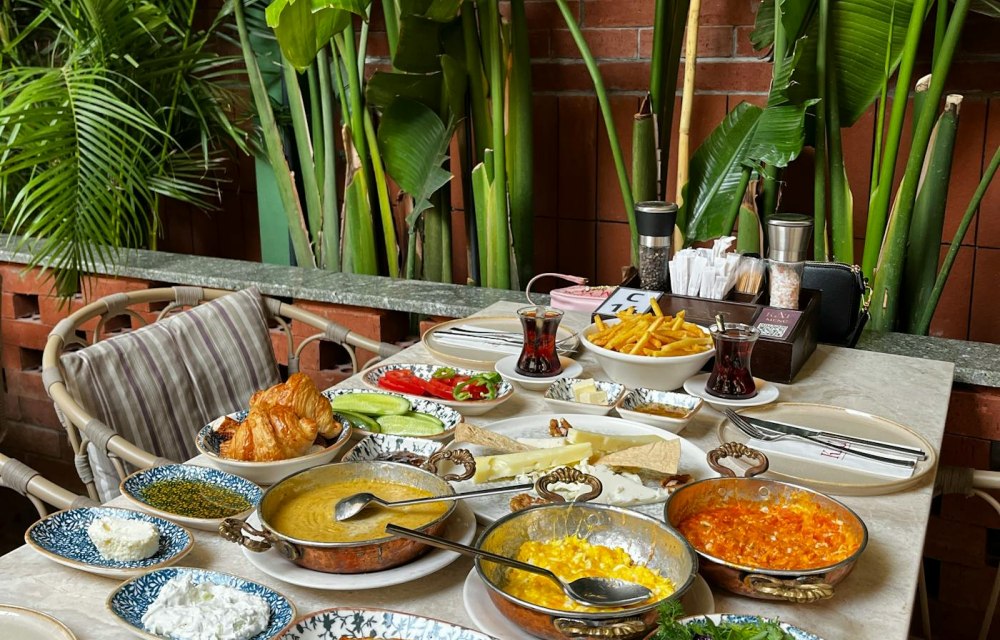
Turkish wedding food centres on lamb, rice pilaf, and the yogurt-based wedding soup called düğün çorbası, a dish so closely tied to the ceremony that it carries the word for wedding in its name. The full wedding meal follows a set sequence from soup through grilled meat to baklava, with regional variations across Anatolia, the Black Sea coast, and the Marmara region around Istanbul. The dedicated guide to Turkish wedding food covers the regional menus in detail.
Düğün çorbası opens the meal. The soup builds on a lamb or beef bone broth thickened with egg yolk and lemon juice through the terbiye liaison technique, which gives the soup its velvety texture and sharp tang. The broth simmers for hours and finishes with melted butter infused with isot or pul biber red pepper flakes. Chunks of braised lamb or veal sit in the bowl alongside the broth.
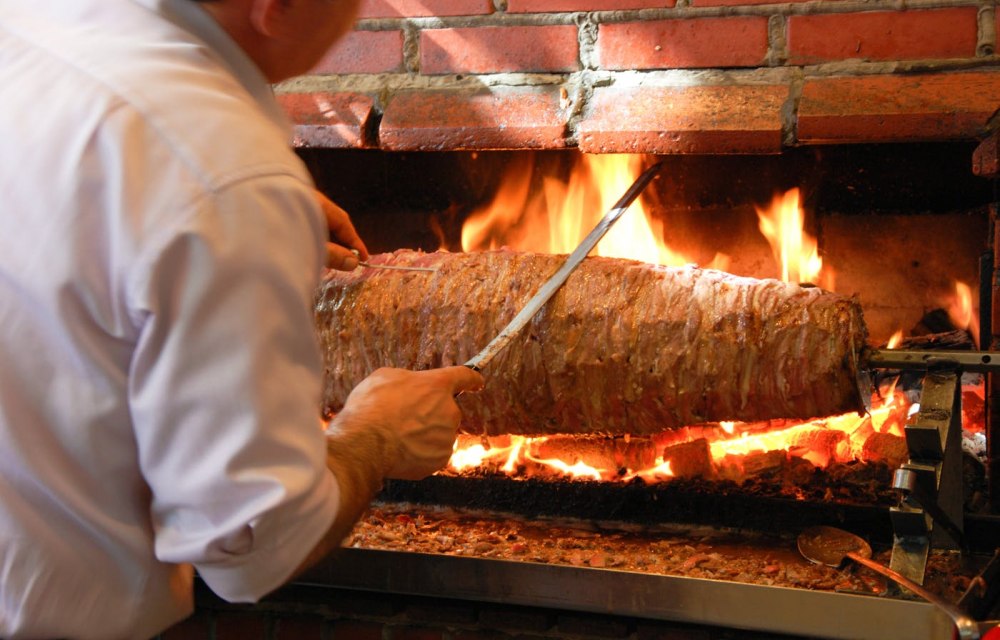
The main course revolves around lamb. Whole roasted lamb on a spit (kuzu çevirme) is the centrepiece of rural Anatolian and eastern weddings, slow-roasted over wood for several hours. In cities, lamb arrives as grilled chops, kebabs on skewers, or as a stew with vegetables. Rice pilav with butter, pine nuts, currants, and chickpeas serves as the carbohydrate base of the plate.
Keşkek, a slow-cooked porridge of pounded wheat and shredded lamb or chicken, is a traditional communal wedding dish in central and western Anatolia. The preparation is a community event: village men pound the wheat and meat in a large stone mortar for several hours the day before the wedding. UNESCO recognised keşkek as part of Turkey’s intangible cultural heritage in 2011. Sarma, dolma, börek, and salads of tomato, cucumber, onion, and parsley dressed with sumac and olive oil round out the table.
Drinks centre on ayran (cold yogurt with water and salt), şalgam (fermented turnip juice from Adana and Mersin), Turkish tea, and Turkish coffee. Şerbet, the chilled fruit drink with Ottoman roots, is served on arrival at some traditional weddings. Alcohol depends on the family’s religious observance and regional custom.
Wedding cakes and sweet traditions
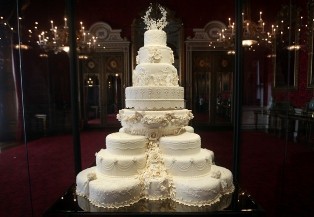
The Turkish wedding cake follows two parallel forms. The modern multi-tier white frosted cake with floral decoration dominates urban weddings, cut by the bride and groom together with both hands on the knife and the first slice fed to each other in a ceremonial gesture. Some rural Anatolian weddings keep the kılıç vurma tradition, in which a male relative of the groom’s family taps a sword lightly on the cake before the bride and groom complete the cut.
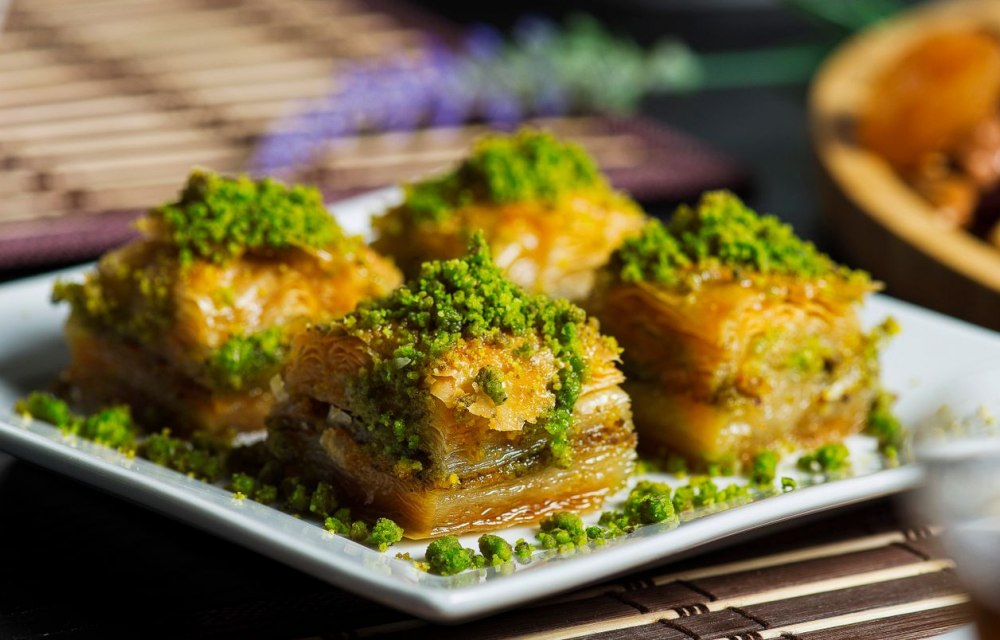
Traditional Turkish wedding sweets sit alongside the cake. Baklava is the headline dessert at most weddings, ordered in large trays from specialist bakeries; Gaziantep is the recognised baklava capital and supplies wedding-grade pistachio baklava across the country. Turkish delight (lokum) appears in every conceivable flavour, from rose-water and mastic to pomegranate and double-roasted pistachio.
Lokma, deep-fried dough balls soaked in sugar syrup, are distributed to guests as a symbol of shared sweetness, sometimes scooped from a portable lokma cart at the venue entrance. Şekerpare, almond-topped semolina cookies in syrup, and helva, the dense semolina-and-butter confection, sit on the dessert table. Kabak tatlısı, pumpkin slices baked in sugar syrup with ground walnuts, joins them through the autumn wedding season. Sugared almonds in tulle sachets travel home as bonbonnière favors.
Music for Turkish weddings
Davul-zurna, the drum-and-shawm pairing, is the traditional reception music in rural Turkish weddings. The deep beat of the davul drum and the high reed sound of the zurna shawm carry across open-air village weddings and signal the arrival of the bridal procession. The same pair has accompanied Anatolian weddings for centuries and remains in active use across central and eastern Anatolia. Modern urban weddings substitute a wedding singer with a backing band or a DJ.
Halay is the line dance most associated with Turkish weddings. Guests link little fingers and form a long line, often led by a designated dancer who steps and turns at the front while waving a coloured handkerchief. The dance is participatory, with guests joining and leaving the line as the music continues. Specific halay variants exist by region: the Kurdish-Turkish halay of the south-east differs in step pattern from the Black Sea coastal version. Side-step halay (ağır halay) opens the dance, and the tempo lifts into faster variants as the evening continues.
Roman havası, the Romani Turkish music tradition, often arrives later in the reception with high-energy hip movement dancing. Wedding repertoire includes “Yine de Şahane”, “Sarı Gelin”, “Bana Ellerini Ver”, and many regional folk standards. The reception programme follows a loose order: davul-zurna or its modern substitute during the bridal procession, ceremonial folk songs during the takı töreni, halay sets through the early evening, and pop or Romani-influenced tracks for the late-night dance hours. Live wedding singers known to the family are common at mid-budget weddings.
Reception structure and gift-pinning
A Turkish reception runs from the late afternoon until the small hours, longer in rural settings. The shape moves from the arrival of the bridal procession (with horn-blowing cars decorated in red ribbons and Turkish flags), through the bride’s entrance, the takı töreni, the dinner courses, the cake-cutting, and the open dance floor with halay leading into Roman havası. Speeches stay brief; the emphasis falls on dancing rather than on extended toasts.
Wedding favors (gelin çikolatası, “bride’s chocolate”) arrive in small gift bags handed to guests as they leave: sugared almonds wrapped in tulle, a piece of Turkish delight, a small evil-eye charm, or a personalised chocolate piece. The bohça, a bundle of fabric and embroidered items prepared by the bride’s family, is given to the groom’s mother as a sign of respect and contains hand-embroidered handkerchiefs, scarves, and household linens.
Cash in white envelopes pins to the takı sash alongside the gold pieces. Household gifts (appliances, dinnerware, linens) are less central than in some other cultures because the çeyiz tradition typically covers those items.
The wedding night (gerdek)
After the reception ends, the bride and groom retire to the gerdek odası, the bridal chamber. The chamber is traditionally prepared at the groom’s family home, with embroidered linens and rose petals or fresh flowers across the bed. The groom recites a short prayer before entering.
The historical “bloody sheet” public proof of the bride’s virginity has largely disappeared from modern Turkish weddings, particularly in cities. Rural traditions sometimes retain a symbolic version, but the practice is increasingly seen as outdated. A close family member, often the groom’s mother or sister, visits the morning after with a breakfast tray, marking the formal acceptance of the bride into the new household. A larger family gathering, called a paça günü, sometimes follows a week later.
Modern vs traditional Turkish weddings
Modern Turkish weddings differ from traditional rural ceremonies along several axes. Modern weddings tend to last a single evening at a hotel ballroom or wedding hall, with civil and religious components combined into a short formal section before the reception begins. Traditional rural weddings can stretch to three days, with separate events for the henna night, the wedding day, and the post-wedding family visit.
Religious observance varies. Modern urban families may skip the religious nikah entirely; rural and conservative families treat it as essential. The guest list scales differently too. Rural weddings draw the entire village, with several hundred attendees and food prepared communally over two or three days in advance. Urban weddings settle around 150 to 300 invited guests with professional catering.
Regional variations
Anatolian interior weddings stretch longest, lean heavily on davul-zurna, and feature large outdoor receptions with whole-lamb spits. The Aegean coast favours simpler late-evening weddings with seafood meze and Mediterranean menus. Black Sea region weddings include local kemençe (fiddle) music and butter-heavy cooking with hamsi (anchovies) and corn bread. South-eastern Turkey features Kurdish folk weddings with mass dance lines, isot pepper-spiced food, and saffron-rice dishes.
Istanbul urban weddings are the shortest format, often a single evening at a Bosphorus-side hotel with civil registration completed earlier in the day. The contrast with a multi-day rural Anatolian wedding can be dramatic, but both sit under the umbrella of Turkish wedding tradition with shared elements: kına gecesi, takı töreni, halay, baklava, and the al duvak. Wedding planning across cultural traditions in Turkey ranges from the village square to the marble ballroom.
Frequently Asked Questions
What is the most important Turkish wedding ritual?
The takı töreni, the gold-pinning ceremony, stands at the centre of the reception. Family members pin gold coins, bracelets, and necklaces to a red sash worn diagonally by the bride and groom. The ritual combines a public expression of family support with a practical financial cushion for the new household.
Why does the bride wear red at the henna night?
Red signals fertility, continuity, and protection in Anatolian folk tradition. The kına bindallısı dress, embroidered with gold and silver thread, dates to Ottoman court attire and remains the standard henna-night outfit even in urban weddings that use a Western white gown for the wedding day.
Is a religious ceremony required by Turkish law?
No. Civil marriage has been mandatory since the 1926 Civil Code, but a religious nikah is optional. Many urban families hold both ceremonies; many others hold only the civil ceremony. The civil registration is the legally binding step.
What is düğün çorbası?
Düğün çorbası, “wedding soup”, is a yogurt-thickened lamb or beef broth finished with melted butter and red pepper flakes. The soup is the traditional opening course at Turkish weddings across most of Anatolia and carries the word for wedding in its name.
How long does a Turkish wedding reception last?
Urban receptions run four to six hours, ending around midnight. Rural Anatolian weddings can stretch across three days, with the henna night on the first evening, the main wedding day in the middle, and a post-wedding family visit on the third day.
Sources and Further Reading
- UNESCO Intangible Cultural Heritage of Humanity, keşkek tradition inscription in 2011
- Turkish Civil Code of 1926, Article 124 onward, on civil marriage requirements
- Cengiz Bektaş, The Turkish Wedding (Anatolian regional ethnography)
- Turkish Cultural Foundation publications on Anatolian folk traditions
- Sabri Ülgener, Düğün Gelenekleri (Turkish wedding ethnography)