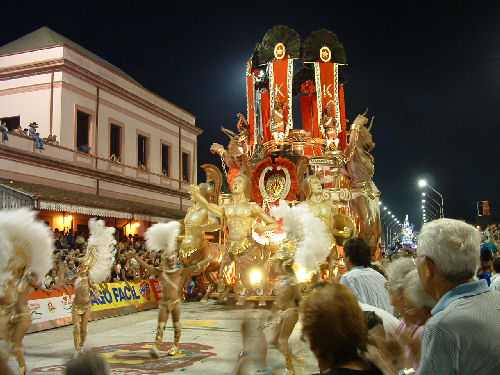
Argentina packs its calendar with festivals that reflect its layered cultural identity – Spanish colonial roots, Italian immigrant influence, Indigenous Andean traditions, and the gaucho rural culture of the Pampas. The Buenos Aires Tango Festival in August draws 500,000 attendees to milongas across the capital. Mendoza’s Vendimia grape harvest celebration fills a stadium with 40,000 spectators for its closing night show. Carnival in Gualeguaychu runs every weekend from January through March with a parade format closer to Brazilian samba than European Mardi Gras. Argentina observes 15 national public holidays alongside these regional festivals, and the combination creates a year where at least one celebration falls in every month.
National Public Holidays
Argentina’s 15 official public holidays (feriados nacionales) close banks, government offices, and most businesses. Several are movable – the government shifts some holiday dates to adjacent Mondays to create long weekends (fines de semana largos) that boost domestic tourism.
- January 1 – New Year’s Day (Ano Nuevo)
- February/March – Carnival Monday and Tuesday (two days off before Lent)
- March 24 – Day of Remembrance for Truth and Justice (marks the anniversary of the 1976 military coup)
- April 2 – Day of the Veteran and Fallen of the Malvinas War
- May 1 – Labor Day
- May 25 – May Revolution Day (marking the 1810 independence movement)
- June 20 – Flag Day (birthday of Manuel Belgrano, creator of the Argentine flag)
- July 9 – Independence Day
- August (third Monday) – Death of General Jose de San Martin
- October 12 – Day of Respect for Cultural Diversity (formerly Dia de la Raza)
- November 20 – Day of National Sovereignty
- December 8 – Immaculate Conception
- December 25 – Christmas Day
The March 24 holiday carries particular weight. The date commemorates the military junta that seized power in 1976 and oversaw the forced disappearance of an estimated 30,000 people during the “Dirty War” that lasted until 1983. The Mothers of the Plaza de Mayo still march every Thursday in Buenos Aires, and the holiday serves as both a memorial and a statement that the crimes will not be forgotten.
Tango Festival and World Cup in Buenos Aires
The Festival y Mundial de Tango runs for two weeks in August, centered in Buenos Aires. The festival turns the city into a continuous tango event: free milongas (social dance gatherings) open in parks, cultural centers, and street corners; orchestras perform in theaters; and workshops cover everything from beginner steps to advanced choreography. The World Cup of Tango crowns champions in two categories – Tango de Pista (salon-style social dancing) and Tango Escenario (stage performance with lifts, acrobatics, and theatrical elements).
Tango originated in the working-class neighborhoods (conventillos) of Buenos Aires and Montevideo in the late 1800s, mixing African-derived rhythms with European instruments – the bandoneón (a type of concertina brought by German immigrants), violin, piano, and double bass. Carlos Gardel, the most recognized tango singer, recorded through the 1920s and 1930s and died in a 1935 plane crash in Medellin, becoming an icon whose face still appears on murals across Buenos Aires. The neighborhoods of San Telmo, La Boca, and Abasto claim the strongest connections to tango’s origins and host year-round performances aimed at both tourists and local dancers.
Beyond the August festival, Buenos Aires maintains a permanent tango infrastructure. Over 100 milongas operate weekly across the city, from the traditional halls of Salon Canning and La Viruta to informal neighborhood gatherings in community centers. The milonga operates on its own social code: the cabeceo (a nod across the room) invites a partner to dance, and couples follow the line of dance counter-clockwise around the floor. Visitors can join open milongas at any skill level, though the better-known venues fill up on weekend nights and some require reservations. Free tango lessons run at Barracas and Parque Centenario on weekday evenings, organized by the city government.
Carnival: Gualeguaychu, Corrientes, and the Northwest
Argentine Carnival runs from January through early March, with the peak falling on the Monday and Tuesday before Ash Wednesday. The two largest Carnival celebrations differ in style. Gualeguaychu, in Entre Rios province, runs a corsodromo (parade arena) seating 35,000 spectators where comparsas (dance troupes) perform choreographed routines in elaborate costumes with sequins, feathers, and floats. The format draws comparisons to Rio’s Sambadrome, though the scale is smaller and the dance style reflects Argentine murga and candombe rather than Brazilian samba.
Corrientes, in the northeast, holds a Carnival with stronger Guarani and Afro-Argentine roots. The comparsas of Corrientes use larger bateria (drum sections) and feature rhythms that trace to the province’s proximity to Paraguay and Brazil. In the Andean northwest – Jujuy, Salta, Tucuman – Carnival takes a different form entirely: the Quebrada de Humahuaca communities celebrate with ancestral Andean rituals, devil masks (diabladas), and the symbolic burial of the Carnival devil (entierro del diablo) to mark the end of festivities.
Vendimia: The Grape Harvest Festival in Mendoza
The Fiesta Nacional de la Vendimia runs through late February and early March in Mendoza, Argentina’s largest wine-producing province. The festival celebrates the end of the grape harvest with a week of parades, cultural events, concerts, and wine tastings that culminate in the Acto Central – a massive outdoor show in the Greco-Roman amphitheater at the foot of the Andes, seating roughly 40,000 people.
Each department (county) in Mendoza province selects a Reina de la Vendimia (Harvest Queen) to represent its wine production. The queens parade through the city on decorated floats, and one is crowned during the Acto Central show, which combines fireworks, music, dance, and theatrical performances against the backdrop of the Andes. Mendoza produces over 75% of Argentina’s wine, and the Vendimia functions as both a cultural festival and an economic showcase for the province’s Malbec, Torrontes, and Cabernet Sauvignon production.
Regional Folk Festivals
The Festival Nacional del Folklore in Cosquin, Cordoba province, has run annually since 1961 during the last week of January. Nine nights of performances on the Atahualpa Yupanqui stage draw folk musicians, dancers, and audiences from across Argentina and neighboring countries. The festival focuses on Argentine folk genres – chamame from the northeast, zamba and chacarera from the northwest, milonga from the Pampas – and functions as a national showcase for artists who work outside the commercial pop mainstream. Cosquin holds a status in Argentine folk music comparable to Newport Folk Festival in American music or the Cambridge Folk Festival in British tradition.
The Fiesta Nacional de la Cerveza (National Beer Festival) in Villa General Belgrano, Cordoba, runs for two weeks in October and draws over 200,000 visitors. The town was founded by German and Swiss immigrants in the 1930s, and the festival mirrors Bavarian Oktoberfest traditions with beer gardens, brass bands, folk dancing, and German-Argentine cuisine. The Fiesta Nacional del Inmigrante in Oberá, Misiones province, celebrates the 15 national communities that settled the region – German, Polish, Ukrainian, Japanese, Swedish, Swiss, and others – with food stalls, dance performances, and music from each culture represented.
Ushuaia, the southernmost city in the world, hosts the Marcha Blanca ski festival in August and the Ushuaia Jazz Festival in October. El Bolson, a hippie-influenced mountain town in Patagonia, holds a weekly artisan fair that becomes a multi-day festival several times per year, drawing craft vendors and musicians from across the southern Andes.
Dia de la Tradicion and Gaucho Culture
Dia de la Tradicion falls on November 10, the birthday of Jose Hernandez, author of the epic poem Martin Fierro, published in 1872. The poem tells the story of a gaucho pressed into military service on the frontier and has served as a foundational text of Argentine rural identity ever since. The holiday celebrates gaucho culture through rodeos, horse-riding displays (jineteadas), asados (barbecues cooked over open wood fires), folk music performed on guitars and bombo drums, and demonstrations of traditional crafts like silverwork and leather braiding.
San Antonio de Areco, a town 110 kilometers northwest of Buenos Aires, hosts the largest Dia de la Tradicion celebration. Gauchos ride through the town’s cobblestone streets in full traditional dress – wide-brimmed hats, bombachas (baggy trousers), leather boots, and silver-handled facones (gaucho knives). The town’s Museo Gauchesco Ricardo Guiraldes holds permanent collections of gaucho artifacts, and its artisan workshops produce hand-crafted mate gourds, leather goods, and silver jewelry year-round.
The gaucho tradition extends beyond a single holiday. Estancias (ranches) across Buenos Aires province offer day trips and overnight stays where visitors participate in horseback riding, cattle work, and asado preparation. The rural economy of the Pampas still depends on cattle ranching, and the gaucho skillset – horsemanship, rope work, leather craft, and open-fire cooking – remains a working profession rather than a purely ceremonial identity.
Frequently Asked Questions
How many public holidays does Argentina have?
Argentina has 15 national public holidays. Some dates are movable – the government shifts certain holidays to Mondays to create long weekends (fines de semana largos). Banks, government offices, and most businesses close on these days.
When is the Buenos Aires Tango Festival?
The Festival y Mundial de Tango runs for two weeks in August. The event includes free milongas, orchestra performances, workshops, and the World Cup of Tango with competitions in salon and stage categories. Most events are concentrated in Buenos Aires’ San Telmo and La Boca neighborhoods.
Where is the best Carnival in Argentina?
Gualeguaychu in Entre Rios province runs the largest and most organized Carnival with a dedicated corsodromo seating 35,000. Corrientes offers a Carnival with stronger Guarani and Afro-Argentine musical roots. The Andean northwest (Jujuy, Salta) hosts Carnival celebrations with Indigenous Andean ritual elements including devil masks and the symbolic burial of a Carnival effigy. The Quebrada de Humahuaca, a UNESCO World Heritage Site, provides the dramatic canyon backdrop for these celebrations, which predate Spanish colonization and blend Andean cosmology with Catholic calendar dates.
What is the Vendimia festival?
The Fiesta Nacional de la Vendimia celebrates the grape harvest in Mendoza during late February and early March. The festival includes wine tastings, parades, and a closing show in a 40,000-seat amphitheater at the foot of the Andes. Mendoza produces over 75% of Argentina’s wine.
Sources and Further Reading
- Gaucho Tradition – Festivals and Traditions in Argentina (gauchotradition.com)
- Civilisable – Argentinian Celebrations: 8 Major Festivities (civilisable.com)
- iExplore – Argentina Holidays and Festivals (iexplore.com)
- What Argentina – Festivals in Argentina (whatargentina.com)