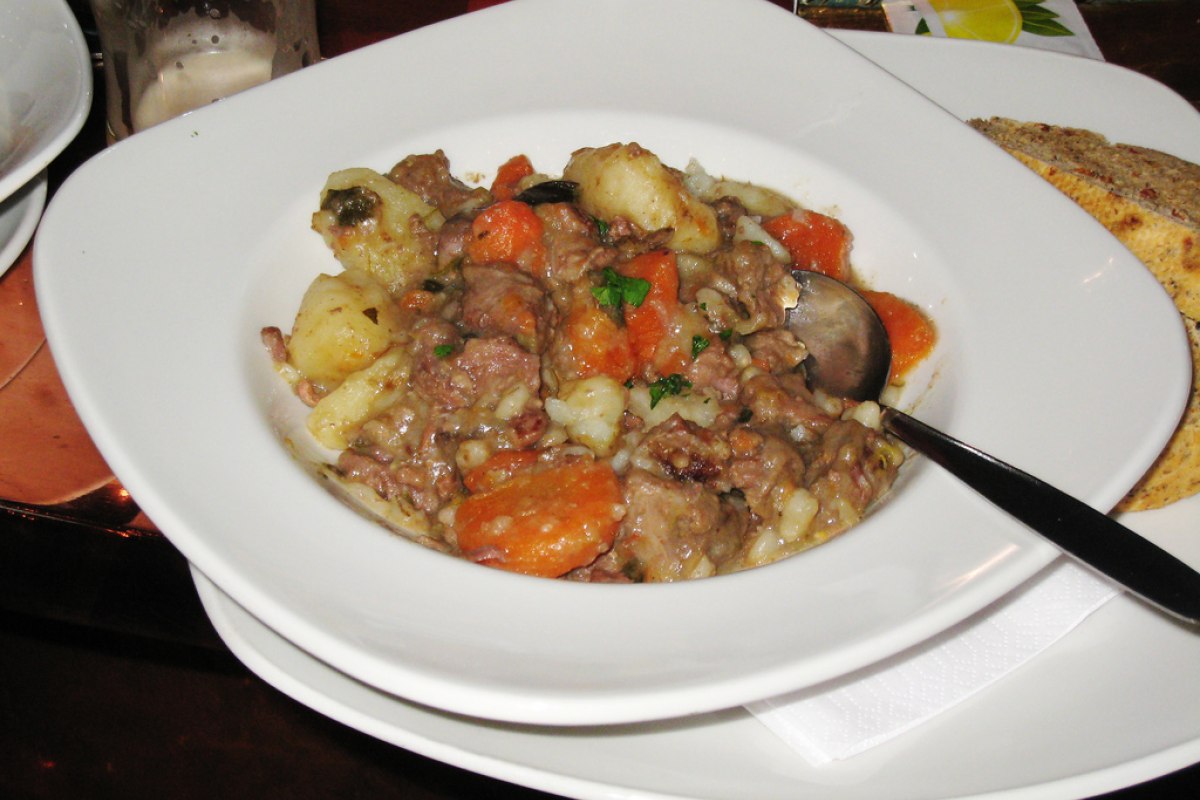
A real Irish stew is pale, not brown. The meat goes into the pot raw, the broth stays the colour of milky tea, and the only thing thickening it is potato breaking down into the liquid. Most recipes online brown the lamb, stir in a flour roux and pour in a bottle of stout. That makes a good dinner, but it is a different dish. This guide separates the traditional white stew from its modern cousins, sorts out the arguments Irish cooks have among themselves, and points you to the right variation for the meat in your fridge.
What counts as a real Irish stew
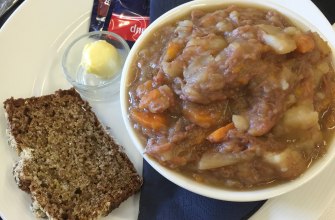
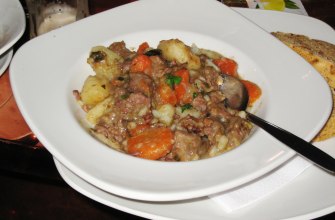
The traditional version is a white stew. Lamb or mutton, onions, potatoes and water go into the pot cold, and nothing is seared first. As the pot barely simmers for two or three hours, some of the potato collapses into the water and turns it into a soft, cloudy broth. No browning, no roux, no colour from a pan. That pale look is the marker old cooks used to tell a proper stew from a fancy one.
The dish grew out of necessity rather than a recipe. Sheep were kept for wool and milk, so only old animals past their useful years went into the pot, and tough mutton needed long slow cooking to soften. Cottage kitchens had one pot over a turf fire and whatever was in the garden. That is the whole origin: cheap meat, potatoes, onions, time.
The Irish name is stobhach, and the dish was recognised by writers as a distinct Irish food by around 1800. How loose the definition can be shows up in an odd legal corner: Canadian food regulation sets a floor for anything sold as commercial Irish stew at a minimum of twenty percent mutton, lamb or beef and thirty percent vegetables. No such rule governs the pot in your kitchen, where the only standard is the one your family passed down.
White stew and brown stew are not the same dish
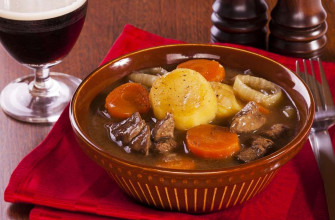
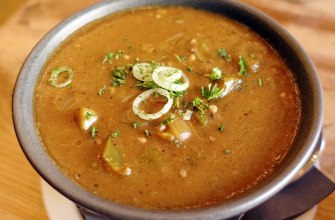
Brown stew sears the meat for a roasted flavour and often thickens the gravy with flour. It tastes richer and looks darker. There is nothing wrong with it, but calling it the traditional dish causes half the arguments online. If a recipe tells you to brown the lamb and build a roux and then calls itself authentic, it has quietly swapped in a restaurant technique. Both belong in your kitchen. Only one is the old cottage stew.
The arguments Irish cooks actually have
Search Irish food forums and the same disputes come up every winter. These are the points locals correct when a tourist recipe shows up, and they tell you more about the dish than any ingredient list.
- Guinness does not go in. Stout belongs in beef stew, which is a separate pub dish. Adding it to a lamb or mutton stew is the single most reliable way to mark a recipe as not Irish. The malt flavour fights the sheep, and the colour ruins the pale broth.
- No Worcestershire sauce. It is an English bottled condiment that a cottage kitchen never had. Same logic rules out stock cubes labelled as the secret ingredient and tomato paste, which is an American import to the dish.
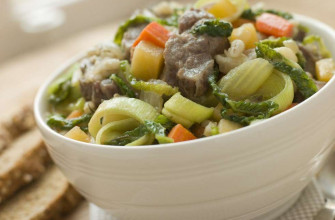
- Carrots split the room. Purists in the west keep it to meat, onion and potato only. Plenty of households add carrot, turnip or parsnip and have done so for generations. Both camps are right for their own kitchen, so treat carrots as a regional choice rather than a rule.
- Pearl barley is a maybe. Barley thickens the broth and stretches the meat, and many families swear by it. Others say it muddies a clean stew. Add a handful if you grew up with it, leave it out if you did not.
The honest summary is that there are as many recipes as there are grandmothers. What unites the traditional ones is what they leave out, not what they add.
Mutton, lamb, and where the meat comes from
Originally the meat was mutton, from a sheep over a year old. Mutton is fattier, stronger and cheaper, and it rewards the long cooking the dish demands. As wool stopped paying and farms shifted to raising animals for meat after the war, lamb took over because it was younger, milder and quicker to tenderise. Lamb held on longest in the west of Ireland, where hill sheep farming stayed central to the economy.
For provenance, the standout is Connemara Hill Lamb, which won European Protected Geographical Indication status registered on 16 February 2007. The name is reserved by law for hill lamb born and reared inside the designated Connemara area of County Galway, animals that graze wild upland grass and heather. It is one of only a small group of Irish food names protected at EU level. If you want a stew that tastes of a specific place, that is the meat to ask your butcher for.
Cut matters more than people expect. Neck, shoulder and gigot chops on the bone give the best result, because the bone and connective tissue melt into gelatine and give the broth body. Lean boneless leg makes a thinner, drier stew.
| Meat choice | Character | Cooking time |
|---|---|---|
| Mutton, bone in | Strong, fatty, deeply savoury | 2.5 to 3 hours |
| Hogget (1 to 2 years) | Middle ground, good flavour | 2 to 2.5 hours |
| Lamb, bone in | Mild, tender, quicker | 1.5 to 2 hours |
| Boneless leg | Lean, thinner broth | 1.5 hours, can dry out |
The potatoes decide the texture
Potato is the thickener in a traditional stew, so the variety changes the whole result. Floury potatoes break down and cloud the broth. Waxy ones hold their shape and stay distinct. The Irish kitchen leans floury.
- Rooster is the workhorse, red skin and yellow floury flesh, and it accounts for close to six in ten of all the potatoes grown and sold in Ireland. It breaks down willingly.
- Kerr’s Pink and Golden Wonder are the classic floury old varieties, even more prone to collapse, ideal for that soft broth.
- Maris Piper is a reliable floury substitute outside Ireland.
The technique that fixes most failed stews is timing. Slice some potato thin and put it in at the start so it dissolves and thickens the liquid. Hold back the chunkier pieces and add them for the final hour only, so they cook through but keep their shape. Dump everything in at once with a floury variety and you get a pot of grey mush. Split the job and you get both a thick broth and potatoes you can lift out whole.
The refined Ballymaloe method
Not every respected Irish cook keeps to the bare cottage pot. The version taught at the Ballymaloe Cookery School in east Cork, made famous by Darina Allen, sits a step up in technique while staying faithful to the spirit. It renders the fat off the chops gently in the pan first, then discards those scraps, rather than searing the meat for colour. Some modern Ballymaloe takes give the broth a light butter and flour roux for a smoother, velvety body that water and potato alone do not reach. Treat this as the dressed-up school of the dish: still lamb, onion and potato at heart, with a cleaner finish. It is a fair middle ground between the rough peasant white stew and the heavy browned versions.
Common mistakes that ruin a stew
- Boiling instead of simmering. A hard boil turns the meat stringy and breaks the potatoes too early. Keep it at a lazy bubble.
- Using lean boneless meat. Without bone and a little fat the broth has no body and the meat dries. Ask for chops on the bone.
- One type of potato added all at once. You lose either the thick broth or the whole pieces. Split floury potato across two stages.
- Over-seasoning. The dish is meant to taste of meat and onion. Hold back the spice rack and let salt, pepper and bay do the work.
- Eating it the same hour. A rest, or better a night in the fridge, lets the broth set and the flavour deepen.
A traditional Irish stew recipe
This is the white method, no browning. It serves six and rewards a slow afternoon. Mutton needs the full three hours; young lamb can be ready in two.
Ingredients
- 1.4 kg mutton or lamb neck and shoulder chops, bone in, fat trimmed
- 6 medium floury potatoes, Rooster or Kerr’s Pink, half sliced thin and half cut in large chunks
- 3 large onions, thickly sliced
- 2 carrots in thick rounds, optional
- A handful of pearl barley, optional
- 1 litre water or light lamb stock
- 2 bay leaves
- Sea salt and freshly ground black pepper
- Chopped parsley and chives to finish
Method
- Trim the hard fat but keep the bones in for body. Do not brown the meat.
- Layer the sliced onions and the thin potato slices across the bottom of a heavy pot. These melt down and thicken the broth.
- Sit the chops on the onion layer. Season with salt, pepper and the bay leaves. Add barley and carrots now if you are using them.
- Pour in cold water or stock until the meat is just covered. Bring it up to a bare simmer over low heat, never a hard boil.
- Cover and cook gently. Skim the fat off the top once or twice. Give lamb two hours, mutton closer to three, until the meat slides off the bone.
- Add the chunky potatoes for the last hour so they hold their shape while the early ones finish thickening the liquid.
- Rest the pot off the heat for ten minutes. The broth should coat the back of a spoon. Scatter parsley and chives over the top and serve with brown soda bread.
Like most slow stews, it tastes better the next day once the flavours settle, so it is worth making a big pot.
Regional variations across Ireland
The stew was never one fixed recipe, and the provinces drifted apart over generations. The west, Connaught and the hill country of Connemara and Mayo, stayed closest to the strict mutton, onion and potato pot, partly because sheep farming stayed central there long after it faded elsewhere. Ulster households leaned toward adding pearl barley to bulk the broth on cold northern nights. Around Munster and the midlands you find carrots and a few more root vegetables creeping in as kitchen gardens grew. None of these is the wrong version. They are a map of what each county had to hand, and any of them is welcome in your pot depending on which tradition you cook from.
The Irish stew family
Once you have the base method, the variations are mostly about the meat and the equipment. Each of these has its own full recipe and notes.
- Traditional Irish stew is the strict version covered above, the four-ingredient white stew with nothing added.
- Irish lamb stew is the everyday modern default, milder and quicker than mutton, the one most families cook now.
- Irish beef stew is the browned, stout-rich pub dish, the right home for Guinness that has no place in the lamb version, and the filling for a beef and Guinness pie.
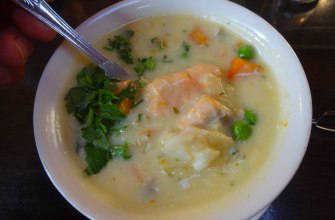
- Irish seafood stew swaps in Atlantic fish and shellfish for a lighter coastal pot.
- Vegetarian Irish stew builds the same comfort from root vegetables, pulses and a good stock.
- Slow cooker Irish stew adapts the timing for a crockpot you can leave all day.
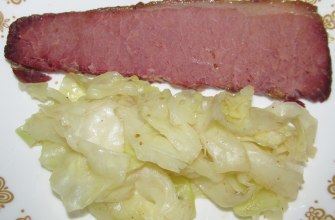
- Corned beef Irish stew is the Irish-American table favourite tied to Saint Patrick’s Day rather than the old cottage pot.
- Beyond the pot, the same stewed meat is baked under pastry as a beef and Guinness pie or under mashed potato as a shepherd’s or cottage pie.
Where to eat Irish stew in Dublin
If you would rather order it than cook it, a few Dublin houses are known for the dish. O’Neill’s Pub and Kitchen near Trinity College has been licensed for more than three centuries and serves a lamb stew with house soda bread that reviewers regularly call the best they have had, praising the broth more than the meat. The Brazen Head, which claims a history back to 1198 and bills itself as the oldest pub in Ireland, leans to the tourist crowd but keeps a respectable stew on the menu. Across review sites the recurring note is the same: the version locals rate has a thick, well-seasoned broth and falling-apart meat, while the ones tourists complain about are watery and underseasoned.
Frequently asked questions
Is Irish stew made with lamb or beef?
Traditional Irish stew uses sheep meat, mutton first and lamb later. Beef stew is a separate Irish dish, usually browned and cooked with stout. If a recipe calls itself traditional Irish stew and uses beef, it has merged the two.
Should you put Guinness in Irish stew?
Not in the traditional lamb or mutton stew. Stout belongs in beef and Guinness stew, where the malt suits the red meat. In a sheep stew it overwhelms the flavour and darkens the broth that should stay pale.
Why is my Irish stew watery?
The potato is your thickener. Use a floury variety like Rooster or Kerr’s Pink, slice some of it thin so it dissolves early, and let the pot simmer with the lid off for the last stretch if it needs reducing. A lean boneless cut also gives a thinner broth than bone-in chops.
Do you brown the meat for Irish stew?
Not for the traditional white stew, where the raw meat goes straight into the pot. Browning belongs to brown stew and to the beef and stout version. Browning changes the flavour and the colour, so choose it on purpose rather than by habit.
What do you serve with Irish stew?
Brown soda bread to mop the broth is the standard, sometimes with a pat of Irish butter. A glass of stout or a cup of strong tea finishes it. The stew is a full meal on its own, so sides stay simple.
Sources
- Bord Bia, the Irish Food Board, quality and PGI schemes
- Teagasc, Agriculture and Food Development Authority, potato varieties
- Irish Potato Federation, variety profiles
- Connemara Hill Lamb protected geographical indication register
- Dúchas, the National Folklore Collection of Ireland
- Fáilte Ireland, National Tourism Development Authority
- The Irish Times, food and drink
- Charles Haynes, Irish stew photograph, Wikimedia Commons, licensed CC BY-SA 2.0