Why ten days, and why this triangle
Ten days is the shortest window that lets a first-time visitor cover Tokyo, Kyoto, and Osaka without spending the trip on bullet trains. Cut to seven days and Kyoto gets shortchanged. Stretch to fourteen and the natural extension is Hiroshima or the Japan Alps, which is a different trip with different paperwork. The Tokyo-Kyoto-Osaka spine, sometimes labelled the Golden Route, gives modern Japan, classical Japan, and food-capital Japan in one ticket.
The route works because the Tokaido Shinkansen runs every few minutes between the three cities. Tokyo to Kyoto takes 2 hours 15 minutes on the fastest service, Kyoto to Osaka takes 14 minutes. Distances stop mattering. What matters is sequencing: which city you land in, which neighborhoods you sleep in, and how many day trips you can fit before fatigue takes over. The plan below fronts Tokyo (4 nights), settles in Kyoto (3 nights), then closes in Osaka (2 nights) with a Himeji day trip on Day 9 that most travel blogs skip.
Days 1-3: Tokyo, the dense version
Land at Haneda if your airline allows it. Haneda sits 30 minutes from central Tokyo by monorail and Yamanote line. Narita adds 60-80 minutes each way and a 3,200 yen Skyliner ticket. Pick a hotel in Shinjuku or Shibuya so the first jet-lagged hours are walkable rather than train-bound.
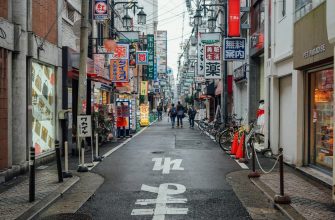
Day 1 is recovery and orientation. Walk Shinjuku Gyoen in the afternoon for sleep-pressure exposure to daylight. Dinner in the alleyways behind Shinjuku station (Omoide Yokocho) costs 1,500-2,500 yen for grilled skewers and beer.
Day 2 covers eastern Tokyo. Start at Tsukiji outer market for a 7am sushi breakfast (the inner wholesale market moved to Toyosu in 2018, but the outer street still operates and Daiwa Sushi is one of the few survivors of the old setup). Continue to Asakusa for Senso-ji temple and Nakamise shopping street, then climb the Tokyo Skytree if visibility looks clean. End the day in Akihabara for the electric town and basement gachapon arcades.
Day 3 covers western Tokyo. Meiji Shrine in the morning when it is quiet. Then Harajuku for crepe stalls and the strange retail of Takeshita Street, the home of Harajuku Japanese fashion. Walk to Omotesando for the architecture, then drop into Shibuya for the scramble crossing at dusk. Most travelers underestimate how much Day 3 wrecks the legs. Plan a short hotel break in the afternoon.
Day 4: Day trip out, then bullet train west
Two solid Day 4 options. Pick one based on weather and season.
Hakone works if Mt Fuji is likely visible (clearest from November through February, hazy in summer). The Hakone Free Pass costs around 6,100 yen from Shinjuku and covers the round-trip rail, the pirate-ship lake crossing, the ropeway over the volcanic Owakudani valley, and local buses. Soak in an onsen, eat black eggs boiled in the sulfur springs, return to Tokyo by 7pm.
Nikko works if rain is forecast or you prefer history over views. The Toshogu shrine complex from 1617 holds the mausoleum of shogun Tokugawa Ieyasu. Train time from Asakusa is 2 hours each way on the Tobu Limited Express.
Either way, Day 4 evening is checkout and the Shinkansen to Kyoto. Catch the 7pm or 8pm Hikari from Tokyo Station. Reserve seats at JR ticket office or via the Smart-EX app. Arrive Kyoto Station by 10pm. Take a taxi to your Kyoto hotel: it costs 1,500-2,500 yen and beats dragging luggage on local buses at night.
Days 5-7: Kyoto, the slow version
Kyoto rewards visitors who walk. The bus system is good but the city is small enough that a 30-minute walk often beats a bus-train transfer. Buy a 700 yen daily bus pass for the days when feet give out.
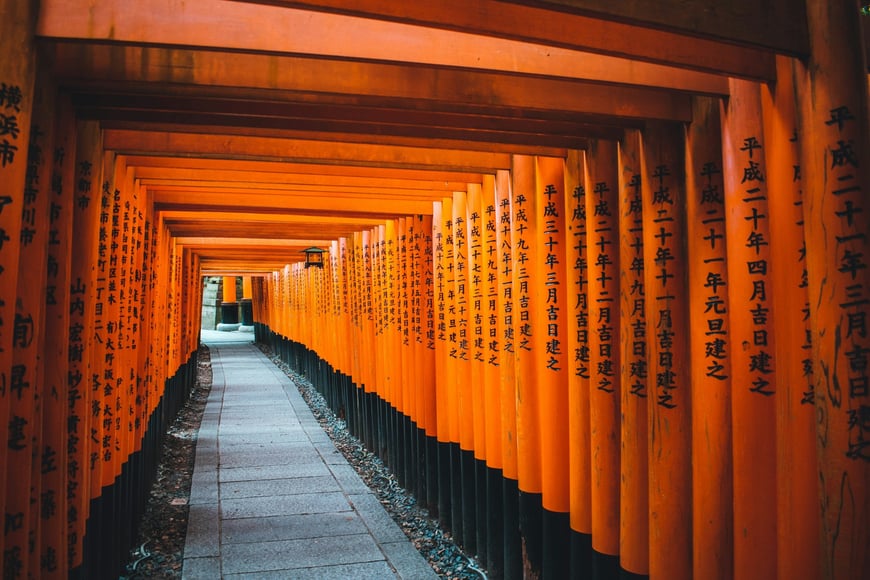
Day 5 is the southern temples. Start before 7am at Fushimi Inari, the orange torii gate mountain. By 9am the trail is clogged. Walk the full circuit (about 90 minutes) and you reach an upper gate where 80% of day-trippers turn around. Continue to Tofuku-ji for the moss garden, then the Gion district for an early dinner. Look for tea houses on Hanamikoji Street where geiko (Kyoto term for geisha) walk between appointments at dusk. Photography of working geiko is restricted on private alleys; check signs.
Day 6 splits Kyoto in half. Morning at Kinkaku-ji, the gold pavilion in the northwest. Afternoon at Arashiyama in the west: the bamboo grove (best at 8am or 4pm to dodge crowds), Tenryu-ji temple gardens, and the Sagano scenic railway if seats are available. The Kyoto stone garden tradition is concentrated here and at the temples featured in our piece on Japanese meditation zen gardens in Kyoto.
Day 7 is the Nara day trip. Trains leave Kyoto every 30 minutes and reach Nara in 45 minutes (Kintetsu line) or 70 minutes (JR line). Todai-ji holds a 15-meter bronze Buddha. The 1,200 free-roaming sika deer in Nara Park are tame, food-aggressive, and bow on cue for 200-yen rice crackers. Return to Kyoto by 6pm. Save the evening for kaiseki dinner or a kabuki performance at Minamiza if the schedule lines up. Anyone curious about the surface of Japanese visual culture will get more from temple visits paired with our overview of the history of Japanese art.
Day 8: Osaka, food capital
Check out of Kyoto after breakfast. The Shinkansen from Kyoto to Shin-Osaka takes 14 minutes. The local JR Special Rapid takes 28 minutes for a fraction of the cost; bag space is the only real difference.
Drop bags at your Namba or Umeda hotel by noon. Afternoon at Osaka Castle: the keep was rebuilt in 1931 in concrete, but the moat and outer walls are original 1583 Toyotomi Hideyoshi stonework. The 8th-floor observation deck is worth the 600 yen.
Evening goes to Dotonbori. The 200-meter neon canal strip serves the city’s best-known dishes: takoyaki octopus balls (try Kukuru), okonomiyaki savory pancakes (Mizuno is the historical original from 1945), and kushikatsu fried skewers (Daruma, the chain with the angry-chef logo). The Glico running-man sign at Ebisubashi bridge has been on that wall in some form since 1935. Walk Hozenji Yokocho for the older lantern-lit alleys two blocks south.
Days 9-10: Himeji day trip and Osaka close
Day 9 is the differentiator. Himeji Castle sits 30 minutes west of Shin-Osaka by Shinkansen. It is the only original (not reconstructed) major castle in Japan, finished in 1609, designated UNESCO World Heritage in 1993, and reopened in 2015 after a five-year restoration that left the white plaster cleaner than it had been in 400 years. Most 10-day Japan blogs skip Himeji because a deer-feeding day in Nara is easier to write about. The castle is a 15-minute walk from Himeji Station along a wide pedestrian avenue. Plan 3-4 hours inside the keep and outer baileys. The stair-climb to the top floor is steep and stocking-only past the entrance.
On the return trip stop at Kobe (one stop east of Himeji on the Sanyo Shinkansen) for an early Kobe-beef dinner. Wakkoqu and Steakland are mid-range options around 8,000-12,000 yen; Mouriya for the splurge tier around 25,000 yen.
Day 10 is Osaka final morning and departure. Early breakfast at Kuromon Ichiba market, where the seafood stalls grill items to order from 9am. Souvenirs from the Namba Walk underground arcade. Kansai International Airport sits 50 minutes south of Namba on the Nankai Rapi:t express (1,490 yen). Allow three hours from city center to wheels-up: Japanese airport security is fast, but the Osaka domestic-international transfer can stack queues.
JR Pass math: do the calculation
The Japan Rail Pass climbed 65% in October 2023. A 7-day ordinary pass that cost 29,650 yen now costs 50,000 yen, and Japan Railways announced a further increase to roughly 53,000 yen via travel agencies starting October 1, 2026 (the official japanrailpass.net site stays at 50,000 yen for now, per their April 2026 notice).
Run the numbers for the standard 10-day route:
- Tokyo to Kyoto on Hikari: 13,320 yen reserved
- Kyoto to Shin-Osaka on Hikari: 1,420 yen
- Shin-Osaka to Himeji round trip: 6,800 yen
- Shin-Osaka to Kobe round trip: 1,500 yen
- Total Shinkansen: about 23,040 yen
That is well under the 50,000 yen pass. Add Hakone (covered by a separate Hakone Free Pass anyway, not the JR Pass) and the calculation does not change. Even with a Tokyo to Osaka return at the end (13,870 yen), the total reaches 36,910 yen, still under the pass.
Verdict: for a Tokyo-Kyoto-Osaka 10-day trip, single tickets via Smart-EX win. The pass becomes worthwhile only when you add Hiroshima and Miyajima (Tokyo-Hiroshima alone is 19,760 yen one way), or when you stretch to a Japan Alps loop with Kanazawa and Nagano. For local rides inside cities, top up a Suica or Pasmo IC card with 5,000 yen at the airport. Tap on, tap off, no thinking.
Watch the Nozomi versus Hikari split. The fastest service, Nozomi, is NOT covered by the JR Pass. Hikari is covered and adds 25 minutes Tokyo-Kyoto. Pass holders who book Nozomi by mistake pay the full fare again at the gate.
Where to sleep in each city
The right neighborhood matters more than the star count.
Tokyo: Shinjuku or Shibuya. Shinjuku gives Yamanote-line access to the entire city and 24-hour food. The Keio Plaza (mid-range, around 22,000 yen) and Park Hyatt (luxury, the Lost in Translation hotel, 80,000 yen plus) are the canonical picks. Asakusa is cheaper and atmospheric but adds 25-40 minutes to most other neighborhoods. Skip Tokyo Station hotels: efficient for Shinkansen but dead at night.
Kyoto: Higashiyama or Gion. Higashiyama puts you walking distance to Kiyomizu-dera, Yasaka Shrine, and the temple cluster. The Higashiyama by Kyoto Tokyu (mid-range, 28,000 yen) and Hoshinoya Kyoto (river-access ryokan, 90,000 yen plus including kaiseki) are the headline options. Gion is louder at night but nearer to the Kamogawa river. The classic ryokan for travelers chasing the historical experience is Tawaraya, run by the Sato family since 1709 (eleven generations); 11 rooms, two-night minimum, around 60,000 yen per person including breakfast and dinner.
Osaka: Namba or Umeda. Namba sits inside the Dotonbori entertainment district. Umeda is the business hub with shopping malls. The Hotel Vischio Osaka by Granvia (mid-range, 18,000 yen) is the practical Namba pick. Capsule hotels start at 4,500 yen for solo travelers who treat the room as a sleep cell.
Book six months ahead for cherry blossom season (late March through early April) and early November for the koyo (autumn leaves) peak. Outside those windows, two months ahead works.
What this trip actually costs
Daily figures below assume one traveler, double-occupancy hotel, mid-range eating with one splurge dinner per city. Convert from yen using a 150 yen-per-dollar reference (rates fluctuate; check before booking).
- Backpacker: 12,000 yen per day ($80). Hostels, convenience-store breakfasts, ramen lunches, one izakaya dinner. Total 10 days: 120,000 yen ($800), excluding flights and intercity rail.
- Mid-range: 30,000 yen per day ($200). 3-star hotels, mix of standing-bar lunches and sit-down dinners, paid temple admissions. Total: 300,000 yen ($2,000).
- Comfort: 60,000 yen per day ($400). 4-star hotels, kaiseki dinner once, taxi over bus when tired, paid English-guided experiences. Total: 600,000 yen ($4,000).
- Luxury: 120,000 yen per day ($800) and up. Tawaraya or Hoshinoya nights, Michelin-rated dinners, private guides. Total: 1,200,000 yen ($8,000) and up.
Add international flights (variable, $700-1,800 from US east coast), the Shinkansen segments (about 25,000-37,000 yen), and a 2,000 yen daily contingency for taxi rides and unplanned admissions.
When to go: cherry blossoms, autumn leaves, off-peak math
Two seasons dominate every Japan-bound search query: late March through early April for sakura, and late October through late November for koyo. Both seasons charge a 30-50% accommodation premium and demand booking six months out. Background on the cherry blossom tradition itself sits in our piece on the Japanese cherry blossom festival; for the actual tree species and how they spread north, see Japanese cherry blossom trees.
Sakura forecast windows for upcoming years (Japan Meteorological Corporation forecasts; trees bloom 7-10 days each):
| Year | Tokyo full bloom | Kyoto full bloom | Forecast confidence |
|---|---|---|---|
| 2026 | March 25 – April 1 (passed) | March 30 – April 6 (passed) | Confirmed |
| 2027 | March 30 – April 4 | April 4 – April 9 | Forecast (issued 2026) |
| 2028 | March 28 – April 5 (10-yr mean) | April 1 – April 8 (10-yr mean) | Historical mean only [VERIFY closer to date] |
Autumn leaves run in the opposite direction (north to south) and reach the Tokyo-Kyoto belt around mid to late November. Kyoto temple gardens are the visual peak: Tofuku-ji and Eikan-do book out 6 weeks ahead.
Off-peak windows that work: mid-January through early March (cold but clear, lowest hotel prices, snow on Mt Fuji backdrops), and mid-September (typhoon risk, but rates and crowds drop). Summer (July-August) is humid, expensive due to Obon holiday, and visually flat. Avoid Golden Week (April 29 – May 5) at all costs unless you have booked everything in February. The summer matsuri calendar can shift this verdict for festival hunters; our seasonal Japanese festivals guide maps the major events month by month.
Other shapes of this trip
Three useful variations on the 10-day spine.
Reverse direction (KIX-in, NRT-out). Many budget carriers and some long-haul flights price Kansai International Airport (Osaka) cheaper than Tokyo arrivals. Run the trip backward: Osaka 2 nights, Kyoto 3 nights, Tokyo 4 nights, plus the Himeji and Hakone day trips. Saves the airport-transfer Shinkansen reversal at the end and lets jet lag fade in quieter Osaka before the Tokyo intensity.
7-day cut. Drop the Himeji day, drop one Tokyo day, keep Kyoto at three nights. Tokyo 3 nights, Shinkansen on Day 4, Kyoto 3 nights with Nara built in, Osaka 1 night (a Saturday for Dotonbori energy), departure. Loses the original-castle visit and the Tokyo east-versus-west split, gains a week-of-vacation slot for travelers without ten days off.
For deeper context on temple aesthetics encountered along the way, the technical tradition behind the calligraphic signs over every shrine entrance lives in our piece on Japanese calligraphy (shodo), and the gardens in Nara reflect Buddhist iconography covered in Japanese Buddhist art.
14-day extension. Add Hiroshima and Miyajima (2 nights) after Osaka, then return via Mt Fuji’s Fuji Five Lakes for a final night before Tokyo departure. This is the version where the JR Pass becomes worthwhile (Tokyo-Hiroshima round trip alone is 39,520 yen). The longer trip also lets you slot in a tea-ceremony lesson, often best taken at a Kyoto Japanese garden tea house, or a kimono fitting from a serious shop rather than a tourist rental booth, like the family-run studios behind traditional Japanese kimono craftsmanship.
Common questions
Do I need a visa? US, UK, EU, Australian, and Canadian passports get 90 days visa-free. Bring a passport with at least 6 months validity remaining and a printed onward ticket (rarely checked but occasionally requested at landing).
How much Japanese do I need? Almost none for the Tokyo-Kyoto-Osaka spine. Train signs, restaurant menus in tourist zones, and ticket machines all run English. Outside the spine, Google Translate camera mode handles menus.
Cash or card? Both. Japan still has cash-only restaurants, ryokan, and some museum tickets. Withdraw 30,000-50,000 yen at a 7-Eleven ATM on arrival (foreign cards work; bank ATMs often refuse). Visa and Mastercard run everywhere else.
SIM or Wi-Fi? Buy an eSIM before departure (Saily, Airalo, Ubigi run $15-25 for 10 days, 5GB). Pocket Wi-Fi rentals at airports cost 800-1,200 yen per day and are the right call for groups.
Tipping? Do not tip. It can confuse staff and is sometimes refused.
Is October better than April? For weather, yes. October is dry, mild, and uncrowded. For visuals, April wins on cherry-blossom photographs but loses on rain frequency. The koyo autumn leaves in late November rival the cherry blossoms for color and run two weeks longer.
Sources
- Japan Rail Pass official site – current 7-day, 14-day, 21-day Ordinary and Green pricing in yen, plus the October 1 price-increase notice for travel-agency purchases.
- Japan Meteorological Agency – official weather data and the seasonal sakura observation network used to validate independent bloom forecasts.
- japan-guide.com – independent travel reference covering station-by-station Shinkansen schedules, regional pass coverage maps, and seasonal event listings.
- Kyoto City Tourism Association – opening hours and entry fees for Kinkaku-ji, Fushimi Inari, Arashiyama temples, and the Gion geisha-district photography rules.
- Himeji Castle official site – current admission, last-entry times, and post-2015 restoration notes for the UNESCO keep covered on Day 9.
- Tokyo Convention and Visitors Bureau – district profiles for Shinjuku, Shibuya, Asakusa, and the Tsukiji outer market hours.
- UNESCO World Heritage List – Himeji-jo (entry 661) – inscription record from 1993 with the cultural-criteria justification and protected zone map.