Japan runs an estimated 100,000 matsuri a year. Some draw a million visitors and broadcast nationally; most fill a single shrine courtyard with a few dozen neighbours, paper lanterns, and shaved ice. The pattern repeats every season, every prefecture, every centuries-old shrine and every new postwar suburb.
This guide tracks the Japanese festival calendar by season, picks out the matsuri worth flying for, and explains how to attend without ruining the day for the locals carrying the float. Spring cherry blossoms, summer Gion in Kyoto, August Obon dance circles, autumn Takayama, February snow sculptures in Sapporo: each anchors a different month and a different reason to be there.
What “matsuri” means
Matsuri originally meant a Shinto rite for honouring kami, the resident gods of mountains, rivers, rice fields, and shrines. The shrine festival follows a fixed structure: a deity is invited into a portable mikoshi, the mikoshi is paraded through the parish, the kami visits its territory, and the deity is returned to the shrine before sundown. Buddhist temples added their own rites after the eighth century, with Obon and various memorial services taking on festival dimensions over the next thousand years.
Today the religious frame loosens at most matsuri. A neighbourhood festival is a community event: yatai food stalls, festival drumming on a wooden tower called a yagura, taiko troupes, a wooden cart pulled by men in matching happi coats, and stalls selling shaved ice and grilled corn. Children fish for goldfish and catch yo-yo balloons.
The Japanese word nen-chu-gyo-ji translates as “annual recurring observances” and covers the calendar of matsuri across a Shinto year. Spring asks for a good harvest, summer protects crops from typhoons and disease, autumn thanks the kami for the rice, winter clears bad luck before the new year. The same logic still organises rural shrines today.
Spring: March to May
The spring season opens with the Hina Matsuri on March 3, the doll display for girls’ day. Families with daughters set out a tiered platform of dolls representing the imperial court, and the dolls return to storage by the end of the day to avoid bringing bad marriage luck.
Cherry blossoms drive the second half of spring. Hanami, the practice of picnicking under sakura, runs from late March in Kyushu to early May in Hokkaido as the cherry front climbs the islands. The Japan Meteorological Agency stopped issuing official sakura forecasts in 2010, but private weather services now track them in greater detail than ever. Major hanami spots include Ueno Park and Shinjuku Gyoen in Tokyo, the Philosopher’s Path in Kyoto, and the Hirosaki Park castle moat in Aomori.
Sanja Matsuri, held on the third weekend of May at Asakusa Shrine in Tokyo, brings about 1.5 million people to a three-day mikoshi parade with around a hundred portable shrines bouncing through the streets. Golden Week, the cluster of national holidays from late April to early May, makes domestic travel expensive and crowded but covers Constitution Memorial Day, Greenery Day, and Children’s Day with their own neighbourhood koi-flag displays.
For deeper coverage of cherry blossom culture, see when and where to see Japanese cherry blossoms and cherry blossom in Japanese art, both of which go further into the symbolism than this hub does.
Early summer: June to July
Tanabata, the star festival, falls on July 7 across most of Japan and on August 7 in Sendai under the lunar calendar. The festival commemorates the once-a-year meeting of the celestial weaver Orihime and the cowherd Hikoboshi, separated by the Milky Way for the rest of the year. People write wishes on coloured strips of paper and tie them to bamboo branches. Sendai’s version, held August 6-8, decorates the city’s arcades with giant streamer ornaments.
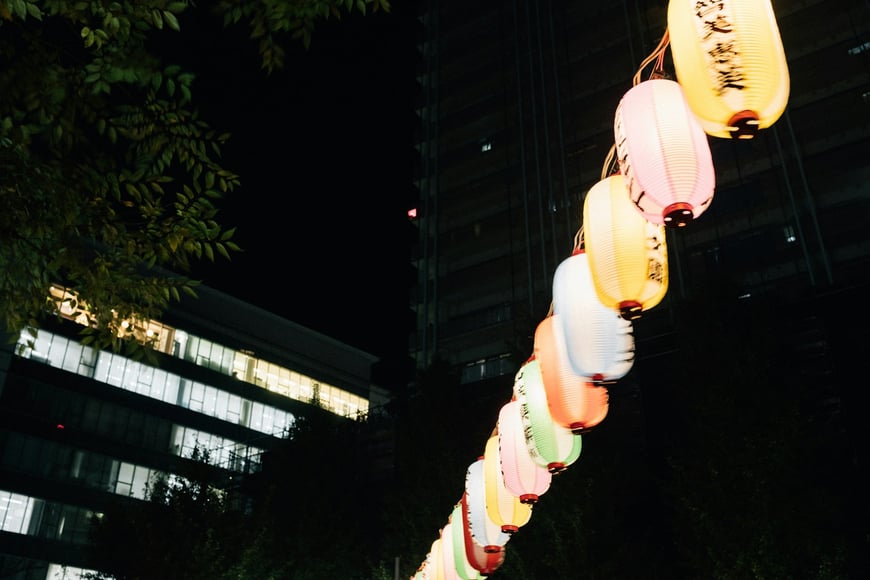
Gion Matsuri in Kyoto runs the entire month of July and counts as one of Japan’s three biggest festivals. The festival traces back to 869, when Emperor Seiwa ordered prayers to Susanoo-no-Mikoto at Yasaka Shrine to end an epidemic. The two centrepiece float processions, Yamaboko Junkō, take place on July 17 and July 24, with float weights up to 12 tons and heights up to 25 metres. Yoiyama, the three-night street festival before each procession, closes downtown Kyoto’s Shijo district to cars and fills it with lanterns, music, and stalls.
Hakata Gion Yamakasa in Fukuoka runs July 1-15 and ends with the Oiyama dawn race: seven teams of bearers run a one-tonne float on a 5-kilometre course through Hakata, starting at 4:59 a.m. Spectators line the streets in the dark.
Late summer: August
August is the busiest matsuri month. Obon, the Buddhist festival of returning ancestral spirits, anchors most of it. Obon traditionally runs August 13-16 in much of Japan, though some regions observe it in mid-July. Families return to home villages, clean ancestral graves, and dance Bon Odori at the local shrine. Lanterns float down rivers on the final evening to send the spirits home.
Awa Odori in Tokushima city runs August 12-15 and is the largest Bon Odori event in Japan. About 1.3 million people watch dance troupes called ren parade through the streets in the evenings between 6 p.m. and 10 p.m. The dance has a male and female form, with the female version performed in tall geta sandals and a pulled-back hat.
The Tohoku region runs three of the country’s most photographed summer festivals. Aomori Nebuta Matsuri parades vast lantern floats depicting mythical warriors August 2-7. Akita Kanto, also in early August, balances bamboo poles strung with up to 46 paper lanterns on the foreheads, hips, and shoulders of skilled bearers. Sendai Tanabata, the third of the three great Tohoku festivals, runs August 6-8 with its famous streamer arcades.
August closes with fireworks. Tokyo’s Sumida River Fireworks, held the last Saturday of July, draws roughly 900,000 spectators along the river. Yodogawa in Osaka, Nagaoka in Niigata, and Tsuchiura in Ibaraki run the country’s largest hanabi taikai displays, with the Nagaoka show staging a single-shell finale measuring 800 metres across.
Autumn: September to November
Tsukimi, the moon-viewing celebration, takes place around the harvest full moon in mid-September. The custom involves rice-flour dumplings stacked in a pyramid, susuki pampas grass arrangements, and the slow contemplation of a clear autumn sky. Tsukimi is more domestic than crowd-driven, though some shrines hold formal viewings.
Takayama Matsuri runs twice a year, in spring on April 14-15 and autumn on October 9-10. The autumn version, called the Hachiman Festival, parades eleven mechanical floats with marionette puppets called karakuri ningyō through the old Hida town centre. The Takayama floats are designated National Important Tangible Folk Cultural Properties [VERIFY: number of designated floats] and the night procession with paper lanterns is the photograph that ends up on most Japan tourism posters.
Jidai Matsuri, the Festival of the Ages, takes place in Kyoto on October 22 and is the youngest of the city’s three big matsuri, founded in 1895. About 2,000 participants in costumes from eight historical periods walk the route from the Imperial Palace to Heian Shrine. The same evening sees Kurama Fire Festival in the mountain village of Kurama, where local men in straw skirts run torches up to a shrine through the dark.
Momiji-gari, the autumn-leaf chase, replaces hanami as the seasonal travel anchor through October and November. Kyoto, Nikko, and the Tohoku mountains all host travellers tracking the colour line south. Niiname-sai on November 23 is the rice harvest thanksgiving observed at every shrine in the country, and at the Imperial Palace in Tokyo by the Emperor in person.
Winter: December to February
Hatsumōde, the year’s first shrine visit, runs January 1-3 and is the largest single religious gathering in Japan. Meiji Shrine in Tokyo handles roughly 3 million visitors over the three days, with smaller numbers spread across local shrines. People pray for the year ahead, buy new omamori amulets, and burn last year’s amulets in a shrine bonfire.
Setsubun on February 3 marks the boundary between winter and spring on the lunar calendar. The mamemaki bean-throwing ritual chases off bad luck: a household member wears an oni demon mask, and the rest of the family throws roasted soybeans at them while shouting “oni wa soto, fuku wa uchi” (out with demons, in with luck). Larger temples host public events with celebrities throwing beans at the crowd.
Sapporo Yuki Matsuri, the snow festival, runs eight days in early February at three sites in Hokkaido’s capital. Snow sculptures up to 25 metres wide and 15 metres high stand along the Odori Park strip, with smaller pieces and ice carvings at the Susukino downtown site. The festival runs about eight days in early February each year, with the exact date set by Sapporo city authorities and published on snowfes.com several months ahead.
Yokote Kamakura Festival in Akita Prefecture builds about a hundred snow huts called kamakura on February 15-16. Children sit inside the huts heated by braziers, sharing sweet sake and grilled mochi with passing visitors. The Hakodate Christmas Fantasy and Otaru Snow Light Path round out Hokkaido’s winter calendar.
Standout regional festivals worth a trip
Some matsuri reward the effort of a long detour. The list runs roughly chronologically:
- Sapporo Yuki Matsuri (early February, Hokkaido) – sculptures larger than buildings; fly into New Chitose, stay in central Sapporo.
- Hakata Gion Yamakasa (July 1-15, Fukuoka) – the dawn race on July 15 is the photograph; arrive the night before.
- Gion Matsuri (all July, Kyoto) – the July 17 and 24 parades are the structural events; Yoiyama lantern nights are the social ones.
- Awa Odori (August 12-15, Tokushima) – watch the first night, join the open dance circles on the second.
- Aomori Nebuta (August 2-7, Aomori) – ride the JR Tsugaru Limited Express in from Tokyo on a JR Pass.
- Kishiwada Danjiri (third weekend of September, Osaka) – intense, fast, dangerous: 4-tonne wooden floats sprinting around 90-degree corners.
- Takayama Matsuri (April 14-15 and October 9-10, Hida) – the autumn version with night procession is the better one.
- Yokote Kamakura (February 15-16, Akita) – intimate; fewer foreign visitors than Sapporo.
How to attend a Japanese festival
Show up before the schedule starts. Float-pull routes get blocked off three to four hours in advance, and hotel rates double. For Gion, book Kyoto accommodation in March; for Sapporo, book in October. Check the local tourist office website for the current year’s exact route.
Yukata, the cotton summer kimono, is appropriate at any summer matsuri and a friendly gesture rather than cosplay. Shops in major festival cities rent yukata with obi belts and geta sandals for the day. The traditional Japanese fashion guide covers the etiquette of wearing one. Traditional Japanese hairstyles for festival wear are still done by salons in Kyoto and Tokyo for the higher-formality matsuri.
Photography rules vary by shrine. Most outdoor matsuri allow photos freely; ceremonies inside shrine buildings often prohibit them, and the Yamaboko floats in Kyoto have signs. Drone photography is banned at virtually every major festival site. Do not block the float route, do not climb fences, and step back when bearers run.
Train surge planning matters. Last trains during major matsuri can run over capacity, and limited expresses to Aomori or Tokushima sell out weeks in advance. JR Pass holders should reserve seats; the Kyoto zen garden guide covers the gentler post-Gion downtime if a few quiet hours away from the float route help.
Cherry blossom: a deeper look at hanami
Hanami sits between rite and picnic. The earliest references date to Heian-period court poetry from the eighth century, and the practice spread to the samurai class by the Edo period and to the wider public after the Meiji Restoration. A modern hanami picnic involves a tarp under the trees, bento boxes, beer, and an afternoon of slow conversation. Office workers reserve plum spots in popular parks since the morning.
Traditional hanami pairs with cherry-blossom symbolism in Japanese cherry blossom art and in cherry blossom festival traditions. The festival aspect is light: most public hanami events are simply the trees themselves at night, illuminated by paper lanterns and called yozakura. Famous yozakura spots include Maruyama Park in Kyoto and Chidorigafuchi moat in Tokyo.
The sakura-front weather report (sakura zensen) maps the bloom advance from southern Kyushu in late March to northern Hokkaido in mid-May. Within a city the bloom lasts seven to ten days from first opening to fall. Plan for the front edge of the window rather than peak, since rain shortens the show by half.
First-timer’s two-week festival itinerary
Two strong itineraries cover most of what a first visitor needs. Spring: arrive Tokyo in late March, give Tokyo three days for hanami at Ueno and Yoyogi, train to Kyoto for the Philosopher’s Path, then train south to Himeji Castle and Hiroshima. Two weeks easily fills with cherry-front chasing and shrine visits, with Japanese pop art and traditional art venues filling rainy afternoons.
Summer: arrive Kyoto in early July, settle in for two weeks of Gion Matsuri events, day-trip to Osaka for food and to Nara for the deer park. Pair Gion with the Hakata Gion Yamakasa dawn race in Fukuoka mid-month, then fly home from Fukuoka or train back through Hiroshima. The Japanese good luck symbols piece covers omamori and shrine purchases that travellers tend to bring home.
For Obon-week travellers, choose Tokushima for Awa Odori or Tohoku for the Nebuta-Kanto-Tanabata circuit, but not both: the distance and August train load make the combination painful. The Japanese zodiac symbols guide covers New Year shrine purchases for travellers arriving in January, and Japanese family symbols are particularly relevant during Obon visits to ancestral graves. Japanese love symbols tie into the Tanabata story and surface again on omamori sold during the festival, while Japanese national symbols appear on the banners flanking many shrine processions.
Frequently Asked Questions
Are Japanese festivals open to foreign visitors?
Yes. Public matsuri welcome anyone who shows up; you do not need a ticket or a connection. A few private shrine rites are members-only, but those are not the festivals visitors come to see. Buy a yatai snack, watch the parade, follow the crowd. Photographers should respect ceremonial buildings and stand-back signs.
What is the difference between a matsuri and a national holiday?
National holidays such as Greenery Day or Mountain Day are calendar dates without religious content. Matsuri are local Shinto or Buddhist events, often anchored to a specific shrine, and the dates often vary year to year by lunar calendar or by local tradition. A matsuri may fall on a national holiday, but the two categories are distinct.
Which season has the best Japanese festivals for a first visit?
Summer offers the largest number and the most photographed matsuri, including Gion in Kyoto, Awa Odori in Tokushima, and the Tohoku trio. Hotel rates and crowds are high. Autumn is more comfortable for travel and includes Takayama and Jidai Matsuri. Winter is quieter but rewards a Sapporo or Yokote trip. Spring centres on cherry blossoms more than on shrine matsuri.
Do I need to book Gion Matsuri tickets in advance?
Most of Gion Matsuri is free and open to the public, including the Yamaboko Junkō parade and the Yoiyama lantern nights. Paid grandstand seats along the parade route can be reserved through Kyoto City Tourism Association from early June. The float interiors during Yoiyama are often opened to visitors who buy a chimaki amulet from each float committee.
Sources and Further Reading
- Japan National Tourism Organization (jnto.go.jp / japan.travel) – festival calendars and current event details.
- City of Kyoto official site (city.kyoto.lg.jp) for Gion Matsuri and Jidai Matsuri.
- City of Sapporo official tourism site (sapporo.travel) for Yuki Matsuri scheduling.
- Yasaka Shrine official records on the Gion Matsuri 869 origin and modern format.
- Agency for Cultural Affairs (bunka.go.jp) for matsuri statistics and intangible cultural property listings.