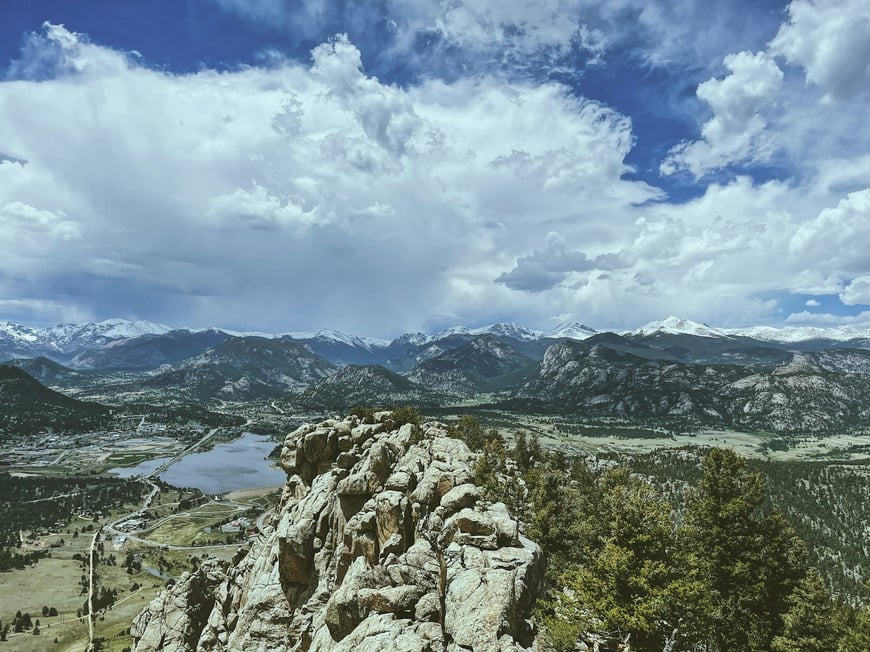
Breckenridge as a year-round destination
Breckenridge is best known as a ski town, but the calendar runs full programming for the other eight months of the year. The town’s 9,600-foot elevation drops temperatures into the 70s in summer, the Blue River and Tenmile Range hold gold-medal trout water and dozens of marked trails, and the resort itself converts Peak 8 into a summer activity park once the lifts close to skiers.
Breckenridge holds the largest historic district in Colorado. The town was founded in 1859 after gold was discovered on the Blue River, and the original Main Street still runs largely intact. The Gold Pan Saloon, opened in 1879, has poured drinks continuously since the gold-rush days and stands as one of the longest-running bars west of the Mississippi.
Annual visitor counts split roughly 60-40 between winter and summer. Summer visitors come for hiking, mountain biking, fly fishing, the alpine coaster, and the Breckenridge International Festival of Arts. Shoulder seasons (April-May, September-November) run quieter with the lowest lodging rates of the year.
For winter activities, see the Breckenridge Skiing Guide. For where to sleep and eat, see the Breckenridge Resorts and Lodging Guide and the Where to Eat in Breckenridge guide.
Summer activities at a glance
Summer in Breckenridge runs from mid-June through early September. Daytime highs reach the high 60s to mid 70s Fahrenheit; nights drop into the 40s. Afternoon thunderstorms are common in July and August, so most outdoor activities front-load into morning hours.
The Peak 8 Fun Park converts the resort’s lower mountain into a summer attraction park. The Gold Runner Alpine Coaster, mini-golf, climbing wall, summer trampoline, bag jump, and the maze are all clustered at the Peak 8 base. Multi-attraction passes save 30 to 40 percent over single-ticket pricing.
The town hosts the Breckenridge International Festival of Arts in mid-August with concerts, public art installations, and street performances. The festival is the busiest non-ski week of the calendar.
Mountain biking, fly fishing, kayaking on Lake Dillon, and hiking dominate the active recreation lineup. The Breckenridge Free Ride bus and the BreckConnect gondola both run year-round, so transit between town and Peak 8 stays convenient in summer too.
Hiking trails
The Tenmile Range and the surrounding White River National Forest carry hundreds of miles of marked trails accessible from Breckenridge.
Quandary Peak is a 14,265-foot summit and one of the most-climbed Colorado fourteeners because of its proximity to Breckenridge and a relatively non-technical east-ridge route. Round trip runs 7 miles with 3,400 feet of elevation gain. Plan an early start (4 to 5 AM trailhead departure) to summit before afternoon thunderstorms.
Mohawk Lakes Trail runs 4.5 miles round trip to a chain of alpine lakes set against waterfall-and-cliff backdrops. Peak wildflowers run mid-July through early August. The trailhead sits at Spruce Creek south of town.
McCullough Gulch Trail follows a stream through aspen and fir to White Falls and an alpine basin. Round trip 3 miles. Family-friendly with consistent shade and moderate grade.
Burro Trail climbs from the Peak 9 base into the Cucumber Gulch wildlife preserve. Two miles round trip with views back over town. Works as a sunrise or sunset hike for travellers staying near the lift bases.
The Breckenridge Heritage Alliance maintains shorter in-town historic walking trails through the original mining-era streets and properties. Self-guided maps available from the visitor centre.
Mountain biking and bike trails
Breckenridge runs one of the deepest summer mountain-bike networks in Colorado.
The Peak 8 Bike Park converts ski trails into lift-served downhill biking from late June through early September. Pricing runs 65 to 95 USD per day for unlimited gondola access plus the Peak 8 chair. Bike rentals (full-suspension downhill rigs) run 80 to 130 USD per day at the on-site Breckenridge Sports rental shop.
Cross-country trail riders find a dense trail network across the Boreas Pass area, the Tenmile recreation paths, and the Trail of the Marathon Stars (the route used during the annual mountain-bike marathon held each August). Most trails sit in the intermediate-to-advanced difficulty range.
The town runs the BreckBike free bike-share program with stations across the downtown area. Standard cruisers and town-friendly e-bikes are available. The CV Link paved path runs through Breckenridge and connects to the wider Summit County paved-path network reaching Frisco, Silverthorne, and Keystone.
Bike rentals beyond the Peak 8 shop run through Mountain Wave, Ridden, and several Main Street shops with full-suspension, hardtail, and gravel options. Day rates run 40 to 130 USD depending on the bike tier.
Fishing, paddling, and rafting
The Blue River runs through Breckenridge and carries gold-medal designation from Colorado Parks and Wildlife. The river holds wild brown and rainbow trout in catch-and-release sections through town.
Several outfitters run guided fly-fishing trips. Mountain Angler and the local Orvis-endorsed outfitter both run half-day, full-day, and multi-day wade trips and float trips on the Blue River, the Colorado River, and the Williams Fork. Half-day guided trips run 250 to 400 USD per person; full-day with lunch runs 400 to 600 USD.
Lake Dillon (10 miles north) is the closest large reservoir and runs sailing, paddleboarding, kayaking, and fishing. The Dillon Marina rents standup paddleboards for around 30 USD per hour and small sailing boats for around 100 USD per hour.
Whitewater rafting trips run on the Arkansas River near Buena Vista (1 hour drive south) and the Colorado River near Kremmling (1 hour northwest). Most rafting outfitters in Breckenridge book trips on these rivers and provide round-trip transportation. Day-trip pricing runs 100 to 175 USD per person depending on river difficulty.
Lifejackets and helmets are included in all guided trips; wetsuits are recommended for early-season runs (May, June) when water temperatures stay below 50°F.
Gondola, alpine coaster, and seasonal attractions
The BreckConnect gondola opened in 2007 as a town-to-mountain ski connector and now also runs as a summer scenic ride. The 7,592-foot length carries riders from the lower terminal in town to Peak 7 and Peak 8 in roughly 10 to 15 minutes with an elevation gain of 391 feet. The route passes over the Cucumber Gulch wildlife habitat preserve. Capacity runs 3,000 riders per hour. Rides are free year-round.
The Gold Runner Alpine Coaster at Peak 8 is the longest single-track alpine coaster in the US at 2,500 feet of track. The coaster runs gravity-driven descents at speeds up to 25 mph through forested switchbacks. Both summer and winter operation. Tickets run 30 USD per single ride or 75 USD for unlimited day passes.
Other Peak 8 Fun Park attractions include the Trygve’s mini-golf course, the climbing wall, the maze, the giant trampoline, and the Gold Coast Bag Jump. Multi-attraction wristbands save against single-ticket pricing.
The Ice Castles attraction (a network of seasonal ice-sculpture installations operated by founder Brent Christensen) has run installations in the Summit County area in winter months. The Ice Castles location rotates among nearby sites; check current-year location through the operator’s website. The Summit Stage bus runs free between Breckenridge and the major Summit County towns.
The Stephen C. West Ice Arena and the Gold Run Nordic Center add additional all-season attractions both for visitors not skiing and for non-skiers in skiing groups.
Family activities, kids, and couples
The Peak 8 Fun Park (mentioned above) is the dominant family destination. Toddlers, kids, teenagers, and adults all find separate-tier attractions in one location, which simplifies group logistics.
The Children’s Mountaintop Museum suits toddlers and children under 8 with hands-on indoor exhibits including a tepee replica, gold-mining demonstration, and play-store setup. Admission runs 10 to 15 USD per child.
The Edwin Carter Discovery Center on Ridge Street runs natural-history exhibits with taxidermy, mining-era artefacts, and seasonal programming. Admission is free; donations are appreciated.
Country Boy Mine and Washington Gold Mine both run hour-long underground tours through original mining shafts. Both work for families with children 6+ and run 25 to 35 USD per adult, kids half-price.
For couples, the apres-ski and dining circuit (Hearthstone, Briar Rose, Twist, Aurum Food & Wine) covers most date-night options. Spa packages at Grand Lodge on Peak 7 and the Lodge and Spa at Breckenridge run couples-massage and hydrotherapy packages from 250 USD per couple.
For travellers comparing family-resort markets in different climates, see All Inclusive Family Resorts Florida.
Historic and cultural attractions
Breckenridge holds the largest historic district in Colorado with more than 250 designated historic structures concentrated along Main Street and the side streets one block east and west.
The Breckenridge Heritage Alliance runs guided historic walking tours of Main Street, departing from the visitor centre on Washington Avenue. Tours run 15 USD per adult, free for kids under 12, and cover the gold-rush founding, the Victorian era, and the early ski-town years.
The Edwin Carter Discovery Center, the Barney Ford House Museum, and the Blue River Museum each cover a slice of Breckenridge history. Barney Ford was a formerly enslaved man who became a successful Black businessman and civil rights advocate in 1860s Breckenridge; his restored house runs interpretive programming.
The Gold Pan Saloon and the Brown Hotel both date to the 1879-1880 era and remain operational. A short Main Street walk covers most of the surviving historic commercial and residential buildings.
The Breckenridge International Festival of Arts in August adds a contemporary cultural programming layer with chamber music, public art installations, and street performances spread across the town.
Shopping and outfitters
Main Street’s retail mix runs from outdoor-gear shops to art galleries to jewellery and antique stores spread across roughly four walkable blocks.
For skiing and biking gear, Breckenridge Sports, Christy Sports, Charter Sports, and Aspen Sports all run Main Street locations with new and used outdoor inventory.
For fly fishing, the Orvis-endorsed Breckenridge Outfitters and Mountain Angler both run as full-service fly shops with rod sales, gear, guided trips, and casting clinics. Rocky Mountain trout fishing is the regional specialty.
Twisted Pine Leather and Fur Co. on Main Street runs Western-style and European-style leather coats, jackets, and accessories along with leather furniture and home goods.
Art galleries cluster along Main Street between Lincoln and Adams, with Western, alpine-landscape, and Native American art at varying price points. Most galleries run no-pressure browse policies and ship internationally.
The Breckenridge Welcome Center on Washington Avenue runs visitor information, public restrooms, and a small souvenir shop. Worth a stop early in the trip to pick up trail maps and event calendars.
Day trips and nearby destinations
Breckenridge sits at the geographic centre of Summit County and a 1 to 2 hour drive from several other tier-1 Colorado destinations.
Frisco, 10 miles north, runs lakefront recreation on Lake Dillon, more budget-friendly dining and lodging, and the closest big-grocery shopping. The free Summit Stage bus connects the towns every 15 to 30 minutes.
Vail, 35 miles west via I-70, runs as the larger alternate ski resort with a Bavarian-style Vail Village and a deeper restaurant scene than Breckenridge.
Hoosier Pass, 11 miles south on Highway 9, crosses the Continental Divide at 11,541 feet. The pass offers a scenic drive plus trailheads into the Mosquito Range and the Quandary Peak summit zone.
Keystone and Copper Mountain, both 20 to 30 minutes away, run as alternate ski areas with their own summer-mountain programming. Both sit on the Epic Pass.
Leadville, 35 miles south, is North America’s highest incorporated city at 10,152 feet and runs 1880s mining-history museums and the Leadville Colorado & Southern Railroad scenic train.
Glenwood Springs, 90 miles west, runs the Glenwood Hot Springs Pool and Iron Mountain Hot Springs.
For a contrasting California mountain comparison, Big Bear Luxury Properties covers the Sierra Nevada equivalent.
Getting here, transfers, and parking
Denver International Airport (DEN) is the main entry, 80 to 104 miles east depending on route. Drive time runs 1 hour 45 minutes to 2 hours 30 minutes, longer on ski-season Sunday-evening I-70 traffic.
Eagle County Regional Airport (EGE) sits 65 miles west and runs seasonal direct flights from major US cities. Aspen-Pitkin County Airport (ASE) and Colorado Springs Airport (COS) are alternate options. Seven domestic and regional airports sit within reach of Breckenridge in total.
Most travellers either rent a car at DEN or book a shuttle. Colorado Mountain Express and Peak 1 Express both run scheduled shared-van service from DEN to Breckenridge for 80 to 110 USD per person each way. Private car services run 250 to 400 USD per van. Shuttle reservations 24 hours ahead are standard during peak weeks.
Inside town, the free Breckenridge Free Ride bus stops at all major lodging properties, the BreckConnect gondola, and Main Street every 15 minutes. The free Summit Stage bus connects Breckenridge to Frisco, Silverthorne, Dillon, Keystone, and Copper Mountain.
Overnight parking inside Breckenridge town limits requires planning. Free parking is restricted to designated lots; on-street parking is metered or two-hour limited. Most hotels include free guest parking. The North Gondola Lot, the Tiger Dredge lot, and several public lots offer paid overnight parking from 10 to 25 USD per night. Sleeping in passenger vehicles is not permitted; RVs require a designated RV park.
Frequently asked questions
Is Breckenridge worth visiting outside of ski season?
Yes. Summer and early autumn offer hiking, mountain biking, fly fishing, the alpine coaster, the August arts festival, and noticeably lower lodging rates. Wildflower season (mid-July to mid-August) is the peak summer visual window.
How many days should I plan in Breckenridge?
Three to four days for a focused trip. Five to seven days for a balanced mix of hiking, biking, town exploration, and a Vail or Leadville day trip. Ski-week trips typically run six to seven days.
Are dogs welcome on the trails?
Most White River National Forest trails allow leashed dogs. Town and resort property has separate rules; check signage. Lake Dillon Marina runs no-dog policies on the boats.
What is a warm-weather alternative for parts of the trip?
For travellers wanting to combine a mountain stay with a beach or desert week, see Best Palm Desert Luxury Hotels, Big Bear Snowboarding for the California ski-and-mountain alternative, or Big Bear Cozy Cabins for the cabin equivalent.
Are summer thunderstorms a serious concern?
July and August afternoons run a daily thunderstorm pattern between 1 and 4 PM. High-altitude hikes (especially above 12,000 feet) need to descend below treeline by noon. Lightning above the trees is a real risk on Quandary Peak and the Tenmile ridges.
Where do I find current event listings?
The Breckenridge Tourism Office runs gobreck.com with full event calendars updated continuously. The visitor centre on Washington Avenue carries printed event programs as well.