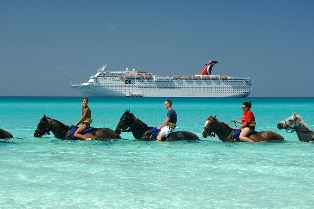
Horseback riding in Nassau ends in the sea. The signature ride on New Providence walks you through native pine forest to a quiet beach at Coral Harbour, where the horses wade into the shallow Caribbean water with you on their backs. It is a gentle, walk-pace trail rather than a gallop, built for ordinary holidaymakers rather than experienced riders, and the ride into the sea is the kind of thing people remember from a whole trip. This guide covers where the riding is, what the beach ride involves, the weight and age limits that catch people out, and what to wear.
The riding scene here is small, centred on the stables at Coral Harbour on the quieter south-west of the island, so this is a single distinctive experience rather than a choice of many operators.
The Coral Harbour Beach Ride
The classic Nassau ride starts at the stables in Coral Harbour and follows a loop through the native bush down to the shore. The whole point is the ending, when the horses step into the sea.
- The route: a roughly two-hour outing that threads through Bahamian pine and coppice woodland before reaching the beach, at an easy walking pace throughout.
- The water: the horses wade into the shallow water at the beach, the part everyone remembers, so expect to get wet from the knee down and dress for it.
- The pace: this is a nose-to-tail trail walk with a guide, not a ride where you trot or canter, which is what makes it suitable for beginners and nervous first-timers.
The Bush and the Beach You Ride Through
Half the pleasure of the ride is the ground it crosses, a corner of New Providence most visitors never see. Coral Harbour sits on the quiet south-west coast, away from the resorts and the cruise crowds.
- The native woodland: the trail passes through Bahamian pine and the low coppice scrub that covers much of the undeveloped island, a dry, scented bush full of birdsong.
- The quiet coast: the south-west shore is calmer and emptier than the north-side tourist beaches, which is what lets the horses walk into the water undisturbed.
- The local side of the island: Coral Harbour is a residential and fishing area, so the ride gives a glimpse of an everyday New Providence beyond the hotels.
The Horses and the Ride
The experience is built for safety and for the welfare of the animals, which shapes how the ride feels.
- Calm trail horses: the horses are used to nervous beginners and to the water, so they stay steady on the trail and in the shallows.
- A guided line: a guide leads the group nose to tail at a walk, keeping the pace gentle and the riders together, with no riding skill assumed.
- Small groups: rides go out in small numbers rather than large strings, which keeps the outing personal and the horses unhurried.
- Helmets and a brief: a short safety briefing and a helmet come before you mount, so first-timers know what to do before the trail starts.
Weight, Age and Booking Limits
The practical rules trip up more visitors than anything else, so check them before you build a day around the ride.
- Weight limit: stables cap rider weight for the welfare of the horses, commonly around the two-hundred-and-thirty-pound mark, and they do enforce it.
- Minimum age: the beach ride usually sets a minimum age in the early teens, so it is not an activity for small children.
- Book ahead: rides run in small groups on set departures and fill up, especially on cruise days, so reserve in advance rather than turning up.
- Numbers are limited: small group sizes mean spots are genuinely limited, another reason to book early.
What to Wear and Bring
Because the ride ends in the sea, the dress code is different from a normal trail ride.
- Clothes that can get wet: wear a swimsuit under shorts or light trousers, since your lower half will be in the water.
- Long trousers help: long, light trousers protect your legs from the saddle and the brush on the trail better than bare skin.
- Closed shoes: secure closed-toe shoes that you do not mind getting wet are safer in the stirrups than flip-flops.
- Sun and a dry bag: a hat, sunscreen and a small waterproof bag for a phone round out the kit, and a helmet is usually provided.
When to Ride and What It Costs
A couple of practical points shape when to book and what to expect to pay.
- The cost: a guided two-hour beach ride is a premium activity, running well over a hundred dollars a rider, reflecting the small groups and the long outing rather than a quick pony walk.
- The time of day: morning rides are cooler and calmer for both horse and rider, and the light on the water is better, so an early slot beats the midday heat.
- The season: the drier winter and spring months give the most comfortable riding, while summer adds heat and the chance of an afternoon storm, another reason to ride early.
- Cancellation: because spaces are limited and booked ahead, operators often ask for notice to cancel, so check the terms when you reserve.
Who the Ride Suits
The walk-pace beach ride is built around access rather than horsemanship.
- Good for: beginners, families with teenagers, and anyone who wants the experience of riding a horse into the sea without needing to know how to ride.
- Less so for: experienced riders after a fast, technical ride, since the pace stays slow, and small children or anyone over the weight limit.
- On a cruise day: the south-west location means a transfer each way, so factor the travel time against your all-aboard time using our guide to Nassau shore excursions.
For other ways to spend time on the water and the sand, see our guide to the free public beaches of Nassau and the wider things to do in Nassau.
Frequently Asked Questions
Where can you go horseback riding in Nassau?
The riding centres on the stables at Coral Harbour on the south-west of New Providence, which run a two-hour trail through native pine woodland down to a beach where the horses wade into the sea. It is the island’s signature ride and is booked in advance in small groups.
Can you ride horses in the ocean in Nassau?
Yes. The signature Nassau ride ends with the horses walking into the shallow Caribbean water at the beach with riders on their backs, so you will get wet from the knee down. It is the highlight of the trail and the reason most people book it.
Is there a weight limit for horseback riding in Nassau?
Yes. Stables cap rider weight for the horses’ welfare, commonly around two hundred and thirty pounds, and the limit is enforced. There is also usually a minimum age in the early teens, so the ride is not suitable for small children.
What should you wear horseback riding in Nassau?
Wear a swimsuit under light shorts or trousers because your legs go in the water, with long trousers helping against the saddle and brush, and closed-toe shoes you do not mind getting wet. Add a hat, sunscreen and a small waterproof bag, and a helmet is usually provided.
Do you need riding experience for the Nassau beach ride?
No. The ride is a guided walk-pace trail with no trotting or cantering, led nose to tail with a safety briefing and a helmet, so it is built for complete beginners. Experienced riders after a fast or technical ride will find it too gentle, but for a first time on a horse it is well suited.
Is horseback riding a good Nassau cruise excursion?
It can be, with a caveat. The stables sit on the south-west coast, so a transfer each way eats into a port day, and the ride itself runs about two hours. Factor the travel and the fixed departure times against your all-aboard time, and book in advance, since spaces are limited.
Can children go horseback riding in Nassau?
Older children usually can, but the beach ride sets a minimum age in the early teens, so it is not for small children. There is also a rider weight limit for the horses’ welfare. Families with younger children are better served by the beaches and the gentler activities elsewhere on the island.
Sources and Further Reading
- Bahamas Ministry of Tourism – the official tourism guide to outdoor activities on New Providence
- Nassau Paradise Island – the official destination guide to Nassau tours and adventures