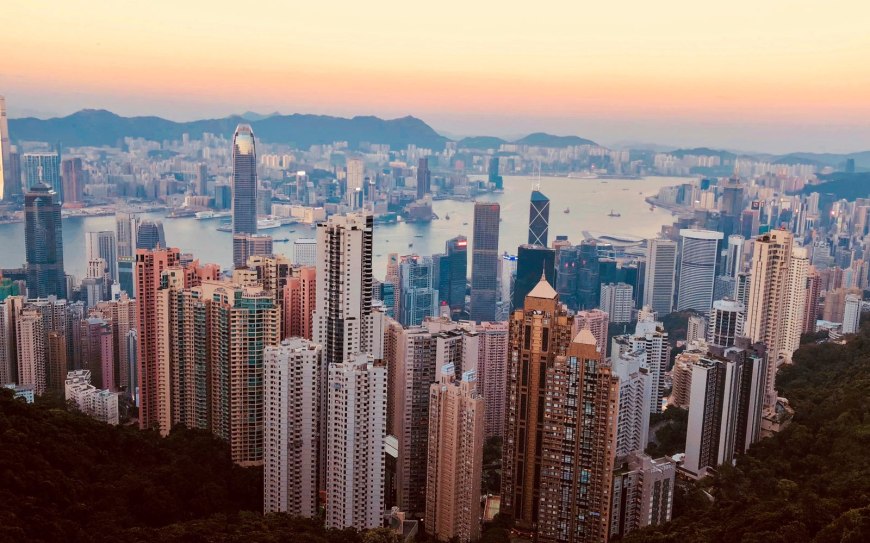
Hong Kong runs the only all-double-decker tram fleet in the world and keeps roughly three-quarters of its land as country park, which is the first surprise of a city known abroad only for its skyline. It is a place of two halves: the dense, neon-lit grid of Kowloon and Hong Kong Island, and the green hills, fishing villages and beaches a short ride beyond. This guide covers the harbour and the Peak, how to move around on an Octopus card, where to eat dim sum and street food, the feng shui hidden in the towers, the markets and temples, and the hikes and islands most visitors never reach.
A Quick History: From Colony to Handover
Hong Kong’s split personality comes straight from its past. Britain took Hong Kong Island after the First Opium War in 1842, added Kowloon in 1860, and leased the New Territories for 99 years in 1898, ruling the whole until 1997.
At the handover that year the territory passed to China as a Special Administrative Region under the formula of “one country, two systems”, keeping its own laws, currency, courts and free-port economy for fifty years. That history is why the traffic drives on the left, the street signs are bilingual, the trams are British-era and the food is purely Cantonese, a mixture you feel on every block.
Victoria Harbour, the Peak and the Skyline
The view across Victoria Harbour, with the towers of Hong Kong Island stacked against the green ridge behind, is the city’s signature, and it is free.
- The Star Ferry: the green-and-white ferries have crossed the harbour since 1888 and still cost only a few Hong Kong dollars, the cheapest and best harbour tour in the city.
- Victoria Peak: the high point of the island, reached by the Peak Tram funicular since 1888 on a steep six-minute climb. Skip the paid towers and walk the free Peak Circle Walk along Lugard Road for the full panorama.
- The Symphony of Lights: a nightly laser-and-light show across the harbour towers at 8pm, best watched from the Tsim Sha Tsui promenade and the Avenue of Stars below the old Clock Tower.
- A junk cruise: the red-sailed Aqua Luna and other restored Chinese junks make short harbour trips, the most atmospheric way onto the water after the Star Ferry.
Getting Around: the Octopus, the MTR and the Ding Ding
Hong Kong has one of the best transport systems anywhere, and a single card unlocks all of it.
- The Octopus card: tap it on the trains, trams, ferries and buses, and in shops and cafes too. Buy one on arrival and top it up; it saves fumbling for change everywhere.
- The MTR: the fast, clean, bilingual metro that links the airport, Kowloon, the island and the New Territories.
- The Airport Express: the dedicated train runs the 35 kilometres from the airport to Hong Kong Island in about 24 minutes, with free in-town check-in for some airlines.
- The ding ding trams: the island’s slow, beloved double-deckers, running since 1904 along the north shore. Its 178 trams make it the only fully double-decker tram fleet left in the world, the fare is a flat couple of dollars, and the front seat on the top deck is the best cheap sightseeing in town.
- The Central-Mid-Levels Escalator: the longest covered outdoor escalator system on earth, running 800 metres up the hillside through Central and SoHo, downhill in the morning rush and uphill the rest of the day.
Eating Hong Kong: Yum Cha, Cha Chaan Teng and the Street
Food is the real reason to come. Cantonese cooking here runs from white-tablecloth seafood to a paper cup of street snacks, and the local institutions are the ones to seek out.
- Yum cha: the morning ritual of tea and dim sum, traditionally “one pot of tea, two dishes”, with steamed prawn dumplings, char siu buns and egg tarts wheeled past on trolleys in the old halls.
- Cha chaan teng: the Hong Kong diner, born in the 1950s, serving silk-stocking milk tea strained through a sackcloth filter, a method invented at Lan Fong Yuen in 1952, alongside pineapple buns and macaroni soup.
- Dai pai dong: the last open-air street food stalls, frying up wok dishes at fold-out tables, a vanishing slice of old Hong Kong.
- Sham Shui Po: the cheapest, most authentic eating district, where Tim Ho Wan first won a Michelin star for its dim sum and earned a name as the world’s most affordable starred restaurant.
- Street snacks: the bubble-shaped egg waffle, curry fish balls, roast goose and barbecue pork rice.
Tea runs through all of it, a thread picked up in our guide to Chinese tea culture.
Feng Shui and the Skyline’s Hidden Rules
Hong Kong’s towers were not only designed by architects but shaped by feng shui masters, and the rivalries between buildings are part of local lore.
The HSBC headquarters was built with an open, column-free ground floor so energy and people could flow straight through to the harbour, and its two bronze lions, named Stephen and Stitt, are rubbed for luck. Nearby, the Bank of China Tower by I.M. Pei is all sharp triangular angles, and its knife-like edges were said to fire bad energy at its neighbours, who answered with their own feng shui defences. Out at Repulse Bay, a seafront block has a large square hole cut through its middle, said to let the dragon of the hill behind pass through to drink from the sea.
Markets, Temples and Old Kowloon
Across the harbour, Kowloon keeps the noisy, crowded, old-Hong-Kong feel, best explored on foot after dark.
- Mong Kok markets: the Ladies’ Market for cheap goods, plus the separate goldfish, flower and bird markets nearby.
- Temple Street Night Market: stalls, open-air seafood and a row of fortune tellers, with impromptu Cantonese opera some nights.
- Wong Tai Sin Temple: a busy Taoist temple where worshippers shake bamboo fortune sticks until one falls out to be read.
- Man Mo Temple: a small, smoke-filled temple on the island hung with giant spiralling incense coils.
- Chi Lin Nunnery and Nan Lian Garden: a serene Tang-style wooden complex and garden tucked among the tower blocks.
- Ten Thousand Buddhas Monastery: up a hillside of some 400 steps in Sha Tin, the path lined with thousands of individually posed golden statues, well past the ten thousand of its name.
Museums, Heritage and Old Kowloon
Hong Kong has poured money into culture, and a cluster of new and restored sites now rivals the old markets.
- M+: a vast museum of visual culture in West Kowloon, opened in 2021, strong on Asian art, design, architecture and film.
- Hong Kong Palace Museum: next door, opened in 2022, showing treasures on long-term loan from Beijing’s Forbidden City.
- Tai Kwun: the former Central Police Station and Victoria Prison, restored into a heritage and contemporary-art quarter of courtyards, galleries and bars.
- Kowloon Walled City Park: a calm garden on the site of the infamous Walled City, an ungoverned warren that crammed tens of thousands of people into a few acres and ranked among the most densely populated places on earth before it was cleared in 1993.
The Green Side: Dragon’s Back and the Country Parks
The biggest surprise is how wild Hong Kong is. About three-quarters of the territory is countryside, protected in two dozen country parks, and the trails start a short bus or train ride from the towers.
The famous one is the Dragon’s Back, a ridge walk on the island’s southeast that Time magazine named the best urban hike in Asia in 2004, ending above the surf beach at Big Wave Bay. The long-distance MacLehose Trail crosses the wild New Territories, while the beaches of Repulse Bay, Shek O and the Sai Kung peninsula give the city a coastline most visitors never see.
The Outlying Islands
Ferries from Central reach a string of islands that feel a world away from the harbour.
- Lantau: the largest island, home to the giant bronze Tian Tan Buddha, reached up 268 steps beside the Po Lin Monastery, where you can eat a vegetarian lunch with the monks. The Ngong Ping 360 cable car glides for 25 minutes over the hills to reach it, past the Wisdom Path of standing inscribed pillars. On the west coast, Tai O is a fishing village of silver-roofed stilt houses raised over the water on wooden poles.
- Cheung Chau: a car-free island known for the Bun Festival, when towers studded with lucky buns are raised and climbers race up them, alongside a parade of children posed in mid-air costumes. The festival is listed as national intangible heritage.
- Lamma: a laid-back, car-free island with seafood restaurants and easy walking trails, a popular Sunday escape.
Island Neighbourhoods: Central to Stanley
Hong Kong Island packs sharply different districts into a few square kilometres, each worth an afternoon on foot.
- Central and Sheung Wan: the banking core climbs uphill into the antique shops of Hollywood Road and Cat Street, the restored PMQ design hub, and the dried-seafood and herbal-medicine shops of old Sheung Wan.
- SoHo and Lan Kwai Fong: the dining and nightlife quarters strung along the Mid-Levels Escalator, lined with bars and restaurants of every cuisine and busiest at the weekend.
- Causeway Bay: the dense shopping district of malls and neon, where a noonday gun is still fired each day on the waterfront.
- Stanley: a relaxed village on the south coast with a beach, a seafront promenade, the relocated colonial Murray House and a long market of clothes and souvenirs.
When to Go, Money and Practical Tips
Hong Kong is a Special Administrative Region of China, run on its own system with its own currency and entry rules, so it is easier to enter than the mainland for many nationalities.
- Best time: autumn, from October to December, is dry, clear and warm, the finest season. Spring is humid, and summer is hot with a typhoon risk that can shut the city down under a number-eight signal.
- Festivals: the Mid-Autumn Festival brings the Tai Hang Fire Dragon, a 67-metre dragon stuck with thousands of glowing incense sticks and danced through the streets over three nights, a tradition listed as national intangible heritage.
- With the family: Hong Kong Disneyland and Ocean Park, a long-running marine-life and rides park, both make easy half-day trips.
- A day in Macau: the former Portuguese colony of baroque ruins and casinos lies about an hour away by ferry, or across the sea bridge from the airport, a popular day out.
- Money: the currency is the Hong Kong dollar, not the mainland yuan, and cards and the Octopus are accepted almost everywhere.
- Language and roads: Cantonese and English are both official, English is widely spoken, and traffic drives on the left.
- Visas: entry rules differ from the mainland; our wider China travel guide covers the mainland’s separate visa and payment systems, while our guides to Shanghai and Hangzhou cover the mainland cities a short flight away.
Frequently Asked Questions
How many days do you need in Hong Kong?
Three to four days cover the harbour, the Peak, the Kowloon markets, a day of dim sum and street food, and one trip out to Lantau or a hike on the Dragon’s Back. A fifth day lets you add Cheung Chau or the beaches without rushing.
Do you need a separate visa for Hong Kong?
Often yes, or rather a different rule. Hong Kong sets its own entry policy as a Special Administrative Region, and many nationalities who need a visa for mainland China can enter Hong Kong visa-free for a set period. Always check your own nationality before booking.
What is the Octopus card?
A contactless stored-value card you tap to pay for almost everything, from the MTR, trams, ferries and buses to convenience stores and cafes. Buy one at the airport or any station on arrival, load it with cash, and top it up as you go.
Is Hong Kong expensive?
It can be, but it need not be. Hotels and bars are pricey, yet the transport, street food, dim sum, markets, hikes and the Star Ferry are cheap, so a careful traveller eats and moves well for little.
What is the best way to see the skyline?
Take the Star Ferry across the harbour at dusk, walk the Tsim Sha Tsui promenade for the 8pm Symphony of Lights, and go up Victoria Peak for the daytime panorama. All three are cheap or free.
When is the best time to visit Hong Kong?
Autumn, from October to December, brings the clearest, driest weather. Avoid the humid, typhoon-prone summer if you can, and pack a light layer year-round for the fierce air-conditioning indoors.
Sources and Further Reading
- Hong Kong Tourism Board – the official visitor guide to sights, food and events
- Hong Kong Tramways – the history and routes of the ding ding trams
- MTR – the official metro and Octopus information
- Country and Marine Parks, AFCD – the official guide to Hong Kong’s hiking trails
- The Peak Tram – tickets and information for Victoria Peak
- Outlying Islands, HKTB – Lantau, Cheung Chau and Lamma