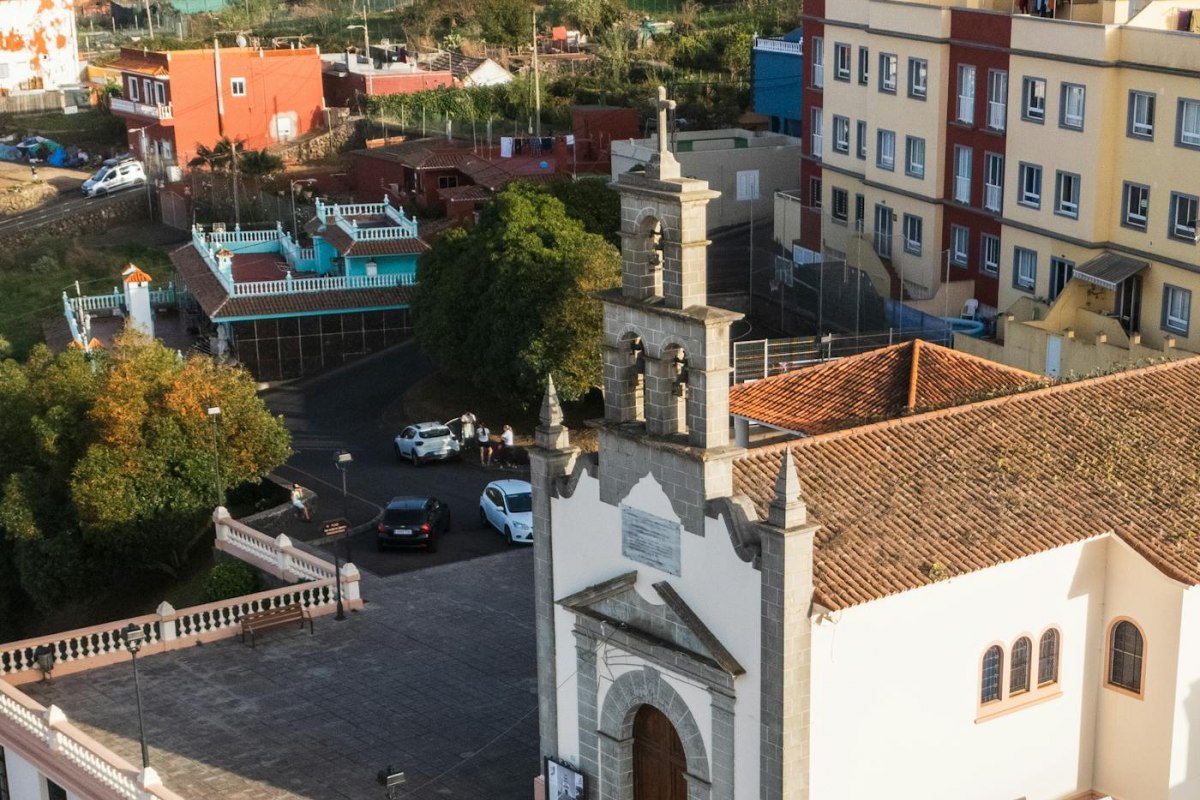
Betancuria is the historic heart of Fuerteventura, a tiny whitewashed village in a green inland valley that was once the capital of the island and of the whole Canary archipelago. It holds the oldest church in the Canaries, the ruins of the islands’ first convent, and a story of Norman conquest and Berber pirate raids that explains why an island capital was built where you cannot see the sea. This guide covers what to see and the history behind it. For the wider island, see our Fuerteventura travel guide.
The first European capital of the Canaries
The village was founded around 1404 by the Norman adventurer Jean de Bethencourt during his conquest of Fuerteventura, and it took his name. Together with Rubicon on Lanzarote, Betancuria was among the first towns the Europeans built anywhere in the Canary Islands, and it served as the island’s capital for centuries before the role passed to the coast. Its position is the key to understanding it: rather than build on the shore, the conquerors chose a sheltered inland valley ringed by mountains, both for its fertility, water and greenery in a dry island, and above all for defence. Hidden from the sea, the capital was meant to be safe from the raiders who worked these waters. The choice shaped the village that survives today, a cluster of low white houses, palm trees and cobbled lanes that feels nothing like the resort coast.
The church of Santa Maria
The great symbol of Betancuria is the church of Santa Maria, raised from around 1410 and built in a French Gothic style brought by the Norman conquerors. For centuries it was the only parish church on the entire island, the religious centre of Fuerteventura until the eighteenth century, and it is widely considered the first Christian temple of the Canary archipelago, sometimes described as its first cathedral since the islands’ early bishopric was associated with Betancuria. The building you see is largely a seventeenth-century rebuild, because the original did not survive the island’s most violent day. Inside, the carved wooden ceiling, the gilded altarpiece and the old choir repay a slow look, and the church remains the focal point of the village.
The pirate raid of 1593
The defensive logic of Betancuria’s inland site failed once, catastrophically. In 1593 a Berber raiding force led by the corsair Xaban Arraez landed on the island, pushed inland and reached the capital itself, where they burned, looted and destroyed the main buildings, the church of Santa Maria among them. The same raid wrecked the nearby Convento de San Buenaventura. The attack is the reason so much of what stands today is a later rebuild, and it is a reminder that the pirate threat which shaped the island’s settlement was real and not merely a precaution. The story of that raid still defines how locals tell the village’s history, and it connects Betancuria to the wider tale of conquest and defence covered in our island guide.
The convent of San Buenaventura
A short walk from the church stand the ruins of the Convento de San Buenaventura, founded by Franciscan friars in the fifteenth century. It was the first convent built anywhere in the Canary Islands, and for generations it was far more than a religious house: it served as the only centre of education on Fuerteventura, where many of the island’s people were taught when there was no other schooling. Burned in the 1593 raid and later abandoned, it survives as evocative stone ruins on the edge of the village, a quiet, atmospheric stop that few visitors give the time it deserves.
The museums and the smaller sights
For a place of a few hundred people, Betancuria packs in a remarkable amount to see:
- The Archaeological and Ethnographic Museum: tells the pre-Hispanic story of the aboriginal Majoreros, the conquest and the island’s social history through archaeological, palaeontological and ethnographic pieces.
- Casa Santa Maria: a restored traditional house beside the church, now a museum and restaurant that shows the old domestic and agricultural life of the island.
- The Ermita de San Diego: a small chapel linked to a cave where, by tradition, the saint prayed in the mid-fifteenth century, on the edge of the village.
- The village itself: the cobbled lanes, the palms, the small craft and cheese shops and the general air of a place that time has largely passed by.
Around Betancuria: viewpoints and kings
The drive to and from Betancuria is part of the experience, and it strings together some of the island’s best inland sights:
- Mirador de Morro Velosa: a viewpoint and building designed by the Lanzarote artist Cesar Manrique, with a sweeping panorama over the centre and north of the island.
- Mirador de Guise y Ayose: on the approach from the east, two bronze statues over four metres tall represent Guise and Ayose, the kings of the aboriginal kingdoms of Maxorata and Jandia who ruled the island before the conquest.
- Vega de Rio Palmas: a green, palm-filled valley just south, home to the Ermita de la Pena, the sanctuary of the island’s patron the Virgen de la Pena, the focus of a major pilgrimage each September.
- The mountain road: the winding FV-30 over the eroded central massif offers some of the finest driving and scenery on Fuerteventura.
Why a tiny village still matters
It is worth pausing on why a place of only a few hundred people draws so many visitors. Betancuria is not a grand monumental city; its appeal is concentration and atmosphere. In a few hundred metres you walk past the first church and the first convent of an entire archipelago, the seat of its earliest bishopric, and the museums that hold the island’s deepest history, all set in a green, sheltered valley that feels like a different island from the dune coast. The village has been declared a site of historic and artistic interest, and the lack of large-scale development is the point: it looks much as a small Canarian capital would have looked, white houses and palms against bare brown hills. For travellers who think Fuerteventura is only beaches and wind, half a day in Betancuria reframes the whole island as a place with a thousand-year human story, from the aboriginal Majoreros through the Norman conquest to the present, which is exactly the gap the resort coast leaves.
Visiting Betancuria
A few practical notes make a trip easier:
- Getting there: Betancuria sits in the centre of the island and is reached by the scenic FV-30. A hire car is the easiest way, around 30 to 40 minutes from Caleta de Fuste or Puerto del Rosario, longer from the south.
- Time needed: half a day suits the village, the church, the convent and a museum, with a lunch stop, or a full day combined with the viewpoints and Vega de Rio Palmas.
- When to go: mornings are quieter before the coach tours arrive, and the inland valley is sheltered from the coastal wind.
- Combine it: pair Betancuria with the interior on a jeep safari or self-drive, and taste the island’s Majorero cheese and gofio at the village shops.
Frequently asked questions
Why was Betancuria the capital of Fuerteventura?
The Norman conquerors founded it around 1404 in a sheltered inland valley for its fertility and water and, above all, for defence: hidden from the sea, the capital was meant to be safe from the pirates who raided the coast. It remained the capital for centuries.
What is the oldest church in the Canary Islands?
The church of Santa Maria in Betancuria, first raised around 1410 as the island’s sole parish and widely considered the first Christian temple of the archipelago. The present building is largely a seventeenth-century rebuild after the 1593 pirate raid.
What happened in Betancuria in 1593?
A Berber raiding force led by the corsair Xaban Arraez reached the inland capital and burned and looted its main buildings, including the church of Santa Maria and the Convento de San Buenaventura, which is why much of the village is a later rebuild.
How do you get to Betancuria?
By the scenic FV-30 mountain road in the centre of the island, easiest with a hire car, around 30 to 40 minutes from Caleta de Fuste or the capital, or as part of an interior jeep safari.
How long do you need in Betancuria?
Half a day covers the church, the convent ruins and a museum with lunch, while a full day lets you add the Morro Velosa and Guise y Ayose viewpoints and the Vega de Rio Palmas valley.
Sources and further reading
- Ayuntamiento de Betancuria, official history of the municipality
- Reserva de la Biosfera Fuerteventura
- Cabildo de Fuerteventura, island council