Paris by arrondissement: how the numbering works, and how to pick
Paris is divided into 20 arrondissements that spiral outward from the Louvre clockwise like a snail shell. The 1st sits dead center on the Right Bank, the 2nd through 8th wrap the historic core, and the spiral keeps turning until the 20th in the far east. Postal codes confirm which one a hotel sits in: 75001 is the 1st, 75004 is the 4th (Le Marais), 75018 is Montmartre. Memorize that single trick and Paris becomes legible the moment you read an address.
For first-time visitors, the rule of thumb is simple. Stay inside the single-digit arrondissements (1-9) plus Montmartre (18th, central section near Sacré-Coeur). Stay within a five-minute walk of a Métro station served by at least two lines. Skip neighborhoods that require a ten-minute bus connection to reach an attraction you came to see. The seven neighborhoods below cover where most travelers should sleep, plus one area to skip and clear reasons to skip it.
Le Marais (3rd and 4th): the right base for most first-timers
Le Marais sits between the Pompidou Centre and the Bastille, hugging the Seine across from Île Saint-Louis. The neighborhood escaped Haussmann’s 1860s demolitions, so the streets are narrow and the buildings are 17th-century mansions converted into shops, hotels, and apartments. The historic Jewish quarter runs along Rue des Rosiers, the LGBTQ+ scene clusters between Rue Sainte-Croix-de-la-Bretonnerie and Rue Vieille-du-Temple, and the entire district turns into a Sunday-shopping zone when most of Paris is closed.
Walking distance covers the Pompidou, Notre-Dame, Place des Vosges, Île Saint-Louis (where Berthillon makes the city’s most-cited ice cream, full notes in our piece on Berthillon French ice cream), and the boutiques and food halls of Bastille. The dining tier from cheap falafel stands to Michelin-starred kitchens is unmatched anywhere else in central Paris; the cheese specialists deserve their own visit, mapped in our guide to the best cheese in Paris.
Hotels: Pavillon de la Reine on Place des Vosges runs €450-700 per night for the 17th-century courtyard experience. Hôtel des Grands Boulevards (technically just outside in the 2nd, three minutes by foot) hits €280-380 in the boutique tier. Villa Beaumarchais sits at €220-320 mid-range. MIJE runs three converted hôtels particuliers as hostels with private rooms from €95.
Latin Quarter (5th): student energy on the Left Bank
The 5th arrondissement gets its name because the Sorbonne students spoke Latin until the French Revolution. The neighborhood runs from the Seine south to the Jardin du Luxembourg, anchored by the Panthéon and a network of bookstores along Rue des Écoles. Shakespeare and Company, the English-language bookshop opposite Notre-Dame, moved to the current spot in 1951 and is still a working bookstore with a reading room upstairs.
The Latin Quarter is louder than Saint-Germain and cheaper than the Marais. It is also the closest single arrondissement to the Île de la Cité and the post-fire Notre-Dame Cathedral, with the entrance to the Catacombs of Paris a short Métro ride south at Denfert-Rochereau. Solo travelers and budget couples land here for the price-to-attraction ratio.
Hotels: Hôtel Minerve and Hôtel des Grands Hommes sit on Place du Panthéon at €180-260. Hôtel Saint-Jacques runs €160-240 for a 19th-century building with painted ceilings. Budget travelers find €100-140 doubles on side streets near Maubert-Mutualité.
Saint-Germain-des-Prés (6th): literary cafes, gallery row
The 6th was the existentialist headquarters of postwar Europe. Sartre wrote at Café de Flore (founded 1887), Beauvoir wrote at Les Deux Magots next door, and the literary tradition still drives the neighborhood’s prices upward. Today the 6th is the most expensive Left Bank address, with antique dealers along Rue Jacob, art galleries along Rue de Seine, and the Jardin du Luxembourg as the front lawn.
The 6th is for travelers who want quiet evenings, classical Paris architecture, and a 12-minute walk to the Louvre across Pont du Carrousel. Stay here if your itinerary leans toward art (the Musée d’Orsay sits on the 7th arrondissement boundary, six minutes from most 6th hotels). Stay elsewhere if you want nightlife past midnight; the 6th closes early.
Hotels: Le Pavillon des Lettres at €380-520 for the boutique pick named after a different French author per room. Relais Christine at €450-650 in a 16th-century convent. L’Hôtel on Rue des Beaux-Arts (where Oscar Wilde died in room 16, the room is preserved) runs €380-700.
Champs-Élysées and the 8th: luxury, central, mostly for show
The 8th arrondissement contains the Champs-Élysées, the Arc de Triomphe, and most of the city’s flagship hotels: Le Bristol, Four Seasons George V, Plaza Athénée, Hôtel de Crillon. If you came to Paris for the address, this is where it lives. The avenue itself is wider, more commercial, and louder than any other central street, dominated by chain stores and a permanent thrum of traffic on the Boulevard Périphérique reach.
The honest assessment for sleeping: the 8th is overpriced for what you actually get unless you specifically want the Crillon or George V experience. Restaurants along the Champs are tourist-priced. The morning-after-arrival walk to the Louvre is 25 minutes versus 10 from the Marais. A reader budget-rationed for €280-400 per night spends that better one arrondissement east.
Hotels: Hôtel de Crillon at €1,800+ for the original Place de la Concorde experience. Le Bristol at €1,400+. For travelers who want the address without those numbers, Hôtel Daniel and Hôtel Lancaster sit at €450-700 boutique. Look at the best views in Paris for what you actually access from this neighborhood.
Montmartre (18th): hilltop village, with a clear edge to avoid
Montmartre is a separate village folded into Paris in 1860, perched on the highest natural point in the city at 130 meters. Sacré-Coeur sits at the summit, the Place du Tertre painters cluster below it, and the windmill at Moulin de la Galette still turns. The 18th is the only neighborhood outside the single-digit arrondissements that experienced travelers will recommend without qualification, and the qualification is geographic.
The southern half of the 18th (south of Boulevard de Clichy and around Abbesses Métro) is what people mean when they say Montmartre. The northern half above the basilica, into Goutte d’Or and toward La Chapelle, is a different neighborhood with less Métro coverage and more reported petty-theft incidents around the Barbès-Rochechouart and Château Rouge stations after dark. Stay south of the funicular line.
Hotels: Le Relais Montmartre runs €180-260 in a quiet courtyard at Abbesses. Terrass” Hotel (the rooftop bar opens to a Sacré-Coeur view) hits €280-400. Hôtel des Arts at €130-180 for budget rooms with character. Hôtel Particulier Montmartre at €450-650 for the hidden-mansion luxury tier.
Canal Saint-Martin (10th): walkable canal, hipster zone
The 10th arrondissement was a working-class canal district until about 2010, when the wine bars and concept stores moved in. The Canal Saint-Martin runs north from the Seine through the neighborhood, with iron footbridges every two blocks and a Sunday-afternoon crowd that picnics along the towpath. Amélie shot half her exteriors here.
The 10th is for return visitors and travelers in their 20s and 30s who want the Marais energy without Marais prices. Single rooms run 30-40% cheaper than equivalent Marais addresses. The catch is geography: the eastern stretch toward Gare du Nord and Gare de l’Est gets less attractive after dark, and the 10th is the right call only if you sleep west of the canal between Republique and Goncourt.
Hotels: Hôtel Providence at €260-360 boutique (the bar is the local institution). Le Citizen Hotel along the canal at €180-260 mid-range. Generator Paris hostel for €60-110 private rooms.
Trocadéro (16th): family-friendly, postcard Eiffel views
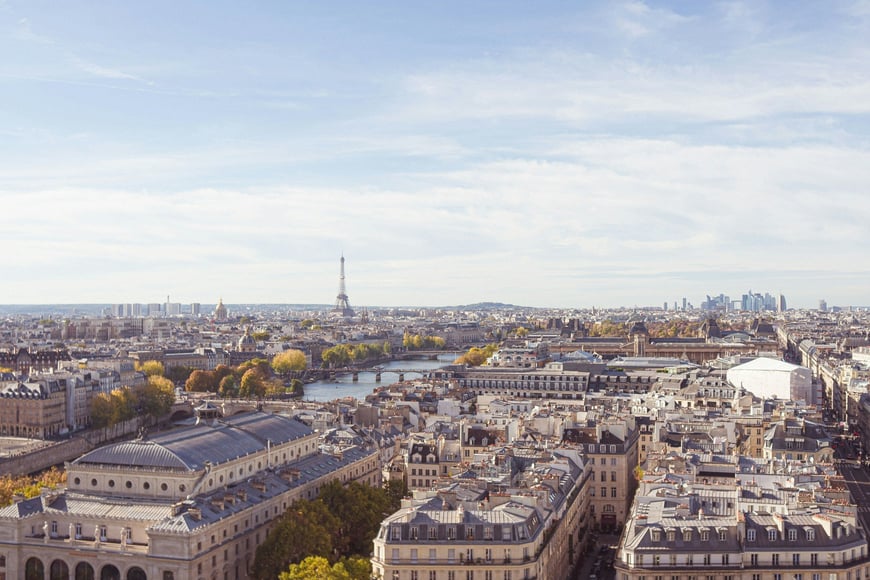
The 16th wraps the western edge of Paris from the Arc de Triomphe down to the Bois de Boulogne. The Trocadéro section, running from Place du Trocadéro south to the Pont d’Iéna footbridge, faces the Eiffel Tower across the Seine and offers the photograph everyone takes home. The neighborhood is residential, leafy, calm, and the right pick for families with children under ten or travelers who want morning runs through a real park.
The 16th is also the dullest central arrondissement. Restaurants close early, no street life past 10pm, and the Métro connections eastward (toward Marais and Bastille) take 25 minutes minimum. Pick the 16th when peace and morning views matter more than walking to dinner.
Hotels: Shangri-La Paris at €1,400+ luxury (the building was the home of Napoleon’s grandnephew). Hôtel Square at €280-380 boutique. Citadines Trocadéro for serviced-apartment families at €200-340.
Bastille (11th and 12th): nightlife, restaurants, real Parisians
The 11th is where Parisians under 35 actually drink. The Oberkampf and Charonne corridors run east from Place de la République across into the 11th, with natural-wine bars, neo-bistros, and the kind of restaurants that take a single seating per night. The 12th, immediately south, holds Bastille proper, the Coulée Verte elevated park (the model for New York’s High Line, finished 1993), and the dramatic 19th-century food hall at Marché d’Aligre.
The 11th and 12th are the neighborhoods most people who live in Paris recommend to friends visiting for the second or third time. First-timers who priortize food and restaurant culture over the Eiffel-Notre-Dame postcard list will feel at home immediately. The flea market shopping is slightly different from the city’s main flea markets; the 12th’s Marché d’Aligre is the food-and-bric-a-brac version, daily until 1pm.
Hotels: Le Citizen 11ème at €160-240 mid-range. Pavillon Nation in the 11th at €130-200 budget mid. Mama Shelter Paris East at €150-220 (designer hostel-meets-hotel hybrid).
Hotel tier and price summary
Use this as a one-glance reference. Ranges are euros per night for a standard double in low-to-mid season (excludes Fashion Week, Roland Garros fortnight in late May, and the Christmas markets period when rates jump 25-40%).
| District | Budget under €150 | Mid-range €150-300 | Boutique €300-500 | Luxury €500+ |
|---|---|---|---|---|
| Le Marais (3rd-4th) | MIJE Marais | Villa Beaumarchais | Grands Boulevards | Pavillon de la Reine |
| Latin Quarter (5th) | Side-street doubles | Hôtel Minerve | Hôtel Saint-Jacques | Rare |
| Saint-Germain (6th) | Rare | Hôtel Bonaparte | Le Pavillon des Lettres | Relais Christine, L’Hôtel |
| Champs / 8th | None | None | Hôtel Daniel, Lancaster | Crillon, Bristol, George V |
| Montmartre (18th, south) | Hôtel des Arts | Le Relais Montmartre | Terrass” Hotel | Hôtel Particulier |
| Canal Saint-Martin (10th) | Generator Paris | Le Citizen | Hôtel Providence | Rare |
| Trocadéro (16th) | Rare | Citadines Trocadéro | Hôtel Square | Shangri-La |
| Bastille (11th-12th) | Pavillon Nation | Mama Shelter East | Le Citizen 11ème (top) | Rare |
Metro, walking, and the 2026 Navigo Easy fare
The Paris Métro runs 16 lines plus 5 RER (commuter rail) lines that cross the city in 20 minutes end to end. Trains run roughly 5:30am to 1:15am Sunday through Thursday, until 2:15am Friday and Saturday. Ile-de-France Mobilités, the regional transport authority, repriced the entire fare structure on January 1, 2026.
Current fares for visitors:
- Navigo Easy card: €2 one-time card cost (rechargeable, anonymous, plastic). Buy at any Métro vending machine.
- Single t+ ticket on Navigo Easy: €2.55 for Métro, RER inside Paris, and Transilien trains. Bus and tram singles run €2.05.
- Carnet of 10 single tickets: €20.40 loaded onto Navigo Easy.
- Navigo Jour day pass (all zones): €12.30 for unlimited Métro, RER, bus, tram inside zones 1-5.
- Navigo Découverte weekly pass (zones 1-5): €30 plus €5 photo-ID card fee. Runs Monday through Sunday only.
- Charles de Gaulle or Orly airport ticket: €14 one way, RER B or Orlyval.
The math for a typical first-timer week: the €30 Navigo Découverte beats single tickets the moment you take 12 or more rides. Most travelers hit that on day three. The catch is the Monday-to-Sunday calendar window; arrivals on Friday should buy single t+ tickets through the weekend, then activate the weekly Monday morning. Practical breakdown for the metro mechanics sits in our older piece on the Paris metro ticket system, useful as background. For multi-attraction itineraries, pair transport with the Paris Museum Pass, which covers the Louvre and most major museums on a 2/4/6-day window.
Common questions
Which arrondissement is safest for a solo female traveler? The 6th, 7th, and central sections of the 4th (Marais) are the consistently safest after-dark for solo walking. The 16th is also safe but dull at night.
Is air conditioning standard in Paris hotels? No. Buildings predate central HVAC. Confirm AC in writing for any stay between June and early September; a 19th-century mansard room in 33-degree weather is real misery.
What is the smallest reasonable hotel room? Anything under 15 square meters (about 160 square feet) is cramped for two people with luggage. Read the room-size field on Booking; older Paris hotels routinely offer “doubles” at 10-12 square meters.
Should I use Airbnb or hotels? Hotels for a first trip. Paris regulates short-term rentals heavily, and Airbnb listings frequently get pulled days before arrival when a host loses their license. The risk-to-savings ratio favors hotels under 4 nights.
How far in advance do I book? Six months for cherry blossom equivalents (May-June), Fashion Week (late February and early October), and the December holiday windows. Two months for everything else.
What about Disneyland Paris? Stay in Paris and take the RER A out for the day; do not sleep at Disneyland unless you have multi-day park tickets. The RER A from central Paris reaches the park in 35 minutes.
Sources
- Île-de-France Mobilités official 2026 fare schedule – source for the Navigo Easy, Navigo Découverte, Navigo Jour, and airport-ticket prices cited in the Getting Around section.
- RATP English portal – operating hours, line-by-line maps, and station accessibility for the Paris Métro and RER network.
- Paris Convention and Visitors Bureau – official tourism office, used for arrondissement orientation, fashion-week and event-calendar dates that drive hotel pricing windows.
- Paris.fr official city portal – municipal source for short-term-rental regulation context referenced in the FAQ on Airbnb risk.
- Arrondissements of Paris (Wikipedia) – history of the 1860 Haussmann annexation and the 20-arrondissement spiral structure summarized in the overview.
- Time Out Paris – current event listings used to validate which neighborhoods host active nightlife and Sunday-open districts.
- Paris by Train – Navigo Easy guide – independent reference cross-checked against the Île-de-France Mobilités fare table for the carnet and single-ticket pricing.