The Jandia peninsula on Fuerteventura’s south-western tip catches the trade winds blowing south from Madeira and Morocco, and the long arc of white sand on its lee side has anchored the island’s all-inclusive holiday market for more than thirty years. Fuerteventura is the second-largest of the Canary Islands and the closest to the African mainland, around 100 kilometres off the coast of Western Sahara, with a year-round mild climate and roughly 150 kilometres of sand beach. The all-inclusive market on the island clusters around four resort areas: Jandia and Costa Calma on the south coast, Caleta de Fuste on the east coast, and Corralejo on the northern tip. This guide walks through the differences between those areas, what to expect from an all-inclusive package on the island, and the practical steps that make a booking less likely to disappoint.
Resort Areas and Airport Travel Times
- Caleta de Fuste: east coast, ~15 minutes from Fuerteventura airport, family-oriented, calm water
- Costa Calma: south-east, ~60 minutes from airport, Sotavento lagoon, windsurf and kitesurf hub
- Jandia / Morro Jable: far south, ~90 minutes from airport, long white-sand beaches, quieter
- Corralejo: north, ~35-40 minutes from airport, Grandes Playas dunes, livelier nightlife and dining
- El Cotillo: north-west, ~50 minutes, small village feel, natural lagoon beaches, limited all-inclusive
Jandia Peninsula and the Southern Resorts
The Jandia peninsula juts out from the south-western corner of Fuerteventura and holds the island’s longest continuous beach: Playa de Sotavento and the connected Playa de Jandia run for around 21 kilometres along the south-eastern shore. The main resort town on the peninsula is Morro Jable, a former fishing village that grew into a holiday destination from the 1970s onwards and remains the centre of the southern hotel cluster. The wider Jandia area also includes the Esquinzo and Butihondo zones, both of which sit between Morro Jable and Costa Calma.
The all-inclusive offer in Jandia leans toward German and British package travellers, with several large hotel chains operating multi-building complexes set back from the beach behind low dunes. The peninsula’s south-western tip remains undeveloped and protected as part of the Jandia Natural Park, with hiking access to the Pico de la Zarza, the highest point on Fuerteventura at 807 metres. Wind conditions in this area run strong on most afternoons, which makes the southern beaches a destination for windsurfers and kitesurfers but less suited to travellers looking for calm sea bathing in the afternoon.
Morning sea conditions are usually calmer. The drive from Fuerteventura airport at Puerto del Rosario to Morro Jable takes around 90 minutes by car along the FV-2 coastal road. Most package operators arrange airport transfers as part of the booking. Self-drive renters can pick up cars at the airport from a long list of standard agencies and from several local Canarian companies.
Costa Calma and the Sotavento Lagoon
Costa Calma sits roughly halfway between Morro Jable and the central isthmus of the island, on the eastern side of the Jandia peninsula. Our dedicated guide to main attractions in Fuerteventura covers the inland destinations worth combining with Costa Calma on a longer stay. The town developed in the 1980s and 1990s as a resort cluster purpose-built for package tourism, with most accommodation arranged in low-rise blocks along the FV-2 highway and a string of hotels facing the long beach. The Sotavento lagoon, a tidal flat that fills and empties with the changing tide, sits a few kilometres south of the town and hosts the annual Windsurfing and Kiteboarding World Cup each summer.
The lagoon is one of the safer places on the island for beginner windsurfing classes because the water inside the sandbar stays shallow even at high tide. Costa Calma’s east-facing coast catches the Atlantic trade wind less full force than the open south coast, which gives it calmer afternoons and warmer evenings. The town has a smaller commercial centre than Morro Jable, with a couple of grocery supermarkets, a handful of restaurants outside the resort buffets, and a small selection of shops.
Travellers who want full restaurant variety usually rent a car and drive to Morro Jable or Caleta de Fuste for evening meals. Costa Calma all-inclusive packages tend to run a step more upscale than the equivalent in Corralejo, with a higher share of four and five-star properties and a higher base price. The resort area suits families with younger children because of the calm lagoon water, although the broader beach can become windy by late morning.
Caleta de Fuste on the East Coast
Caleta de Fuste is the closest of the major resort areas to Fuerteventura airport, around 12 kilometres south on the FV-2 highway, which makes it the standard pick for travellers who want to cut transfer time. The original village wraps around a small horseshoe bay with calm water that is sheltered from the open Atlantic, which gives Caleta the reputation as the family-friendly choice on the island. The wider resort area runs north and south of the original bay along the coast, with two golf courses and a long line of mid-range and upper-mid-range hotels.
Caleta de Fuste was developed as a resort town from the 1980s onwards and lacks the old fishing-village character of Morro Jable, although it makes up for that with concentrated shopping, restaurants, and entertainment within walking distance of most hotels. Seafood and regional tapas served along the Caleta waterfront fall inside the broader tradition covered in our guide to traditional food in Spain. The main commercial street has supermarkets, several pharmacies, dive shops, and a stretch of cafes and bars. The resort area also serves as a convenient base for day trips: the road network from Caleta gives quick access to Lajares and the northern villages, to the historical capital at Betancuria in the interior, and to the dune fields at Corralejo on the north coast.
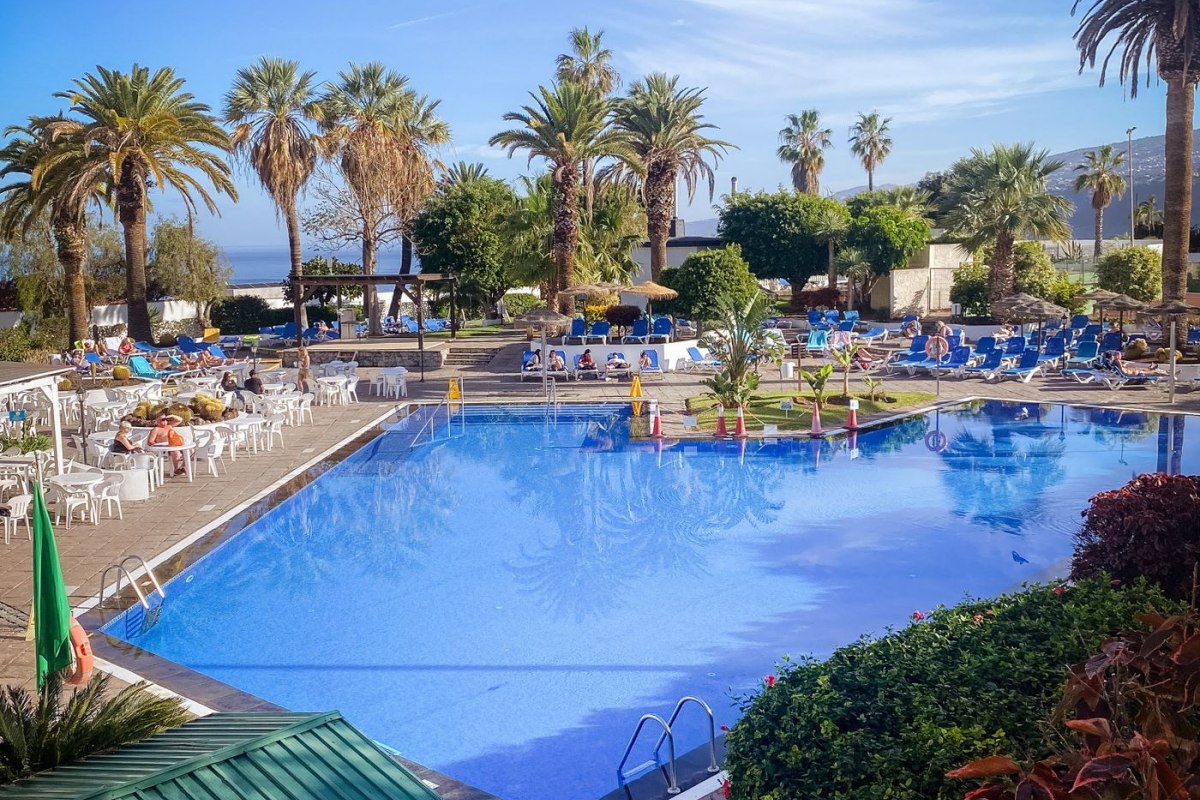
Most all-inclusive packages in Caleta include access to one or more on-site pools, evening entertainment, and a buffet meal plan. Premium options add a la carte restaurant credits and beach club access. Caleta de Fuste tends to attract an older British and Irish clientele than Corralejo and stays quieter at night.
Corralejo and the Northern Dunes
Corralejo sits at the northern tip of Fuerteventura, around 35 kilometres from the airport, and is the largest resort town on the island. The Corralejo Natural Park, a protected area of around 2,668 hectares, stretches south from the town along the east coast and contains the largest field of mobile sand dunes in the Canary Islands. The protected park status means that hotel construction inside the dunes is frozen at the level reached in the 1970s, which limits the number of beachfront properties on this stretch and gives the area its open visual character. The same protection shapes the local water-sports culture, and our guide to family activities in Fuerteventura covers the beach clubs for children within walking distance of the main hotel strip.
Corralejo itself has a more developed nightlife scene than the other Fuerteventura resorts, with bars and restaurants concentrated along Avenida Nuestra Senora del Carmen and around the harbour. Ferry services from Corralejo harbour cross to the small island of Lobos, a protected nature reserve around 15 minutes offshore, and to Playa Blanca on Lanzarote in around 25 minutes. Day trips to Lanzarote from Corralejo are common because of how short the crossing is.
The wind in Corralejo runs strong on most days, which has made the north coast a destination for surfing, kitesurfing, and windsurfing. Several long-running surf schools operate in the area and offer multi-day courses for beginners. All-inclusive options in Corralejo cover the full price range from budget three-star up to five-star, with the highest concentration of mid-range hotels along the coastal strip facing the dunes. Travellers who book Corralejo for the all-inclusive offer should also expect a town that operates as a working surf and ferry hub rather than a quiet resort enclave.
Choosing the Right Side of the Island
Picking between the four main resort areas comes down to a few clear differences. Travellers with young children and a preference for calm sea conditions do best in Caleta de Fuste, which has the most sheltered swimming beach and the shortest airport transfer. Travellers who want a long beach with consistent strong wind for surfing or kitesurfing tend to head for Corralejo in the north or for the southern tip of the Jandia peninsula.
Couples and groups looking for nightlife and a more developed evening scene tend to pick Corralejo or Morro Jable over Caleta or Costa Calma. Those who want a quieter all-inclusive holiday with less surrounding commercial development tend to choose Costa Calma or one of the more remote Esquinzo and Butihondo properties further south. The eastern coast around Caleta de Fuste and the south-eastern lagoon area at Costa Calma are the warmest and the most sheltered from the prevailing wind.
The northern coast at Corralejo and the open southern coast at Jandia are windier and cooler in the late afternoon. Anyone planning to drive around the island during their stay should consider Caleta de Fuste as a base because of its central east-coast position. Our piece on quiet resorts in Fuerteventura covers the smaller hotels outside the four main clusters for travellers who want to avoid the larger package properties. The drive from Caleta to Corralejo takes around 40 minutes, the drive to Morro Jable takes around 70 minutes, and the drive to Betancuria in the interior takes around 30 minutes. A rental car opens up most of the island for day trips outside the resort itself.
Practical Steps for Booking All-Inclusive
Booking an all-inclusive package on Fuerteventura comes down to a sequence of decisions that an organised traveller can work through in an hour or two. Start by setting the dates: high season runs from late October through April when the northern European winter pushes demand toward the Canaries, with peak prices around Christmas and New Year and the Easter break. Low season runs from May through September when the island is hot and the European mainland competes on price.
Pick the resort area before the specific hotel: location matters more than the property name on this island because the gap between resort areas is large. Decide on the meal plan: most Fuerteventura all-inclusive packages cover breakfast, lunch, dinner, snacks, and selected drinks at hotel bars, but the included drinks tend to be local-brand spirits and house wine rather than premium labels. Premium packages add a la carte options and named-brand drinks.
Check the airport transfer arrangement on its own line: most package operators bundle transfers, but a few ask for an add-on at booking time. Read the cancellation and amendment policy before paying: package terms vary across booking platforms, in particular for non-refundable rates. Consider trip insurance for any booking made more than three months in advance.
Confirm the included activities: some packages cover a beach club, water sports rental, or entertainment programme, others charge separately. Travellers who plan to spend most of their time on the beach or by the pool can do well on a mid-range package; those who want excursions, restaurants outside the hotel, or car rental should budget for those line items rather than expect them inside the all-inclusive price.
No tourist tax and the cost of all-inclusive
Two local facts shape the real cost of an all-inclusive week here. The Canary Islands charge no per-night tourist or eco tax, unlike the Balearics and parts of mainland Spain, and they use their own lower sales tax, the IGIC, at 7 percent rather than the 21 percent IVA on the peninsula, which sits inside the price of the room, the meals and the bar. Together they keep a Fuerteventura package below the equivalent in many rival destinations, so the quoted price is close to the final price.
Whether all-inclusive is the right plan still depends on how you travel. It wins for families and for heavy eaters and drinkers who will use the buffet and the bars all day, and for travellers who want a fixed budget with no decisions. It works less well for light eaters, couples who want to try the harbour seafood in Morro Jable or El Cotillo, and anyone planning to spend days out exploring, who pay for meals they do not eat. The included drinks default to local-brand spirits and house wine, with premium labels charged extra, and excursions, water sports and spa treatments sit outside almost every package. A self-catering apartment or a half-board hotel often costs less for those travellers, as our guides to self-catering and where to stay explain.
Frequently Asked Questions
What is the best month to visit Fuerteventura?
Fuerteventura has a mild climate year-round, with average daytime temperatures between 19C in January and 28C in August. The most popular months for European package travellers run from March to May and October to November, when temperatures are warm but not high and the island is less crowded than during the December and February school holidays.
How long is the airport transfer to each resort area?
Caleta de Fuste sits around 15 minutes from Fuerteventura airport, Corralejo around 35 to 40 minutes, Costa Calma around 60 minutes, and Morro Jable on the southern tip around 90 minutes. Most package operators include the transfer in the booking.
Is Fuerteventura suitable for families with young children?
Caleta de Fuste has the calmest sheltered bay on the island and is the standard pick for families with younger children. Costa Calma has a long sandy beach although afternoons can be windy. Corralejo and the southern tip of Jandia are exposed to the trade wind and have stronger surf, which makes them less suited to small children.
Do I need a rental car?
Not for a beach-and-pool holiday, although a rental car opens up most of the island for day trips to Betancuria, the interior villages, the surfing beaches in the north, and the protected coastlines on either side of the central isthmus. Distances on Fuerteventura are large by Canary Islands standards, so public transport stays limited outside the main routes.
Sources and Further Reading
- Patronato de Turismo de Fuerteventura, official island tourism office, visitfuerteventura.es
- Cabildo de Fuerteventura, island council statistics on tourism arrivals, cabildofuer.es
- AEMET (Agencia Estatal de Meteorologia), Canary Islands climate data, aemet.es
- Reserva Natural de las Dunas de Corralejo, protected area information from Gobierno de Canarias
- Aena, Spanish Air Navigation, Fuerteventura airport arrival statistics, aena.es