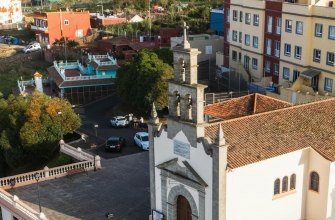
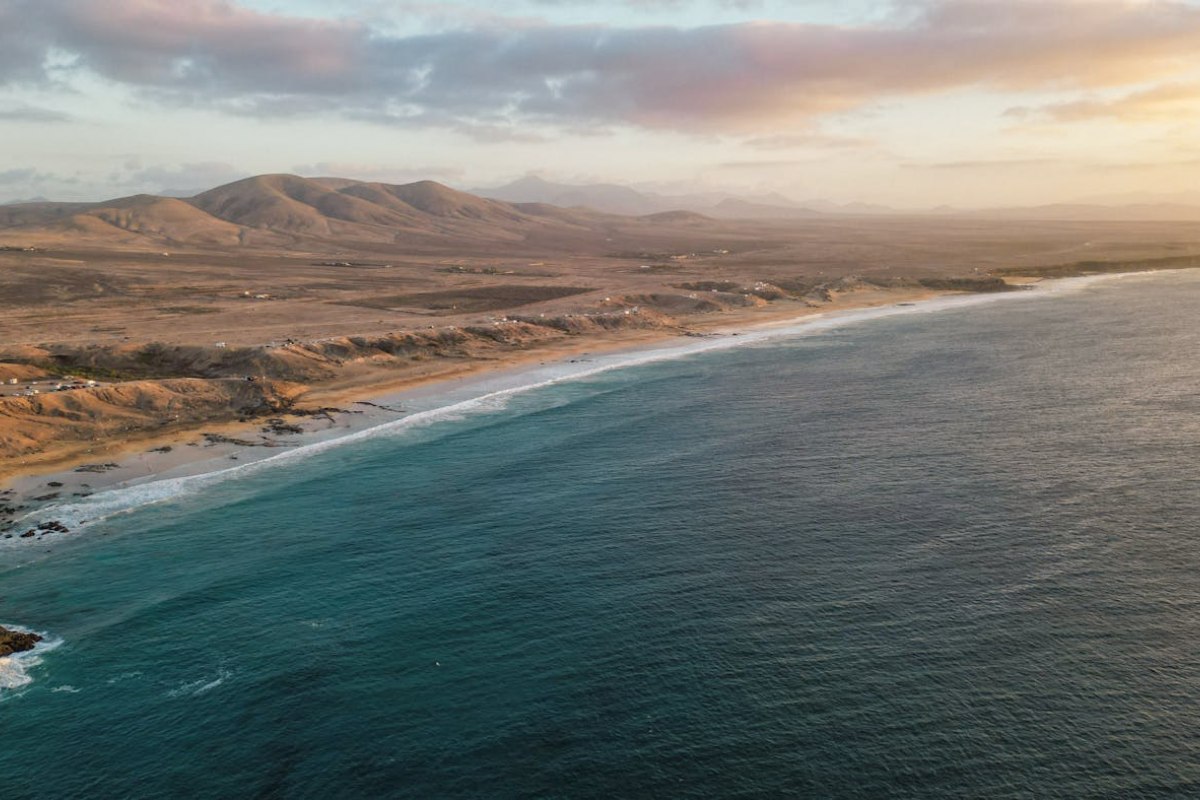
Morro Jable is the main town of southern Fuerteventura, a former fishing village that climbs a hillside above one of the island’s longest beaches and now anchors the southern resort area. It keeps a genuine old town of steep, narrow streets and a working harbour while sitting at the edge of the wild Jandia peninsula. This guide covers the town itself, its beach and wetland, and what makes it worth more than a drive-through. For the wider island, see our Fuerteventura travel guide.
A fishing village that became a resort gateway
The town’s name tells its origin: morro for the headland it grew beneath, and jable, an old Norman-French word for sand that the conquerors brought to the island, for the dunes around it. Morro Jable began as a small fishing settlement and grew from the 1960s and 1970s into the centre of the southern holiday scene, yet unlike the purpose-built resort strips it kept its original core. The result is a town with two halves: the modern seafront promenade and resort zone along the beach, and the historic old town climbing the hill behind, where the steep, narrow streets still feel like the village it was. That contrast is the appeal, since you can have the long beach and the resort comforts but also a real town with its own life, covered for accommodation in our Jandia hotels guide.
The town has a precise birthday. It was founded in 1899 by Cirilo Lopez Umpierrez, commemorated by a small statue in the centre, and grew from two pedestrian streets of fishers’ houses as families arrived from Cofete, the north of the island and Lanzarote. Its modern shape owes much to the German engineer Gustav Winter, who bought the whole Jandia peninsula from the Marqueses de Lanzarote and promoted first its farming and grazing and then, in the 1960s, its tourism; the area’s first hotel opened in 1966. Knowing that history explains why Morro Jable feels like a real town wearing a resort, rather than a resort pretending to be a town.
Playa del Matorral and the salt marsh
The town fronts the Playa del Matorral, also called the Playa de la Solana, more than four kilometres of golden sand that ranks among the best beaches on the island, lined with cafes, sunbeds and watersport spots. Behind part of it lies something unusual: the Saladar de Jandia, a protected coastal salt marsh and internationally recognised wetland that floods and drains with the tides, creating a rare habitat of salt-tolerant plants and a feeding ground for wading birds. A boardwalk lets you cross it without damaging the fragile ground. Having a protected wetland on the edge of a busy resort beach is unusual, and it is one of the things that sets Morro Jable apart from a standard package destination.
The lighthouse and the old town
Two features anchor the town’s character:
- The lighthouses: the tall modern Faro de Morro Jable, the slender tower beside the Playa del Matorral, dates from 1991, while the historic Faro de Punta de Jandia of 1864, one of the oldest on the island, stands far to the south-west at the remote tip of the peninsula, reached on a Cofete tour.
- The historic old town: the steep, narrow streets above the seafront are dotted with bronze sculptures honouring local figures and the anonymous fishermen, goatherds and people of the sea who built the place, a quiet open-air gallery worth a wander.
The harbour and the ferry
Morro Jable has a substantial harbour at its western end, and it is more than a fishing port. A fast ferry connects Morro Jable with Gran Canaria, which makes the town a practical base for an island-hopping day trip to the bigger neighbour, as well as a working port for the local fishing fleet and excursion boats. The harbour is also the main departure point for the island’s dedicated whale and dolphin watching trips, since it sits closest to the deep southern waters where the resident cetaceans gather, covered in our dolphin and whale boat trips guide.
The way into the wild south
Morro Jable is where the comfort of the resorts ends and the wild Jandia peninsula begins. From the town the rough track climbs over the mountains to the remote beach of Cofete and the mysterious Villa Winter, and the trail to Pico de la Zarza, the island’s highest point at 807 metres, starts from here. The protected Jandia Natural Park, with its endemic plants and its empty beaches, is on the doorstep, and the lighthouse at Punta Jandia marks the island’s remote south-western tip beyond it. For most visitors the easiest way to reach Cofete is a guided jeep safari, since the road is unpaved and usually excluded by hire-car contracts.
The promenade and the resort life
Alongside the old town, Morro Jable has a long, well-kept seafront promenade that runs behind the Playa del Matorral, and it is the social spine of the resort. The paseo links the beach, the hotels, the cafes and the shops, and an evening stroll along it, past the salt marsh and out toward the lighthouse, is part of the southern routine. The resort zone behind it has the supermarkets, restaurants and bars that the smaller southern villages lack, which makes Morro Jable the most self-contained base in the south: you can have the long beach, the wild peninsula, the boat trips and a proper town with everyday services all in one place. That combination is rare on the island, where most resorts are either purpose-built strips or quiet villages, and it is a strong argument for choosing Morro Jable over the more isolated southern complexes, as our Jandia hotels guide explains.
The salt marsh and its birds
The Saladar de Jandia deserves more than a passing glance. This tidal salt marsh behind the Playa del Matorral is one of the best-preserved coastal wetlands in the Canaries, and it floods and empties with the tide to expose flats that feed wading birds and shelter specialised salt-tolerant plants found in few other places. A raised boardwalk crosses it so you can see the habitat without trampling the fragile ground, and birdwatchers come for the waders, plovers and other species that use it, especially on migration, as covered in our birdwatching guide. That so well-preserved a wetland sits right against a busy resort beach is unusual, and it is a quiet reminder that the whole island is a UNESCO Biosphere Reserve where nature and tourism are meant to share the coast. The boardwalk and the bird hides make it an easy, rewarding stop even for visitors with no special interest in nature, and an early-morning or late-afternoon walk across it, when the light is soft and the birds are active, is one of the quieter pleasures of a stay in the south.
Eating and the local catch
One advantage of a town with a working harbour is the seafood. The old town and the harbour area hold a cluster of family-run restaurants where the day’s catch, often vieja, sama or cherne, comes simply grilled with papas arrugadas and the local mojo sauces, a step closer to the source than the resort buffets. It is one of the better places in the south to eat the island’s fish, and the wider Canarian table is covered in our guide to traditional food in Spain.
Visiting Morro Jable
- Getting there: at the southern tip of the island, around 80 to 90 minutes by road from the airport on the FV-2. A long-distance bus and most package transfers serve it, and our airport transfer guide covers the options.
- Time needed: a half day for the old town, the lighthouse and the salt-marsh boardwalk, longer if you add the beach or a boat trip.
- Combine it: pair the town with a Cofete jeep safari, a Pico de la Zarza walk or a Gran Canaria ferry day trip.
- When to go: year-round, with calmer mornings on the beach before the afternoon wind that the open south is known for.
Frequently asked questions
What is Morro Jable known for?
It is the main town of southern Fuerteventura, a former fishing village with a historic old town, the long Playa del Matorral, a protected salt marsh, a tall seafront lighthouse and a harbour with a ferry to Gran Canaria. It is also the way into the wild Jandia peninsula.
What does the name Morro Jable mean?
Morro refers to the headland the village grew beneath, and jable is an old Norman-French word for sand, brought to the island by the conquerors, for the dunes around it.
Is there a ferry from Morro Jable?
Yes, a fast ferry links Morro Jable with Gran Canaria, making the town a practical base for an island-hopping day trip. The harbour is also the main base for whale and dolphin watching trips.
How far is Morro Jable from the airport?
Around 80 to 90 minutes by road on the FV-2 at the southern end of the island, served by bus and package transfers.
Can you reach Cofete from Morro Jable?
Yes, by a rough unpaved mountain track, best done on a guided jeep safari since most hire-car contracts exclude the road. The trail to Pico de la Zarza, the island’s highest peak, also starts from the town.
Sources and further reading
- Cabildo de Fuerteventura, island council
- Saladar de Jandia protected wetland, Ministerio para la Transicion Ecologica
- Reserva de la Biosfera Fuerteventura